


In the North East, it was one step forward, two steps back.
Much of the progress made by Sir Muhammed Saleh Akbar Hydari, the Governor of Assam, was being undone.
The Khasis, a matrilineal society that is largely concentrated in present-day Meghalaya, were one of the largest ethnic groups in the Northeast. Hydari had met with representatives of the federation of 25 Khasi states on July 12, 1947, and after four days of negotiations, concluded an agreement with the federation that was designed to stop separatist tendencies.
The agreement, copies of which were forwarded to Vallabhbhai Patel and Jawaharlal Nehru, provided a standstill arrangement of two years or until new agreements were formulated, whichever was earlier. It provided for the region’s autonomy in all subjects, except judicial, excise, forests, and land and water rights.
In judicial matters, the Khasi states agreed to accept the final authority of the Assam High Court when established. Regarding legislation, if the Assam province and states agreed, they could send representatives to the Assam Assembly.
Hydari believed that this standstill period would give New Delhi breathing space till it arrived at satisfactory arrangements regarding the region’s complex questions, including the position of the Shillong-Administered Area.
Even arriving at this stopgap agreement wasn’t easy. The legendary Khasi leader James Joy Mohon Nichols Roy is “a constant pain in the neck”, Hydari complained to Nehru. “He thinks more of his party (he has a party among the Khasis which he calls, if I remember the name correctly, the Khasi and Jaintia States Peoples Federation) than of the interests of the Assam government of which he is a member. It would be easy to deal with him alone, but the difficulty arises from the fact that he has Bardoloi’s ear in these matters, and it takes a lot of expenditure of my nervous energy and patience to persuade Bardoloi out of suggestions engineered and innuendos let loose by the Reverend gentleman.”
Congress leader Gopinath Bardoloi, the first chief minister of Assam, did not always agree with Hydari on major issues, with their differences coming to a head when it came to dealing with the Nagas.
Roy’s American wife, Hydari, wrote, “sees visions”. On a recent occasion, the Governor said, she “begged me to give her husband police protection, which I did, as she had dreamt that he would be murdered between Gauhati and Shillong on his way back from Delhi”. Hydari alleged that the couple, “working together surrounded by an atmosphere of sanctity, amassed a considerable fortune in commerce and in other ways.”
Another issue was the slow pace at which things moved. Hydari had a deal with the 25 Khasi states, but it had to be enforced on the ground. His repeated reminders to Patel for approval to bring the agreement with the Khasi states into force were met with inexplicable silence from New Delhi.
In the Naga Hills, meanwhile, the Naga-Hydari accord signed on June 28 was stillborn. A week after the signing, a subcommittee of the Constituent Assembly, headed by Gopinath Bordoloi, told Naga representatives that they could not approve the deal. Bordoloi argued that the Naga Hills District should be treated as part of Assam, not as an independent area. The subcommittee said they were willing to discuss the matter further in Delhi.
It wasn’t just the Bordoloi Committee which rejected the deal – the extremist faction of the Naga National Council was also not in favour. This group said that nothing less than independence would satisfy them. It formed into a new political outfit called the People’s Independence League that took inspiration from Pakistan and the two-nation theory, as well as from the secessionist states.
Even the moderates felt a sense of betrayal at the subcommittee’s treatment of the agreement and decided it was time to show the fickle Congress leaders a “little bit of extremism” by demanding a revision of clause 9, to reflect that the Nagas alone would decide their destiny after ten years.
The Naga dissidence caught fire. As soon as Hydari returned from Imphal, a breakaway Angami Naga leader, Angami Zapu Phizo, hardened his position. Phizo made it clear that he was not like the more servile members of the NNC who would bend under official pressure because they were tied to their government jobs. He was ready to be radical. A diminutive figure with markedly asymmetrical features, Phizo would become one of the most formidable opponents to the idea of a united India.
In July, no one was taking Phizo and his compatriots, mostly from the Khonoma village, seriously. By mid-July, they realised that they would achieve nothing in Assam or in the Northeast. A seven-member delegation of the NNC landed in Delhi. They couldn’t get a meeting with any of the members of the interim government, but managed to meet Jinnah. The delegation told him that their people would be an independent Naga nation.
Jinnah said: “It is a matter entirely for you to decide. I am not in a position to say anything … but I have every sympathy for your welfare. I work for the people and my sympathies are always with the underdog. I am opposed to their being exploited by anybody.”
On July 19, Phizo and his compatriots called on Gandhi, who was then staying at the Bhangi Colony in the capital. The delegation told him that the Nagas would be declaring independence on August 14. According to the record of the meeting kept by Gandhi’s secretary Pyarelal Nayyar, the conversation went thus:
Gandhiji: Why not now? Why wait for August 15? I was independent when the whole of India was under the British heel. You can be independent if you have non-violence in common with me, no one can deprive you of independence.
Naga Leaders: The government said that if we become independent, military sanctions will be applied against us.
Gandhiji: The Government is wrong, I will come to Kohima and ask them to shoot me before they shoot one Naga.
As news filtered back of the Phizo faction’s activities in Delhi, confusion reigned in the hills. Opinions were divided in the NNC, but the dominant demand was that, at the end of the tenyear agreement, the Nagas should be free to decide their own future.
On July 25, the NNC met and decided to send another delegation to Delhi, this time to get Nehru and the constituent assembly to agree to a change to clause 9. If this failed, they decided they, too, would declare independence from India.
Meanwhile, the strategically located border state of Tripura was in mourning following the death of the popular ruler Maharaja Bikaram Kishore on May 17, 1947. For nearly a year before his death, he had been quite ineffective. Kishore had two attacks of delirium before his death. A doctor was called from Calcutta to attend to the King, but he arrived too late.
It didn’t take much time for grief to be overtaken by an unseemly tussle over who would run the princely state.
The Maharaja was survived by his Maharani, the daughter of the ruler of Panna, and by a son and two daughters. The official report of the Political Department recorded that the King “also had two Nepalese wives, both of whom died childless, and he leaves six concubines, and six sons and one daughter from them, who require to be provided for”.
In Tripura, the ruler’s unofficial wives and their offspring enjoyed a higher status than is usual, a situation similar to that of Nepal. The sons are called Maharajkumars, and there were three of them studying in a Raipur College at the expense of the state, the report said.
By early July, the British recognised the Tripura ruler’s young son, then thirteen and studying at Mayo College in Ajmer, as the successor to the throne. Three days before Mountbatten wrote to the young ruler to recognise his new position, the Resident of Eastern States took a unilateral decision to appoint a new chief minister for Tripura, Rajya Ratan SV Mukherjee. The Resident also told the incumbent chief minister to appoint a Regency Council, of which the Maharani could be the president, and asked the CM to get her assent.
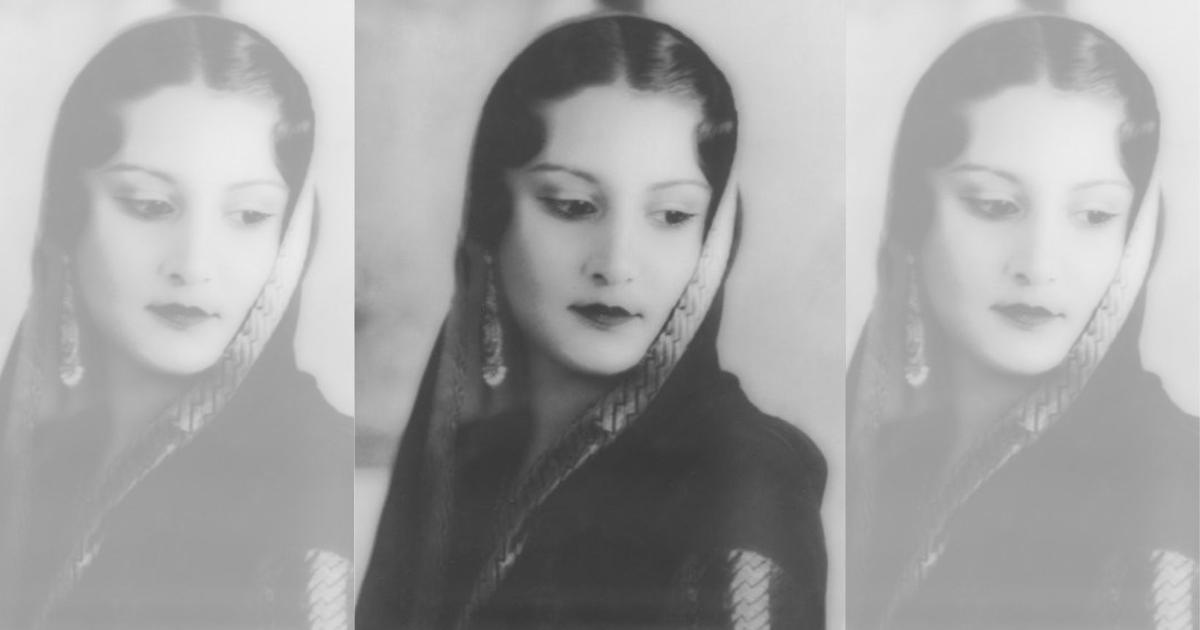
What the Resident got instead was a letter from Maharani Kanchan Prava Devi, in which she pointed out that when he met her after the death of her husband, they had agreed to look for a suitable candidate to be the CM. The Maharani hoped that the Resident had not made any final commitment to Mukherjee. She pointed out that Mukherjee was over 60 and that the state in these troubled times needed an active, healthy man in the key position.
The appointment of a new chief minister was, however, less important than the declaration of the Regent, she wrote, and put forward her claim to be appointed to the position. Her uncle, BK Dev Varma Bahadur, was functioning as the chief minister and the arrangement could easily continue till the appointment of a new chief minister, she argued.
Referring to the proposal from the Resident to appoint a Regency Council, the Maharani wrote that all sections of the people wanted her to assume the Ruler’s responsibility as Regent during the minority period of her son. “In order to maintain the prestige of the State and its Ruler and in the best interests of the administration of the Govt of Tripura and as a gesture in response to the loyal sentiments of the people in general, I feel it incumbent upon me to declare myself as Regent and to assume charge forthwith.”
The Resident suspected that the Maharani’s letter “is the result of intrigues in the palace in Tripura”, and telegrammed asking her to meet him in Calcutta. In New Delhi, TB Creagh Coen, secretary to Mountbatten and a senior member of the Political Department, wrote that the developing situation in Tripura “has the seeds of much mischief, even bloodshed, in it”.
Tripura adjoins Noakhali and Sylhet. In the first week of July, a referendum was held in Sylhet to decide its future, and the majority voted to be part of East Bengal. With that decision, Coen pointed out, Tripura is “now entirely surrounded by Pakistan territory except for a strip of tribal territory with no communications”.
Coen argued that the Muslim minority might appeal to the Government of Pakistan to intervene and seize paramountcy, as the Government of India was doing in the case of the Dangs. In present-day south Gujarat, the leaders of the Dangs tribe had stood up to the British Empire, and there was resentment about India’s move to attach the area without the local rulers signing the Instrument of Accession.
Into this strategic state, thousands of refugees were pouring in from present-day Bangladesh. There were blazing rumours about what Pakistan may do to Tripura after August 15, creating a situation akin to Kashmir.
The suspense would last until the dying hours of the British Empire.
Excerpted with permission from Birth of a Nation: The Twenty-One Days That Made India, Josy Joseph, Westland.
