





I. The statement that should surprise no lawyer – but has startled everyone else
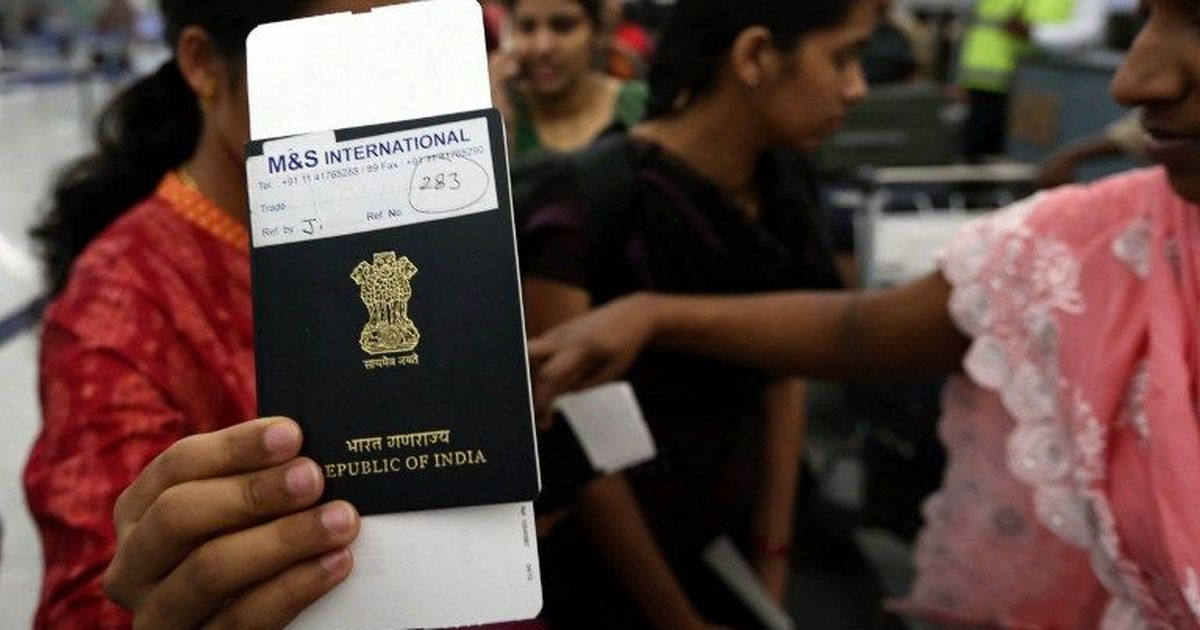
On June 24, by coincidence, the 59h anniversary of the Passports Act coming into force, the Ministry of External Affairs stated plainly that an Indian passport is a travel document, not proof of citizenship.
The official clarification, reported by diplomatic correspondent Sidhant Sibal, has generated considerable public heat. It should not have. The legal position has been settled for decades. What the ministry has done is say publicly what administrators have known privately, and what the Special Intensive Revision of the electoral rolls has been forcing the country to confront: identity and citizenship are not the same thing, and no document routinely issued to tens of millions of Indians conclusively establishes the latter.
The Ministry of External Affairs official also disclosed that 1.39 crore passports were issued in 2025 alone, with total passport-related services reaching 1.5 crore people. At that scale of issuance (one passport issued roughly every two seconds across the working year), the suggestion that each document represents a verified, conclusive certification of citizenship would be administratively implausible even before one examines the statutory position.
The statutory position is this: under Section 20 of the Passports Act, 1967, an Indian passport may be issued to a non-citizen by the Central Government in specified circumstances. That single provision is sufficient to establish that possession of an Indian passport is not, in law, conclusive proof of Indian citizenship. The Ministry of External Affairs has not discovered a new legal position. It has acknowledged an old one.
🧵Passport is a travel doc for Indian govt
— Sidhant Sibal (@sidhant) June 24, 2026
Explaining
Stated Law:
Section 20 of the Passports Act, 1967 says a passport can be given to a non citizen by Indian govt if it is in "public interest"
Link: https://t.co/VJefRzXAzG https://t.co/BdNLFj7sFO pic.twitter.com/4ARd98picI
II. I was born here. Does that make me a citizen?
I was born in Bathinda, Punjab, on July 31, 1961. Under the law as it stood on that date, my birth on Indian soil made me an Indian citizen by birth, automatically and without condition. No inquiry into my parents’ status was required; no administrative determination was necessary.
The territorial principle – jus soli, citizenship by place of birth – governed, and it governed without qualification.
That legal certainty no longer exists. India has, through two Parliamentary amendments, progressively dismantled unconditional birthright citizenship. A child born in India today does not automatically acquire Indian citizenship. The position now depends entirely on parental status at the time of birth – and the conditions are strict.
Understanding how we arrived here requires tracing the statutory journey from 1950 to the present.
III. The constitutional settlement of 1950
When the Constitution came into force on January 26, 1950, the question of who constituted India’s first citizens was answered through Articles 5, 6, and 7 – provisions shaped not by abstract theory but by the lived emergency of Partition.
Article 5 conferred citizenship on persons domiciled in India at commencement if they were born here, or either parent was born here, or they had been ordinarily resident for five preceding years. Articles 6 and 7 addressed the Partition migration: those who had crossed into India from Pakistan, and those who had gone the other way and returned.
These provisions created a one-time constitutional settlement, not a permanent regime. After 1950, citizenship became statute-driven under the Citizenship Act of 1955, which Parliament has amended substantially on three occasions that matter here.
IV. The three-phase narrowing of birthright citizenship
Phase I – January 26, 1950 to June 30, 1987: Open territorial citizenship
During this period, anyone born on Indian soil was a citizen by birth, regardless of the nationality or status of their parents. This was jus soli in its classical form. It was also, for most of this period, broadly uncontroversial – the population was relatively settled, Partition’s wounds were raw and the politics of migration had not yet sharpened into the form they would take over the following decades.
Phase II – July 1, 1987 to December 2, 2004: The first restriction
The Citizenship (Amendment) Act, 1986, which came into force on July 1, 1987, required that at least one parent be an Indian citizen at the time of the child’s birth. The immediate driver was large-scale undocumented migration from Bangladesh into Assam and West Bengal.
The amendment was a legislative response to Assam’s political crisis, itself the product of demographic anxiety that had boiled over into the Assam Movement and eventually the Assam Accord of 1985.
Pure jus soli was gone, replaced by a modified version that still allowed citizenship through a single Indian parent.
Phase III – On and after December 3, 2004: The current position
The Citizenship (Amendment) Act, 2003, enforced from December 3, 2004, tightened the conditions further. A child born in India on or after that date is a citizen by birth only if:
• both parents are Indian citizens at the time of birth; or
• one parent is an Indian citizen and the other is not an illegal migrant.
The consequence of this formulation is absolute: if either parent is an illegal migrant, the child born in India acquires no citizenship by birth, regardless of any other factor. India has, in effect, moved from jus soli to a form of jus sanguinis – citizenship by descent – while retaining the fiction that birth on Indian soil is relevant.
It is relevant only to the extent that it is the occasion for the inquiry; it is no longer the answer.
V. When the law creates statelessness
The human consequences of this framework deserve direct examination, because they do not resolve themselves tidily.
Consider a child born in India to an Indian citizen father and a mother who is an illegal migrant from Bangladesh. Under the post-2004 law, the child is not an Indian citizen by birth. The bar is absolute. The child cannot acquire citizenship by registration under Section 5 of the Citizenship Act, because illegal migrants are expressly excluded from that provision.
Naturalisation requires years of lawful residence – lawful residence the child may not be able to establish. The mother’s home country may not recognise the child. The child risks being rendered stateless.
This is not a hypothetical situation. In the border districts of Punjab, Rajasthan, West Bengal and Assam, administrators encounter variations of this situation with some regularity. During my tenure as Deputy Commissioner of Amritsar between 1992 and 1996, the question of undocumented persons – their status, their children’s status, and the documents they did or did not possess – was a live administrative challenge, not a constitutional seminar. The law then was less stringent than it is now.
Under the current framework, the gaps are wider and the human cost of falling into them is higher.
The Supreme Court addressed the broader context in Sarbananda Sonowal v Union of India (2005), reaffirming the state’s duty to prevent illegal immigration from undermining the citizenship framework. The courts have consistently upheld the 2004 amendment.
Where humanitarian concerns have been raised, judicial responses have been compassionate in language but firm in law: any relaxation must come from Parliament, not from the bench. That legislative gap – between the law’s strictness and the human reality it produces at the margins – remains unfilled.
VI. The Tibetan exception: How the courts applied the law
The most extensively litigated application of these citizenship-by-birth rules has involved Tibetan refugees born in India – a community whose situation illustrates both the precision and the occasionally arbitrary consequences of the three-phase framework.
In Namgyal Dolkar v. Government of India (2010), the Delhi High Court ruled that Namgyal Dolkar, a Tibetan born in India in 1986, was an Indian citizen by birth. The court applied the law as it stood in Phase I: born between 26 January 1950 and 30 June 1987, citizenship accrued automatically regardless of parental status. The government was directed to issue her an Indian passport.
In Phuntsok Wangyal v. Union of India (2016), the Delhi High Court reaffirmed this position and held that the government could not deny passports to eligible Tibetans merely on account of their classification as foreigners in administrative records. Bureaucratic labelling, the court held, did not override statutory entitlement.
The administrative follow-through came in stages. In 2014, the Election Commission directed that Tibetans born in India before July 1, 1987, were eligible to vote. In 2018, the Ministry of External Affairs formally instructed passport-issuing authorities to issue Indian passports to Tibetans born in India between January 26, 1950, and June 30, 1987.
The Tibetan cases illuminate the Phase I /Phase II boundary with particular clarity. A Tibetan born in India on June 30, 1987, is an Indian citizen. One born on July 1 1987, is not – unless at least one parent was an Indian citizen, which in most cases of Tibetan refugees would not have been true.
The difference of one day, one legal provision, produces entirely different citizenship outcomes for persons in otherwise identical situations. That is not an anomaly; it is the law operating exactly as Parliament intended.
VII. What the SIR has forced into the open
The Election Commission’s Special Intensive Revision of the electoral rolls has brought the citizenship documentation question into sharp public focus for the first time in a generation.
The logic of the revision is straightforward: electoral rolls should contain only Indian citizens, and the commission is entitled under Article 324 of the Constitution to verify entitlement. What the Special Intensive Revision exposed is that most Indians do not possess a document that conclusively establishes their citizenship.
Aadhaar establishes identity and residence; it does not establish citizenship. A voter ID establishes prior registration; it does not establish citizenship.
As the Ministry of External Affairs has now confirmed, a passport establishes entitlement to travel; it does not, in the strict legal sense, establish citizenship.
The Supreme Court, in its judgment of May 27, 2026, upholding the constitutional validity of the Special Intensive Revision, inserted a critical limitation: the Election Commission’s role is confined to determining eligibility for electoral rolls. It cannot adjudicate citizenship. The deletion of a name from the voter roll does not strip a person of citizenship. Citizenship can only be determined by a legally competent authority under the Citizenship Act.
The Election Commission must refer disputed cases to that authority rather than making its own citizenship determinations.
That judicial qualification is important, but it does not resolve the underlying problem: there is no single, commonly held document that conclusively proves Indian citizenship for the ordinary resident. The exercise to compile a National Register of Citizens in Assam – which accepted “legacy documents” such as pre-1971 electoral rolls, land records, school certificates and court documents – illustrated the difficulty of answering the citizenship question with documentary certainty at scale.
VIII. So what does prove Indian citizenship?
This is the question the statement by the Minister of External Affairs invites – and which the government has, so far, not answered with the specificity the public requires. On the basis of existing law and administrative practice, the following documents carry citizenship-probative weight, though none is conclusive in every circumstance:
• A Naturalisation or Registration Certificate issued by the Ministry of Home Affairs is the closest to a conclusive citizenship document. It is issued infrequently and in specific circumstances.
• A passport, despite Wednesday’s clarification by the Ministry of External Affairs, remains the most widely accepted working proof of citizenship in practice – precisely because it is issued by the ministrt to persons who represent themselves as citizens and who are not knowingly issued passports by the government if they are not. The ministry’s clarification is legally accurate but practically nuanced: the passport is not conclusive proof, but it is strong evidence.
• Birth certificate combined with parental documentation, establishing the conditions required under the phase applicable at the time of birth.
• Legacy documents of the kind used in the Assam National Register of Citizens (pre-cut-off electoral rolls, land records, school certificates), which establish residence and family connections over time.
The honest administrative answer is that India does not currently have a universal, standardised, conclusive citizenship document available to all citizens. This is a gap that any future National Register of Citizens-type exercise – such as that envisaged by the High Level Committee on Demographic Changes constituted by the Union Government in May 2026 – will have to confront directly.
IX. The global frame: India is not alone
India’s journey from jus soli to conditional, descent-based citizenship is part of a wider global trend. The United States, which has maintained the most robust jus soli regime in the world through the Citizenship Clause of the Fourteenth Amendment – ratified in 1868 primarily to overturn the Supreme Court’s decision in Dred Scott v. Sandford (1857) that denied citizenship to African Americans – has faced sustained political pressure to narrow birthright citizenship.
US President Donald Trump’s Executive Order 14156 of January 20, 2025, sought to deny birthright citizenship to children of undocumented parents and those on temporary visas. Within days, US District Judge John C. Coughenour in Seattle issued a temporary restraining order calling the order “blatantly unconstitutional”.
Amending the Fourteenth Amendment would require a two-thirds Congressional majority and ratification by three-quarters of states – a threshold that renders legislative change effectively impossible in the current political climate.
The contrast with India is instructive. The United States changed birthright citizenship by constitutional interpretation in the nineteenth century and has largely held that line since. India changed it by Parliamentary statute in 1986 and again in 2003 – a far simpler mechanism, requiring only a legislative majority.
The comparative ease with which India has narrowed citizenship by birth is a function of the parliamentary sovereignty model and the absence of a constitutional entrenchment of jus soli equivalent to the US Fourteenth Amendment.
X. The unfinished legislative agenda
Three legislative and policy gaps deserve attention from India’s Parliament:
Statelessness prevention: The current framework creates a real risk of statelessness for children born in India to one citizen and one illegal migrant parent. The 1954 United Nations Convention on the Status of Stateless Persons and the 1961 Convention on the Reduction of Statelessness – to which India is not a party – provide a framework.
Parliament should consider a provision that prevents statelessness without undermining the law’s deterrent purpose against illegal migration: a child born in India who would otherwise be stateless should have a pathway to citizenship that does not require proof of parental status that may be unascertainable.
A universal citizenship document: The statement by the Ministry of External Affairs on Wednesday, the Special Intensive Revision exercise, and the demographic mandate of the High-Level Committee on Demographic Changes established in May collectively expose the absence of any document that most Indians can routinely hold as conclusive proof of citizenship.
This gap needs to be addressed – not by stretching Aadhaar, the voter ID or the passport beyond their statutory purposes, but by creating a citizenship register with a corresponding document accessible to all citizens.
The CAA judgment: The Citizenship Amendment Act, 2019, creates a religion-based fast-track to naturalisation for non-Muslim refugees from three specified neighbouring countries. The Supreme Court has heard arguments on its constitutional validity and judgment is awaited. Whatever the court decides, Parliament will need to address the question of how India’s citizenship framework treats stateless and persecuted communities without reference to religious identity – a question the legislation has posed but not answered in a constitutionally durable way.
What the MEA statement really means
The Ministry of External Affairs official who stated that a passport is a travel document rather than proof of citizenship was not making policy; he was describing law. The Passports Act, 1967, the Citizenship Act, 1955, and the Supreme Court’s judgment on the Special Intensive Revision of May 2026 are all consistent with that position.
The significance of the statement lies not in its novelty but in its timing – issued as the Special Intensive Revision of the electoral rolls is being conducted across the country, as 1.39 crore new passports are added annually to the pool of documents that a confused public believes establishes their citizenship.
The deeper question the statement raises is one that neither the Ministry of External Affairs nor the Election Commission, nor the High Level Committee on Demographic Changes has yet answered directly: if not the passport, then what?
India owes its citizens not merely a legally accurate description of what documents do not prove citizenship, but a clear, accessible, administratively feasible answer to what does.
Until that answer is provided, the gap between the legal reality and the public understanding will continue to generate the confusion, anxiety, and political heat that the Special Intensive Revision has already demonstrated this question can produce – at a scale of 1.39 crore new passports a year and counting.
Karan Bir Singh Sidhu is a retired IAS officer of the 1984 Punjab cadre who superannuated as Special Chief Secretary to the Government of Punjab.
This article was first published on The KBS Chronicle.
