







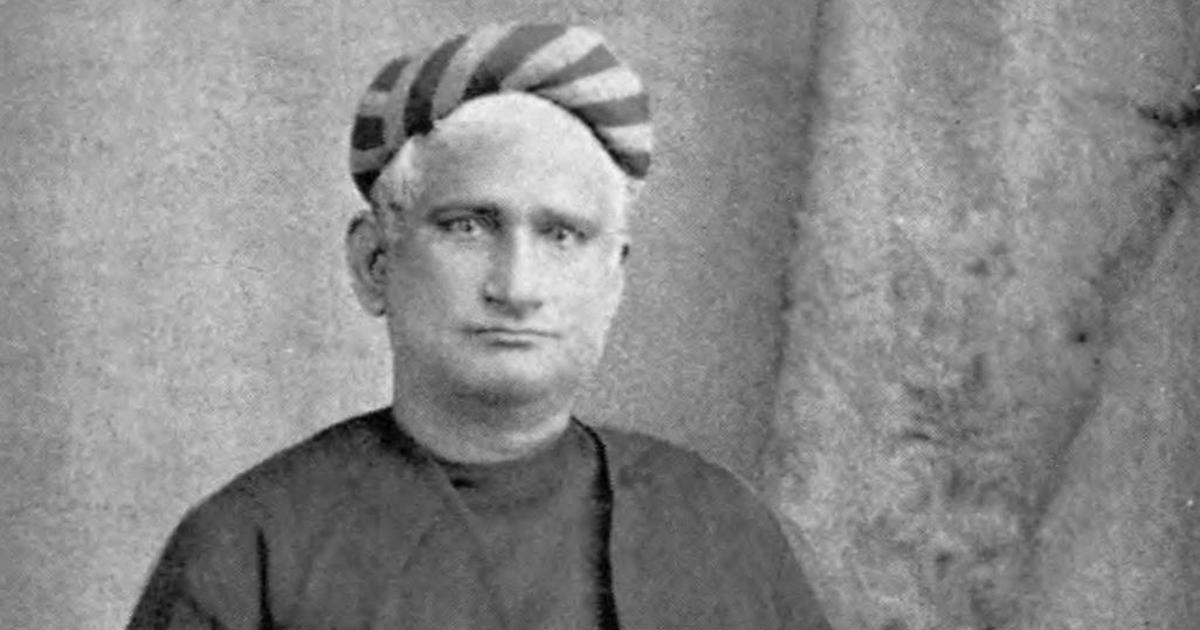
To a 21st-century reader, Rajani (1877) by Bankim Chandra Chattopadhyay, at first, comes across as a novel on caste and flowers. Rajani, a “low-born”, blind girl of 19, makes a living by selling flowers. She frequents Ramsaday Mitra’s mansion in Kolkata to sell flowers to his wife, Labangalata. Seeing her for the first time, Labangalata’s stepson, Sachindra, a medical student, asks about her:
“Flower girl! I was under the impression that she is some gentleman’s daughter.”
Labanga said, “Why do you say so? Can’t a flower girl be the daughter of a gentleman?”
Later in the novel, when Amarnath rescues Rajani on a riverbank, he immediately concludes that the person tormenting her is a vile, low-caste person.
Entering into the forest deeper I found a monstrous man forcibly assaulting a young woman… On seeing them I instantly understood that the man was a scoundrel belonging to the inferior caste, presumably a dome or a siuli.
Then there are flowers, Rajani alludes to flowers when she muses on her feelings for Sachindra:
I felt that I was enshrouded with flowers, flowers on my head, flowers on my feet. I was draped in flowers, flowers in abundance in the core of my heart…
I felt as if the petals of a lotus blooming in a pleasant morning had entwined my arms, as if someone had garlanded my hands with rose flowers… Maybe I wished to hang with Sachindra, transformed as two flowers, thus coalesced from the stalk of a wild tree.
Efflorescent prose
Chattopadhyay’s language, replete with metaphors, similes and breathlessly beautiful compound words, has an efflorescent quality. It is impossible to translate that effect in English, especially at this age when readers prefer a comprehensive, free-flowing narrative style. Perhaps that is the reason the prose in Amita Roy’s translation, often rambling but always lucid, gives a sense of agency and intention. If the question is what remains if that mellifluous quality of Chattopadhyay’s language cannot be retained in translation, the answer is, a lot: two female narrative voices, Rajani’s and Labangalata’s; the neat structure of the novel wherein each of the main characters share their backstory in first person; Rajani’s growth as a confident, resilient woman and her healing journey and the curious characters of her suitors Sachindra and Amarnath.
Rajani’s parents arrange her marriage with Gopal, a married man. So, she runs away from home. However, she is escorted home by Hiralal, a publisher of vulgar magazines. When Rajani turns down his marriage proposal, he abandons her on the bank of the river Hooghly. Rajani hurls a broken staff at Hiralal with success, underlining that she is a damsel who fights in distress. Later, when Rajani tells Amarnath about her love for another man, she says she cannot share much as she is a woman.
Labangalata, the other young woman in the story, is devoted to a husband who is much older than her. Such is her devotion that she punishes her admirer, Amarnath, by inscribing “thief” on his back when he comes to visit her in secret. She is fond of Rajani, so she is the one who works out a similar match for her, with Gopal, so that she could bear him a child. Labangalata whisks Rajani out of her room when she refuses to marry Gopal; her intentions may be kind but her resolutions are bound by the rules of gender and caste.
“This disease has another type of disorder. It advocates widow remarriage; putting an end to the practice of Brahmanas hailing from noble families taking many wives, eradicating child marriage, abolishing caste system. Women who are now tied like cow in sheds, set them free, let them graze on their own. I do not have a cow, nor do I have much association with the cowsheds of others. I do not much wish to do away with the caste system. I am not educated to that extent yet… So, let the division of caste remain. Let there be widow remarriage if it happens, let the young people remain unmarried if it be so…”
A wanderer, an empath and a scholar, Amarnath has his flaws. As he confesses, he is not sure whether the eradication of the caste system would bring about any positive change in society. He grew up with stigma as one of his aunts had eloped, and he made the mistake of trying to break into married Labangalata’s chamber, though for love. He falls in love with Rajani but steps back after knowing her mind. His sense of responsibility and his subsequent sacrifice attribute a different dimension to the novel.
Sachindra, the man Rajani chooses, likes Rajani but is dismissive of her as she belongs to a lower class and is blind. As the plot develops, Rajani’s upper caste lineage and wealth come to the fore, with Amarnath’s effort. Nevertheless, Sachindra resists the marriage proposal. This resistance seems like an imposition of his social conditioning. Sachindra falls ill, his disease exacerbating the debilitating effects of caste and a society not willing to accept disabled individuals. On the other hand, Rajani’s blindness is cured by a hermit, proving that it is not a lifelong condition but a curable disease.
Documenting caste
If we consider Rajani a fairytale, then Rajani’s character is never questioned. She always manages to stay out of scandal. Perhaps the author wanted her to fight a patriarchal, ableist and casteist society with superhuman strength. Amarnath, Sachindra and Labangalata outgrow their rigidities in the course of the novel. Chattopadhyay, like Amarnath, does not do away with caste. Rajani turns out to be a lady from an upper-caste family. This is where the novel disappoints, but it is also promising that Labangalata later realises that society, with its barriers and stigma, can be crippling for men as well as women. In a touching moment, she apologises to Amarnath for her harsh act of judgment.
Ray’s new translation of Rajani reintroduces a novel that documents and addresses the ambiguities of caste, class and desire in the 19th century. It is also a story of fighting labels of disability and other social dictates with introspection and resilience. Instead of an academic, annotated text, Ray’s translation uses an easier, story-like format. I wish we could know Ray’s thoughts on translating Rajani. Perhaps a translator’s note in the next edition of the translation would be helpful.
Sanjukta Dasgupta’s foreword to the translation is rich and comprehensive, bringing out the socio-cultural dynamics of the novel. It should also be mentioned that Rajani has been translated by Sreejata Guha in Bankimchandra Omnibus Volume 1 (Penguin, 2005); like Ray, Guha too has rendered the narrative in simple prose, thus highlighting the conceits of stories and characters more than the language itself.
Paulami Sengupta is the author of Maximum Love in Patel Nagar (Red River, 2023) and Boyosondhir Horof (Boibhashik, 2021).
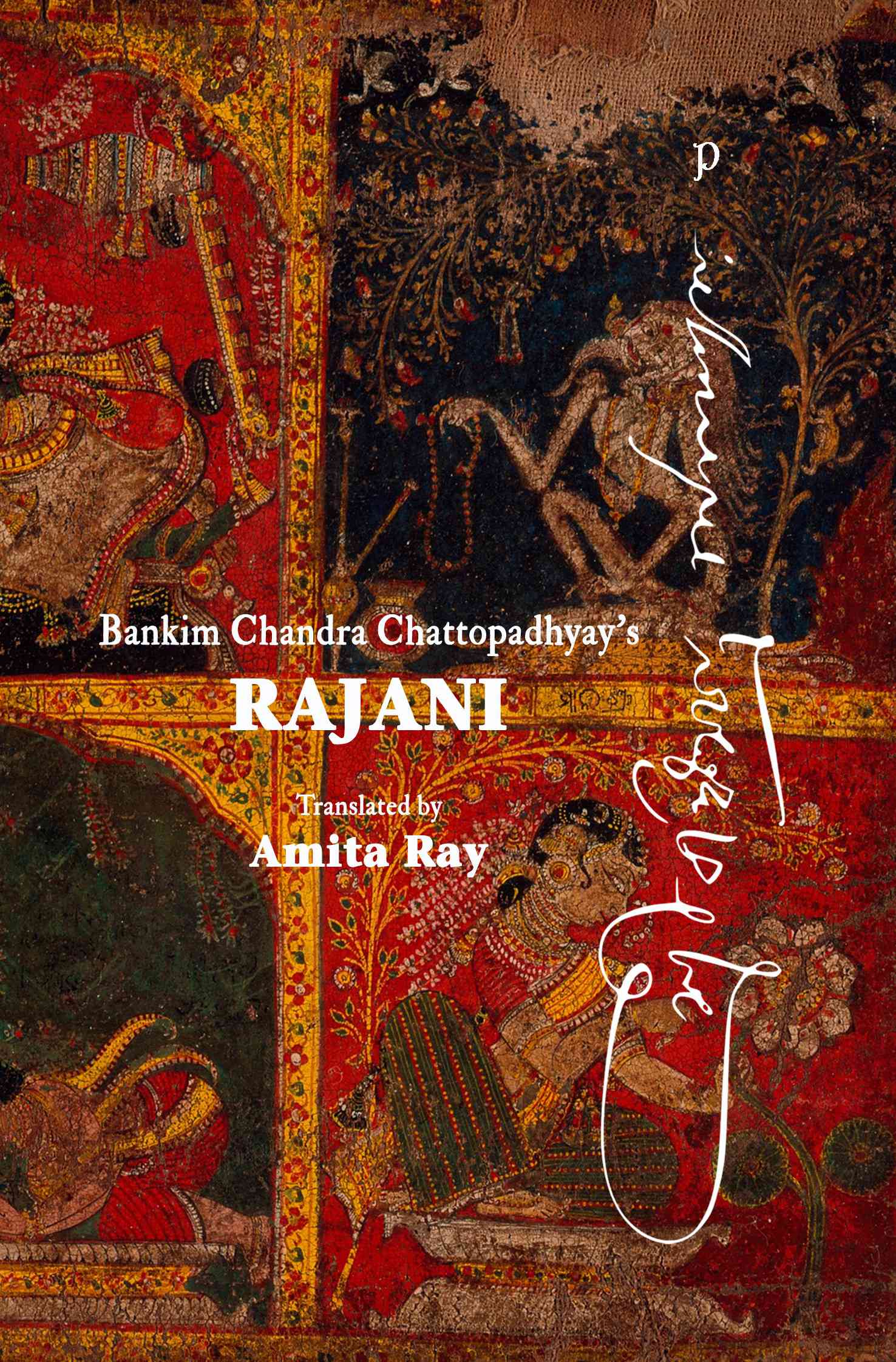
Rajani, Bankim Chandra Chattopadhyay, translated from the Bengali by Amita Ray, Penprints Publications.
