





On the very day Manjamma had planned to return, she felt the urge to visit the Hulige temple once more. While walking near the temple portal, she paused in pleasant surprise. A relative of hers rushed to greet her excitedly. The man was married to Manjamma’s cousin sister, and she had known him as an “uncle” since childhood. They exchanged pleasantries, and Manjamma sensed that he held no prejudice against transgender people. He was also sensitive enough not to broach topics that might cause her distress or insult. This meant a great deal to Manjamma, and she immediately felt at ease with him.
After some pleasant conversation, he invited her to his house in Chilakanakatte village of Bellary district. Manjamma saw this as an opportunity to escape her pointless drudgery in Davangere. Initially, she tried to refuse, using work as an excuse. This did not work, and he insisted she be his guest, at least for a short while. She eventually conceded and went with him to Chilakanakatte, though she had no idea how she would spend her time there. She was, however, excited to visit a new place and experience a different milieu and routine. But, after a couple of days there, she started feeling bored, having nothing to occupy her.
She, therefore, began to assist her uncle in the small restaurant he ran in the village. Within a very short period of time, she acquired the skills required in food service. Sometimes she served customers, and at other times she managed the billing counter. The restaurant’s daily business increased by a notable measure, thanks to her presence. The main reason for this was that she greeted every customer with an unfailing smile.
Her cheerful disposition, however, disappeared the moment she noticed the restaurant’s discriminatory practices. Poor and low-caste customers were served food outside the restaurant on a separate set of plates. It reminded her of her own trials with unfair treatment. She protested against such discrimination, but only in soft and nuanced ways, which fell on deaf ears. She feared objecting strongly to their bigoted minds, as she did not want to lose the warm, bona fide affection the family had shown her. Discrimination and the separate stack of plates and glasses remained intact. Manjamma had to learn to be content with what she received, as she could not yet claim what she sought.
Nearly a month passed. Having witnessed many more distasteful things, she felt a growing urge to return to Davangere. But her uncle would not let her go, possibly reluctant to lose the surge in profit since the young trans woman’s arrival. She agreed to stay back provided he bought her a few saris. He promised to bring her more than she asked for. But there were no strings attached. For even if he had wanted to strike up a warm and healthy relationship with Manjamma, he could not have done so; nothing went amiss under the watchful eyes of his wife. Having observed all this, Manjamma decided to continue living in Chilakanakatte for a longer period.
However, she could no longer bear the increasing caste discrimination and started objecting to their practices, this time with more force. Yet again, her words were not taken seriously by her relatives. No one in their family found it wise or sane to embrace her ideas of equality. She could not overcome her dislike for it. Having endured discrimination herself, she had formed a few radical and piercing thoughts with which she could have struck them hard, but she chose to remain silent, as she was only a guest. Instead, she joined a bhajan group that also narrated tales of the gods during evenings. It served as a way for her to revert to her artistic self.
During the day, Manjamma started wandering about Chilakanakatte and neighbouring villages with her holy bag. As she was a trans woman from an upper-caste background, the villagers treated her with regard and courtesy. They were always generous hosts, gifting her saris, rice, vegetables and other grains. Despite the conflict of interest, she gave away her entire collection to her uncle’s family each day. All she kept for herself were a few saris. The relatives did not intervene in her way of life, as the profits they incurred were supplemented by the alms she brought every day. But once again, Manjamma discovered she was being exploited. Only then did it dawn on her that her uncle’s family only meant business with her.
Nevertheless, her life in the village sowed new hope. A good number of villagers recognised her as a talented folk singer and suggested she add a percussion instrument to her performances. Although she had developed into a competent artist, she had never learned to play any musical instrument. When she confessed this to the villagers, they offered to bring in Somakka Jogathi from Gollarahalli village to teach her. She was a senior trans woman known for her ability to play percussion instruments with her eyes closed. But Manjamma was not enthusiastic about the idea and stayed quiet. By then, her desire to mix with other trans people had largely disappeared.
Despite her reservations, one day, Somakka Jogathi appeared before her at Chilakanakatte. Manjamma welcomed her, albeit half-heartedly. Without wasting much time, Somakka opened her percussion instrument and instructed Manjamma to sing a folk number. Manjamma’s nervousness before a senior was palpable. She respectfully bowed and sought Somakka’s blessings. Somakka, in turn, affably told her to dispel everything and to focus only on the song. Still, Manjamma gave her audition somewhat tensely. Somakka listened attentively, praised her talent, and openly pointed out Manjamma’s areas of improvement.
With this sincere encouragement from a senior musician, Manjamma’s artistry took a new form. Additionally, the villagers assured her that Somakka was never known to exploit anyone. She began to train herself more rigorously than ever before. All the qualms and disappointments in her mind began to fade of their own accord.
There are many ways to define the word “practice”. But Manjamma summarised it as “a bridge between dream and excellence”. Whether she excelled quickly or not is a different matter. But she had certainly set her heart on art, and it showed. Crowds of people started attending the shows she and Somakka gave. Once, the villagers arranged a concert at a temple dedicated to Lord Shiva, and it turned out to be a success. For the first time, Manjamma was handed a microphone to sing, and her joy was beyond words. After her performance, the villagers overwhelmed her with torrents of compliments. She presumed that these were signs of her leaving behind the dark phase of her life.
Three more months passed. Again, she spoke to her uncle and sought to take her leave. Aware of what her absence would mean, he affectionately refused to let her go. Given his unfailing warmth and her growing popularity among the villagers, she decided to stay back for a little longer. Receiving such abundance from her relatives, she began to consider herself part of their family.
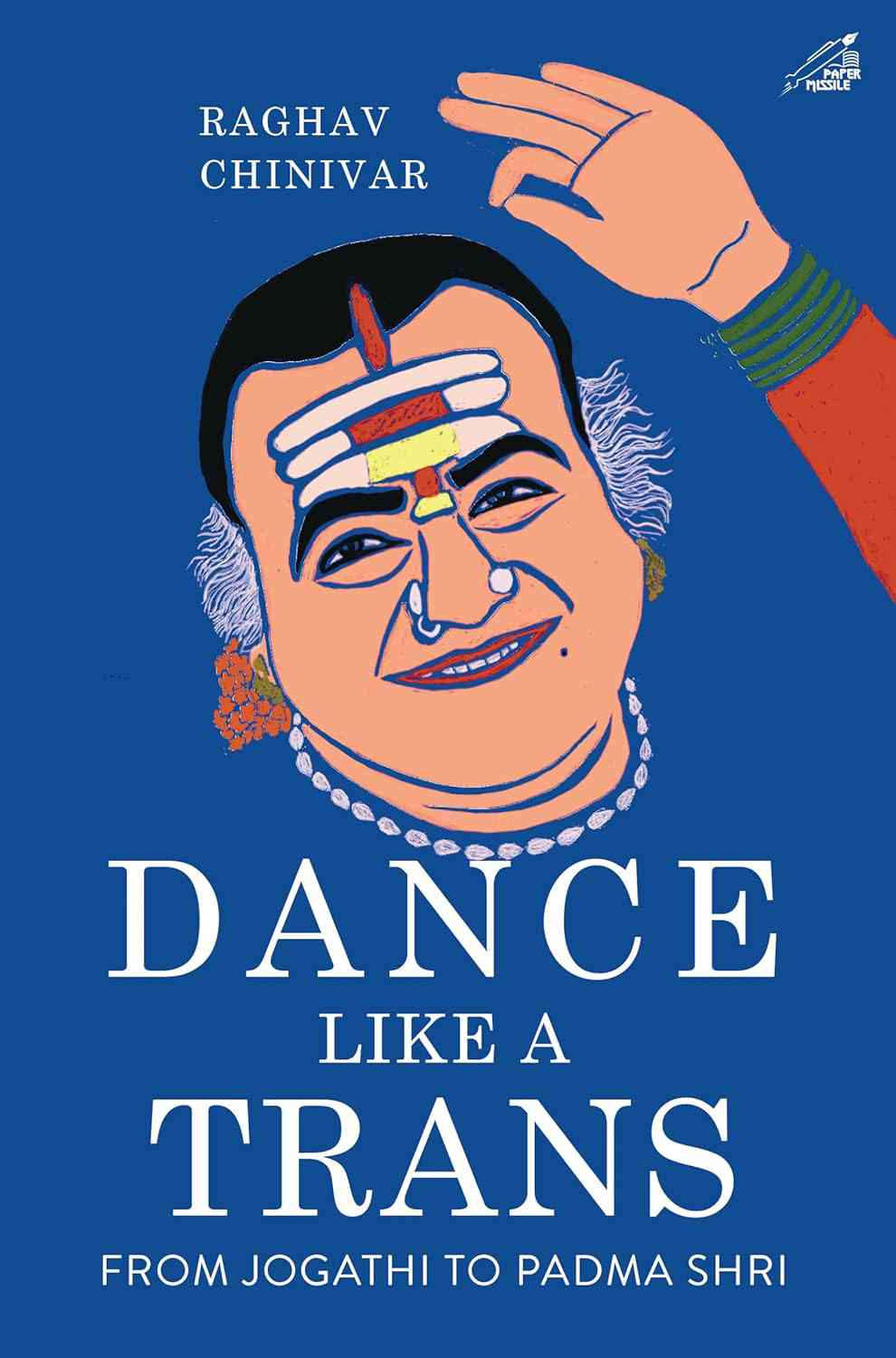
Excerpted with permission from Dance Like a Trans: From Jogathi to Padma Shri, Raghav Chinivar, Niyogi Books.
