









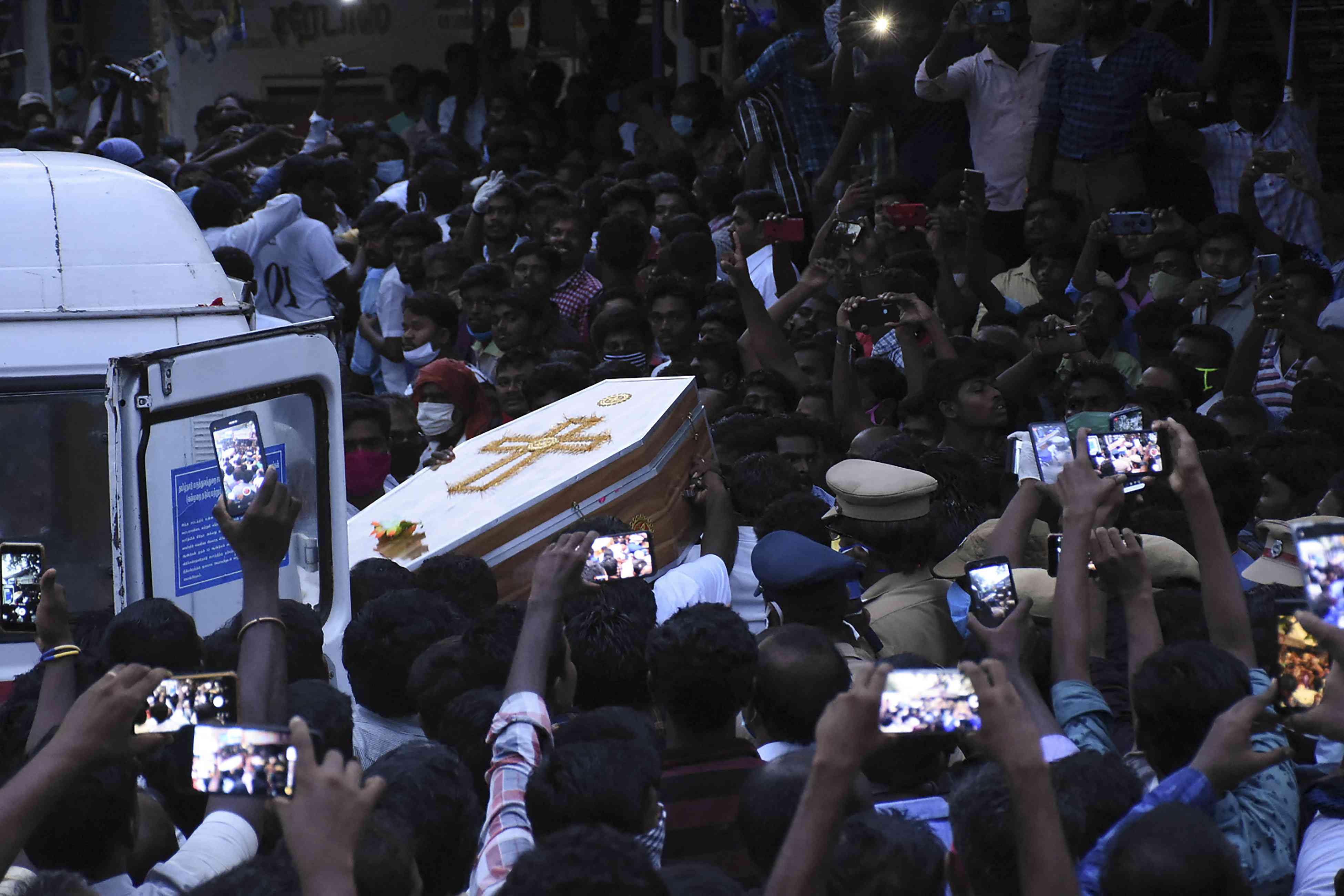
In June 2020, during the Covid-19 pandemic, 59-year-old Jeyaraj and 31-year-old Bennicks were taken into police custody in Madurai for allegedly violating lockdown restrictions. After two days of being physically tortured by the police in Sathankulam town, the father and son died, sparking demonstrations and social media outrage.
Most often, such incidents are met with indifference or celebrated. For instance, the Telangana Police in December 2019 shot dead four men, accused of rape and murder, claiming that they were trying to escape. In this instance, the state’s use of violence to dispense “justice” was celebrated.
The contrasting responses to both incidents shows that public outrage rarely actually holds the state accountable.
Two custodial deaths
Custodial violence is shamefully routine in regular interactions between the police and people in India. The Sathankulam custodial murders are unusual because they disrupted the indifference that is the usual reaction to such violence.
After massive public anger, the Madras High Court took suo moto cognisance of the murders on June 24, 2020. This meant that it took action of its own accord without a petition being filed. The court was careful to ensure the integrity of the investigation. Most cases of custodial deaths linger before the judiciary, but the trial in the Sathankulam murders was wrapped up by March 23, 2026.
However, the public reaction to the extrajudicial killings in 2019 of Jolly Naveen, Jolly Shiva, Mohammad Arif and Chintakuntu Chennakeshavulu in Hyderabad was quite different.
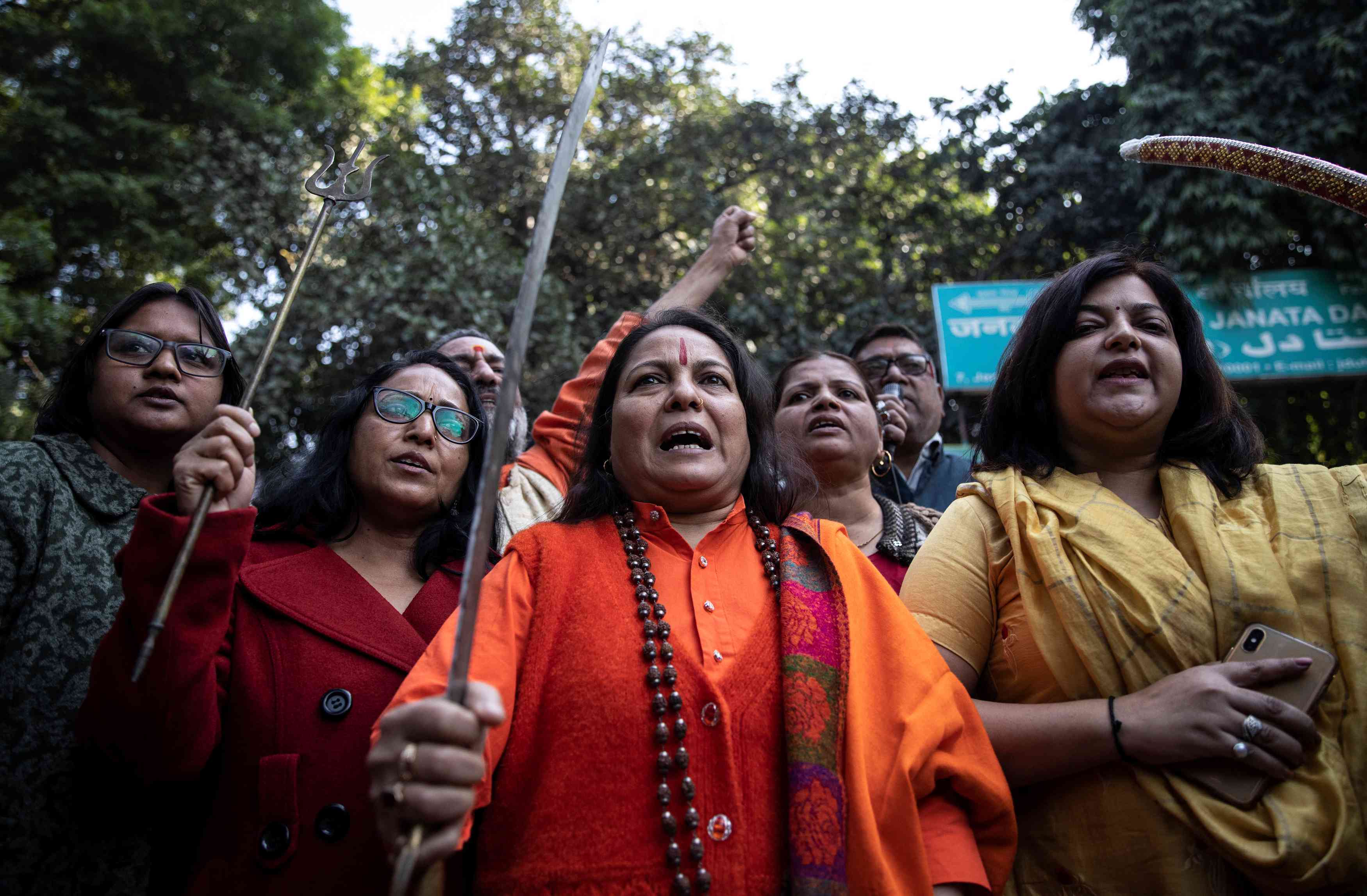
The four were accused of raping and murdering a 25-year-old healthcare professional in Hyderabad in November that year. There were protests in several cities demanding that the four suspects be shot, burnt or lynched. The demonstrators expressed fury against the failure of the police to have protected the victim.
On December 6, 2019, the media reported that the suspects had been killed after they allegedly attempted to attack the police at 3.30 am when they were taken to the scene to reconstruct the crime.
This is similar to the events in West Bengal on Wednesday. On July 8, the police shot dead one of the men arrested in the rape and murder case of an 11-year-old girl in Baruipur town in South 24 Parganas district. The police claim that the suspect, when taken back to the crime scene, tried to snatch a weapon and fire at them.
Unlike the call for justice for Jeyaraj and Bennicks, the public celebrated the killing of the four men in Hyderabad and garlanded the police officers handling the case. The extrajudicial killings were perceived as offerings made to the public to redeem the police for the security lapses.
In January 2022, the Justice VS Sirpurkar Commission established by the Supreme Court to investigate allegations that these were actually extra-judicial killings asserted that the claims about the suspects assaulting policemen were false. It recommended that the police officers be tried for murder.
But the Telangana High Court, in an interim order, suspended the findings of the report and instructed the state government to not take any coercive steps against the police officers until further notice.
Decoding the popular reaction
Public outrage often depends on the relationship perceived between the public and the victims of police brutality. In such circumstances, the state is only responding to the mood of the crowd rather than acting in a manner that actually questions its own use of violence.
The contradictory positions are obvious from the way in which both incidents were constructed in the public imagination.
Jeyaraj and Bennicks were held up to be “ordinary, law-abiding citizens” who were innocent and had not committed any crime. The public discussion emphasised the difference between Jeyaraj and Bennicks and other criminals that the police deal with ordinarily.
The violence of the police was also seen as disproportionate to the apparent violations of lockdown restrictions that the father and son were accused of.
Horrific information about the nature of police violence circulated: how the victims were beaten with batons, the blood stains on their clothes and the walls, their howling. This emphasised that the treatment meted out to Jeyaraj and Bennicks was more brutal than it had been to most other prisoners.
The projection of Jeyaraj and Bennicks as being law-abiding citizens and the imagery of their torture made it easy for ordinary people to identify with their plight.
But when the encounter killing of Shiva, Chennakeshavulu, Naveen and Arif was discussed, they were projected as belonging to a class of criminals whose encounters with police violence are understandable. The details that were circulated related to the charred remains of the young woman they had raped and murdered.
In fact, the mob outside the police station demanded the opportunity to treat the accused the way that the police later treated Jeyaraj and Bennicks. Sexual violence is deemed an exceptional violation of social civility, rendering Shiva, Naveen, Chennakeshavulu and Arif worthy of custodial killing.
Of course, public outrage is not bound to emerge in all cases of custodial death of victims who are perceived to be innocent or who have been brutally tortured or against all accused in sexual violence cases.
The Indian public’s immense tolerance for bodily harm being inflicted on detainees is obvious in the silence that has greeted the allegations of custodial torture of students detained in March, by the Delhi Police as part of an operation against Maoist networks.
Outbursts against police brutality are the short-term emotional reactions of a disorganised mass of people. They are not necessarily motivated by a stable political goal or organised political position. Instead, their anger may have been catalysed by social and economic conditions at that moment.
The public’s position in the cases in Sathankulam and Hyderabad was formed by the dominant social assumptions about criminality, who is thought to deserve punishment and when police violence is warranted. These assumptions are also the result of the varying acceptance thresholds that the public has for specific acts of illegality and the treatment it believes should follow.
The state and the ‘popular’
The state’s response to the anger about the custodial violence against Jeyaraj and Bennicks would seem to represent a victory for the democratic voice of the people. But the public outrage was not a principled position against custodial violence. It did not emerge out of an organised attempt to understand the phenomenon of custodial violence or the relationship between the police and the people. Neither did it demand any systematic interventions to halt this.
The public only expressed a sense of injustice against the deaths of Jeyaraj and Bennicks.
The state’s engagement with such outraged crowds is geared towards catering to the public’s unprincipled perception of justice – one that often the state holds too, one that the policemen involved in Hyderabad custodial murders believed they were dispensing.
The state’s response is meant to assure the public that such instances of power excesses are a deviation from an otherwise stable commitment to procedural integrity. But almost always, it does so without curtailing its own misuse of power. The state makes no commitment to limiting its heightened powers or examining its immunity against excesses.
This underscores the fact that popular outrage does not necessarily demand concrete accountability from the state. In fact, popular outrage often reinforces the state’s authority because it reaffirms the state’s ability to recognise and correct its unjust use of power. The state’s responses attempt to manage the anxieties of the public.
As a result, the politics of outrage creates a platform where the state’s authority over violence and an emotionally charged crowd reinforce each other.
Anup Surendranath is a Professor of Law at NALSAR, University of Law, Hyderabad, and Executive Director, The Square Circle Clinic.
Saniya Rizwan is an Associate (Research) at The Square Circle Clinic working on areas related to violence, law, surveillance, and popular politics.
