







Around this time last week, Honey Trehan’s Satluj was trending on Zee5 as the most-viewed film. Consigned to censorship purgatory since 2022, the political drama previously titled Punjab ’95 had quietly been released on the platform on the evening of Friday, July 3.
For 48 hours, a movie that the censor board had repeatedly refused to clear was available (if only to Zee5 subscribers) without any of the 127-odd cuts the authorities had demanded.
By Sunday evening, however, the listing for Satluj had been replaced with a blank slate. A film inspired by a human rights activist who had been abducted while trying to pierce the veil of darkness around extra-judicial killings and disappearances had itself disappeared.
Jaswant Singh Khalra was among the activists in Punjab in the 1990s who exposed police death squads accused of killing innocent Punjabis under the garb of curbing Khalistani terrorism.
The activists alleged that this strategy had the support of the police top brass and Punjab’s political rulers, with targets being set and promotions given to the participating policemen.
Eventually, a bunch of junior police officers were indicted for abducting and killing the real-life Khalra.
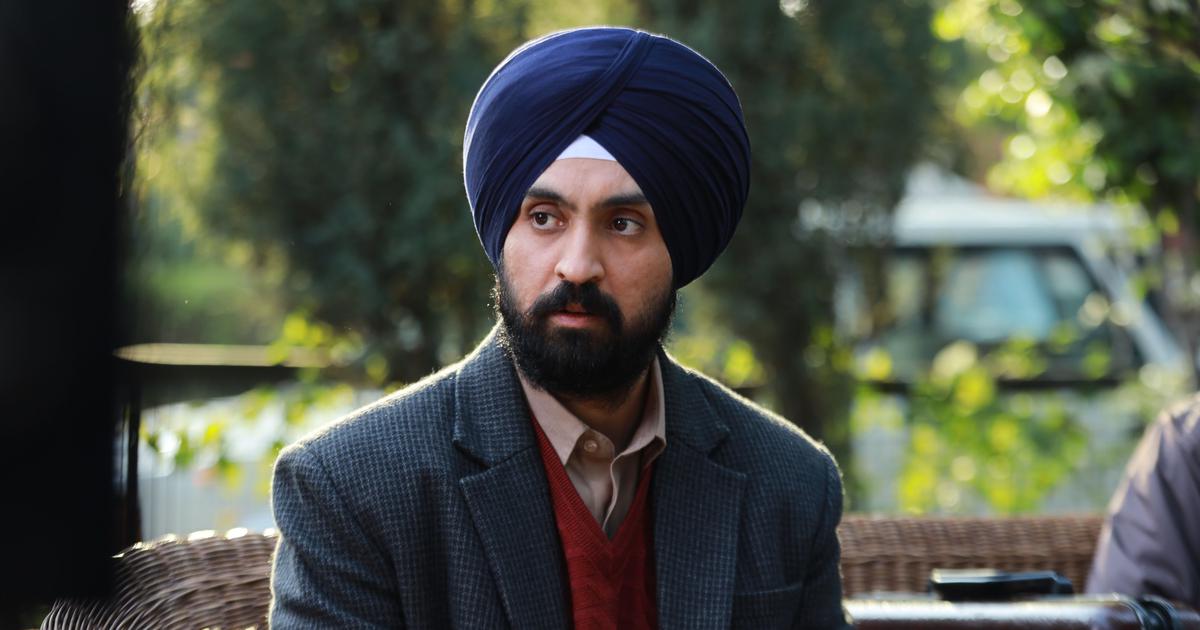
Satluj stars Diljit Dosanjh as Jaswant Singh, whose investigation leads him to a conspiracy orchestrated by senior police officers.
One of the central themes in Satluj – murkiness – is also obvious in the manner in which the authorities have treated the film. Till date, neither the censor board nor the Union Ministry of Information and Broadcasting has explained what makes Satluj so dangerous that it must be stamped out of existence.
Following the Zee5 controversy, there has been a rash of newspaper reports attributed to unidentified “sources”. On July 7, the Hindustan Times reported that the I&B ministry had formed a “high-level interdepartment committee” to closely study the film. A ministry official shared this development with the newspaper on condition of anonymity.
The film was taken down from the platform, the anonymous source said, using the provisions of Section 69A of the Information Technology Act. This allows the Union government to block or remove content that has the potential to disturb public order or challenge national security and the country’s sovereignty.
“Sources” also told The Times of India that Zee5 was instructed to pull down Satluj because of “security concerns”. An unnamed official told ANI that Satluj was pulled off since it had not completed the process of certification. “Instead of complying with the certification process, the makers changed the film’s title and released it on an OTT [streaming] platform on Friday,” the official grumbled.
The irony is hard to miss. Satluj cannot be viewed by the public until the censor board clears it. The censor board is in no hurry to permit the movie to be released in any form. The list of cuts that it has demanded is so lengthy (127 at last count), it is as good as banning the movie.
Some of these cuts border on the ludicrous: replacing Jaswant Singh’s name, not identifying the police as belonging to Punjab, removing the phrases “extra-judicial killings” and “human rights” and even excising such words as “Delhi”, “desh” and “Canada”.
The efforts to blank out Satluj extend beyond India’s shores. In 2023, Satluj, which was still being called Punjab ’95, was invited by the Toronto International Film Festival. That screening was cancelled, allegedly due to pressure from the Indian government, even though Indian films do not need censor certificates to be shown abroad.
If the film’s producers thought they could bypass the censors by landing on Zee5, they were mistaken – even though the censor board’s remit does not extend to films that are released directly on streaming platforms. While such releases are spared the humiliating process of seeking the censor board’s approval, they are not entirely free of censorship.
Streaming platforms follow a self-policing model. This means that they avoid picking up potentially controversial or politically loaded titles. This censorship by the market – motivated by a keen desire to evade government scrutiny – ensures that movies like Satluj don’t turn up even on streaming.
The statements attributed to the unnamed “sources” provide grounds for speculation. At the very least, it appears that Satluj is being punished for defying the censor board and the all-powerful I&B ministry.
Some “sources” have complained that Satluj does not adequately explore the role played by Khalistani militant groups, instead focusing on a few bad eggs in the police force. This argument entirely misses the point of what Satluj is trying to do.
The film is about the impunity that flows from unchecked power. When security agencies get drunk on their authority and behave in unconstitutional ways, they are no different from terrorists, the film shows.
Some of the issues raised by Satluj are bound to irk the current muscular government. In the film, Jaswant Singh travels to Canada to raise awareness about the human rights abuses in Punjab. When warned that he too could disappear, and advised to seek political asylum, he refuses.
But the grim narrative also inspires some hope. The movie shows politicians in Punjab and in Delhi reacting to, rather than ignoring, the clamour for answers.
The Central Bureau of Investigation probes Jaswant Singh’s disappearance. When the case reaches the courts, the judges act fairly. The state’s institutions kick in late, but they eventually do – and they act independently, free from political pressure.
In an interview with Scroll in 2025, director Honey Trehan had said, “I have made a film about a person who fought for a cause knowing that there was a threat to his life and family. If I cannot stand by him or a film that is based on his life, I have no right to make this film.”
When Satluj premiered on Zee5 on July 3, both Trehan and Dosanjh said they were sceptical about whether the film would actually stay on the platform. In separate interviews, Trehan and Dosanjh said that they “would not be surprised” if Satluj disappeared from Zee5.
Although Zee5 issued a statement asking viewers not to pirate Satluj, the film is now being illegally forwarded from mobile phone to mobile phone. There are also reports of public screenings of Satluj being organised in villages across Punjab by Sikh religious groups.
The relentless onslaught on Satluj attempted to disappear the film, but Satluj is on the lam, beyond the long arm of the censor board and ministry “sources”.
Also read: ‘Satluj’ review: A harrowing, heart-rending tale of impunity and courage
Here is a summary of last week’s top stories.
Baruipur rape-murder case. One of the persons accused in the alleged rape and murder of a minor in West Bengal’s Baruipur was killed in an alleged gunfight with the police. Prabhas Mondal attempted to snatch a weapon from the police and open fire at them when the crime scene was being reconstructed, claimed the district superintendent of police.
The police fired at Mondal “in retaliation”, the officer said, adding that he was declared dead at the hospital. Mondal was among the three persons arrested in the case. The body of the girl was recovered from a sack in a pond in the Surjyapur area.
Crackdown on Indian gangs. Indian police officer Gurinderjit Singh has been charged by the United States authorities for allegedly extorting $400,000 from a family in Los Angeles by threatening to file false murder cases against their relatives in India.
The US will seek the extradition of the officer from India, First Assistant US Attorney Bill Essayli said. Singh is reportedly a station house officer in Punjab, where an inquiry has been launched against him.
He is among 37 defendants charged for organised crimes in three indictments unsealed on Tuesday. The charges are part of an action against India-based transnational gangs.
Those charged include gangsters Lawrence Bishnoi and Goldy Brar for organised crimes and ordering the 2023 killing of Khalistani separatist leader Hardeep Singh Nijjar in Canada. Bishnoi is in a Gujarat jail awaiting trial in several cases. Brar is absconding.
The law enforcement agencies in the US, Canada and Europe arrested 24 persons allegedly linked to three India-based gangs, the authorities said. Seven defendants were already in custody and the agencies are looking for 10 fugitives.
Ayodhya embezzlement case. A Special Investigation Team set up by the Uttar Pradesh government to probe the alleged embezzlement of donations at Ayodhya’s Ram temple found 70 instances of counting staff hiding bundles of notes and loose cash in their clothes, pockets and shoes. The report submitted by the SIT, which Scroll has reviewed, pins blame for the dilution of the security protocol in the counting room on trustee Anil Mishra, whose resignation from the post was accepted on Monday.
The team examined security camera footage of the counting room from April 27 to June 5. Although the trust’s internal audits recommended the preservation of 180 days of footage, it “did not take these reports seriously, which led to the present problem”, said the report.
The SIT said that bank records of the accused and witness statements suggest that similar thefts were happening even earlier, but without camera footage.
Also on Scroll last week
- Why are so many trees falling in Mumbai?
- Education crisis in India puts spotlight on Cabinet ministers’ children studying abroad
- Naga-Kuki strife began with a drunken brawl. But five months later, Manipur fault lines run deeper
- What Mumbai’s rulers should realise about devastating rains: The exceptional is the new normal
- How the blind built a place of their own in Ranchi
- Bengal’s history of communal politics is fertile ground for BJP’s polarising agenda
- Road crashes, fires, death by suicide: Crime bureau data reflects India’s urban crisis
- How Japanese military officers freely scouted colonial India without raising British suspicion
- How indie film ‘The Ink-Stained Hand & The Missing Thumb’ explores ‘emotional time’
- ‘The Invite’ review: A couple runs out of ways to insult each other
Follow the Scroll channel on WhatsApp for a curated selection of the news that matters throughout the day, and a round-up of major developments in India and around the world every evening. What you won’t get: spam.
And, if you haven’t already, sign up for our Daily Brief newsletter.
