





Lakshadweep is India’s smallest Union Territory, an archipelago consisting of 36 islands – 10 of which are inhabited – with an area of 32 sq km. But most islands are two to five hours away on choppy seas, and one particular island, Minicoy, takes a 16-hour ship journey from the headquarters, Kavaratti.
It is in this archipelago that India found its first success on TB elimination. Lakshadweep was declared TB-free in March 2021, three years after a strategy document spelt out the task ahead of the administration.
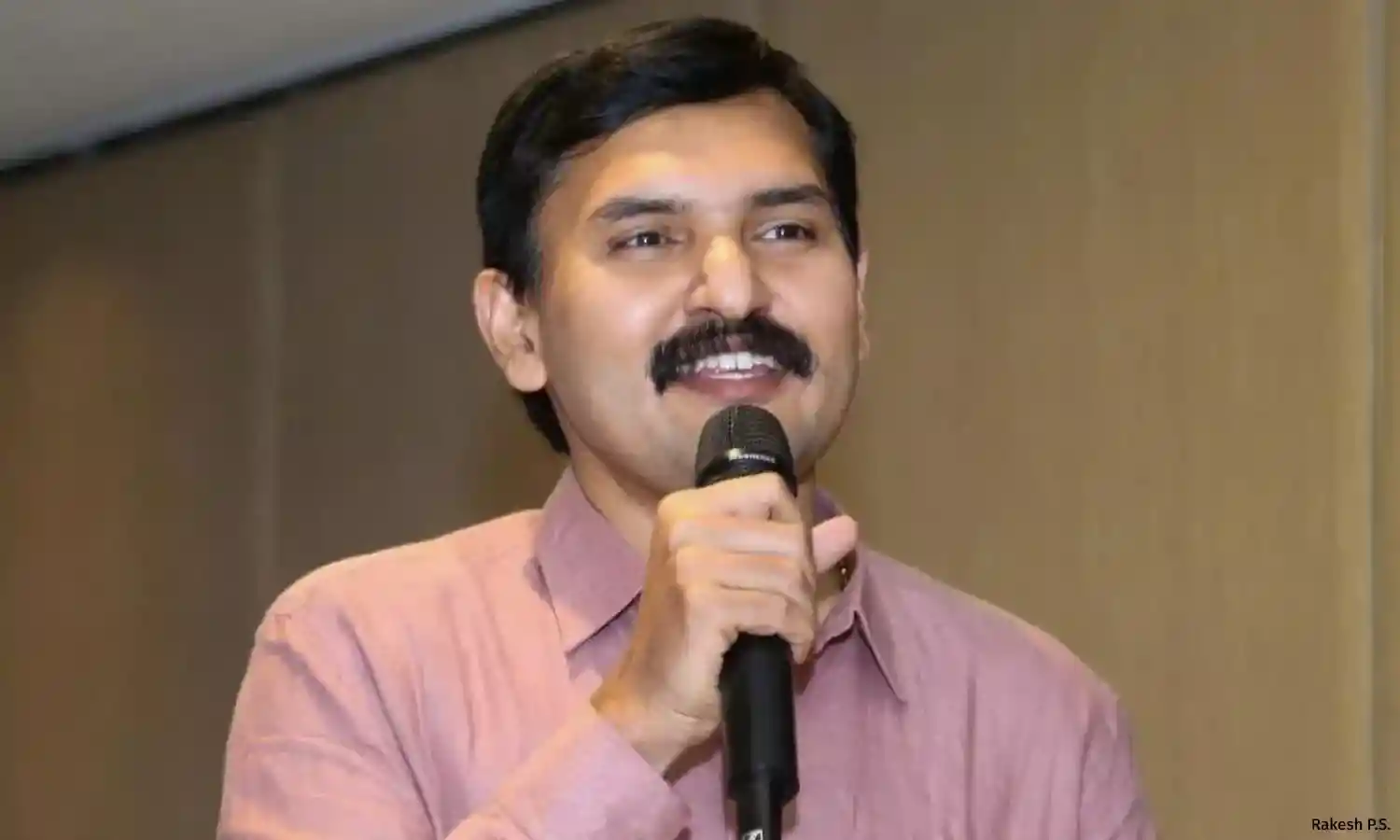
“The strategy was simple in the way many great public health ideas are simple,” says Rakesh PS, who worked as a World Health Organization consultant supporting India’s National TB Elimination Program in Lakshadweep and parts of Kerala. “But simplicity of an idea should never be confused with ease of execution.”
India recorded about 2.7 million cases of tuberculosis in 2025, as ISignal reported in March 2026. Based on population projections for that year, this translates to an incidence of about 185 cases per 100,000 population.
In an upcoming book, Echoes from the Atoll, Rakesh writes about the challenges and the lessons that Lakshadweep’s TB programme holds.
Rakesh is a public health physician, researcher, and health systems specialist, and has worked with the WHO and The International Union Against Tuberculosis and Lung Disease (The Union). A Bernard Lown Scholar in Cardiovascular Health at the Harvard TH Chan School of Public Health, Rakesh holds an MD in community medicine from Christian Medical College, Vellore, and a PhD in public health.
Edited excerpts:
You write about how ending TB depended on “remarkably simple things done consistently”. Elsewhere, you acknowledge that the “strategy looked deceptively simple”. Please explain the size of the task that you had ahead of you.
Lakshadweep had around 70,000 people living across 10 inhabited islands. In each annual round of active case-finding, our health workers and community teams reached and screened nearly three-quarters of the entire census population. But coverage alone was not enough. We had to also ensure continuity of care for every individual who entered the diagnostic and treatment pathway.
Perhaps the hardest part was maintaining the discipline and motivation to keep doing these same essential things, year after year. In public health, there is an understandable excitement around new interventions and new technologies. But elimination also demands the discipline to keep doing the less visible things that already work.
There was nothing glamorous about another round of house-to-house screening or ensuring that tomorrow’s sputum sample was tested promptly. But elimination was built on precisely that repetition.
Then there was the geography. A population that looks small on a spreadsheet becomes a very different operational challenge when a patient, a health worker or a sputum sample may need to cross the sea.
You write about a young woman carrying an intrauterine death, who had to wait four days before evacuation became possible; and a senior treatment supervisor who was stranded for 21 days. How did you and your teams navigate this punishing geography?
On my first visit itself, I realised something: the sea was in charge.
On the mainland, you plan a field visit by checking a calendar. In Lakshadweep, you checked the ship schedule, the weather and the sea, and even then, nothing was certain. Will the vessel sail? If you reach an island today, when can you return? For almost five months of the monsoon, rough seas severely disrupt inter-island movement.
So we could not run the TB programme as though Kavaratti were a district headquarters connected to ten blocks by road. That meant decentralising diagnostics, training local teams and keeping essential supplies available on the islands. It also meant giving local primary health care teams the confidence and space to act.
If surveillance and treatment had depended on a supervisor physically travelling from Kavaratti to every island, the programme would have struggled every monsoon. Fortunately, every inhabited island already had a health facility and local health workers. The principle was simple: whatever could safely and effectively be done on the island should be done on the island.
Screening happened in households. Sputum could be collected locally. Molecular diagnostics were progressively decentralised, allowing an increasing proportion of samples to be tested closer to where people lived and results to become available quickly rather than waiting for the sea to cooperate.
Treatment followed the same principle. A person with TB had a local treatment supporter. Follow-up included clinical assessment, monitoring for adverse reactions and bacteriological evaluation when required. The national programme’s surveillance and reporting systems provided the larger framework, while day-to-day continuity depended on the health teams and frontline workers close to the patient.
I want to dwell on this distance a little further. For instance, we reported in December 2024 about how people living in forest villages in Latehar needed a four-hour trek followed by an ambulance ride to reach a medical centre. Given your experience in Lakshadweep, what are the lessons it holds for reaching remote areas elsewhere in the country?
I would be cautious about saying that what worked in Lakshadweep can simply be copied in a forest village in Latehar. The geographies and communities are very different.
We often call communities “hard to reach”. I sometimes wonder whether we have the language backwards. Perhaps it is the health system that is hard to reach. Similarly, in public health, we spend a lot of time discussing “health-seeking behaviour”. But in remote and underserved geographies, perhaps we should equally ask about the health system’s people-seeking behaviour. How hard did the system try to reach the person?
Lakshadweep taught me to keep asking one question: What is the maximum amount of care that can safely be moved closer to the person? Decentralisation does not mean lowering standards. A molecular test on a remote island should be as reliable as one in a tertiary hospital.
We also need to be careful about applying uniform population norms to profoundly unequal geographies. If geography changes the effort required to reach a person, health-system planning must recognise that. Otherwise, uniformity can unintentionally reproduce inequity.
You speak about your experience scuba diving and say, “To an outsider peering through a diving mask, the underwater world looked impossibly peaceful. Or perhaps I was not sensitive enough to understand their conflicts, fears, and insecurities.” This almost serves as a metaphor for the distance you describe between officials on the mainland and implementation teams on islands. How do you think that gap can be bridged?
I think the first step is humility, the willingness to accept that what you see, as an outsider, may not be the whole truth.
Lakshadweep looks impossibly peaceful from a distance: turquoise lagoons, coconut trees, small populations and high literacy. But, like the reef I saw through my diving mask, there are layers beneath the surface: relationships, histories, fears, rivalries and ways of negotiating change that an outsider may not immediately understand.
During my years working in Lakshadweep, I visited the islands 13 times and made a conscious effort to set foot on every inhabited island. I travelled on ships, speed vessels and fishing boats, sat with health workers, listened to local leaders and spent time with people outside formal meetings. Each visit made me realise how much I had missed on the previous one.
Slowly, I realised that Andrott was not Kavaratti, Kavaratti was not Minicoy, and a strategy that worked on one island could fail on another. That repeated field presence helped us adapt the implementation of national guidelines to the realities of individual islands.
That was also what I learnt underwater. What appears simple from a distance may be a complex living system beneath the surface.
I have worked with national programmes for much of my career, and I have seen the enormous value of that architecture. The question is how to build a stronger learning loop: national guidance informing implementation, and implementation experience continuously informing programme design.
The first step is to recognise that, in a country as diverse as India, edge cases should not sit outside the design conversation. They are valuable stress tests of programme design. One way is to bring frontline implementers into programme design much earlier.
Your book talks about the absurdities of red tape, where to issue a single pill, senior treatment supervisor Rouf had to log in and out using different administrative identities – state, district, sub-district, and health facility – even though all four levels were effectively just him. How can these oddities be addressed?
Rouf’s story is funny when you read it, but it also illustrates a genuine challenge in designing national health programmes for a country as diverse as India. The software was built around the usual administrative hierarchy. In most places, these are separate levels, with different people performing different functions. The problem was that the design had encountered a context it had not anticipated.
National digital platforms have brought enormous value to TB programmes by improving case-based visibility, accountability and continuity of information. National programmes need common definitions and comparable data. The design challenge is to preserve those gains while making workflows increasingly responsive to India's diverse operational settings.
One way to do that is to design systems much more closely with the people who actually use them. One of the most useful design exercises is simply to sit beside a treatment supervisor, an accredited social health activist [ASHA] or a laboratory technician and watch the workflow for a day.
We should periodically ask, what purpose is this step serving? If it protects quality, accountability or patient safety, preserve it. But if a workflow has become unnecessarily repetitive in a particular operational setting, technology should help us simplify it while retaining the necessary safeguards. Technology already allows configurable workflows and role-based access, with permissions and audit trails.
More fundamentally, health workers’ time is also a health-system resource. Every avoidable administrative step consumes time that could have been spent with a patient or in the community.
“Women here often made major health decisions themselves, something I rarely encountered in many mainland settings,” you wrote. Could you elaborate on this?
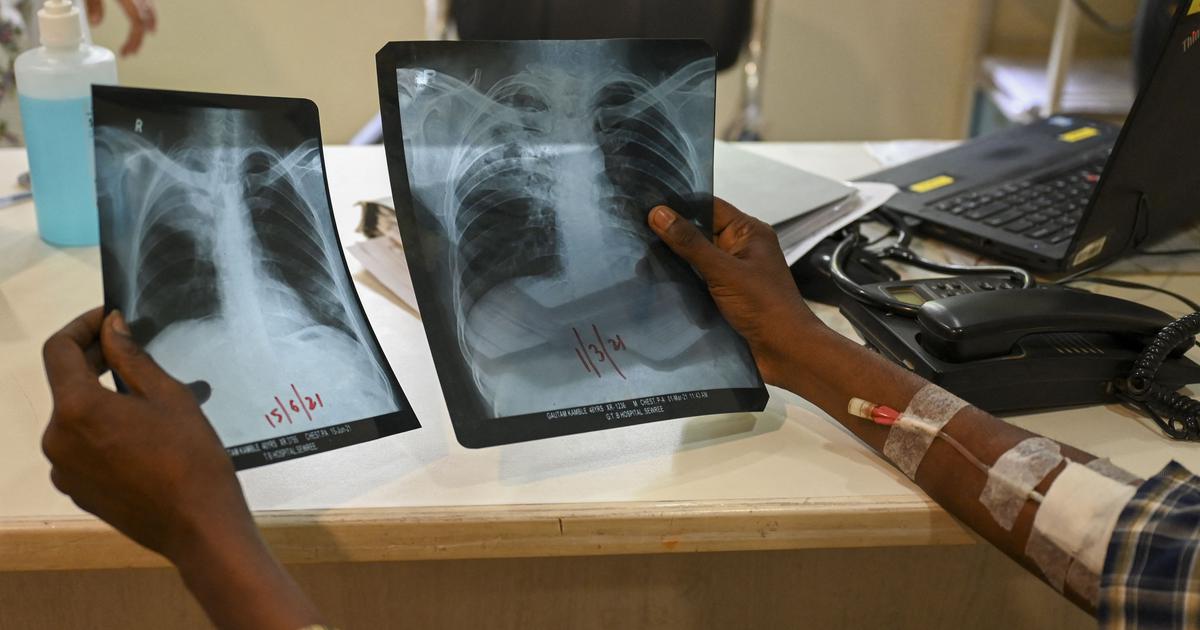
It was something I noticed repeatedly in the field. If an ASHA visited a household and suggested that a woman undergo an X-ray or a TB test, she could often make that decision herself. That small space between being offered a health service and being able to say, “Yes, I will do it,” is enormously important in public health.
National data also show substantial improvements in women’s participation in household decision-making over time, so I do not want to paint a static or simplistic picture of the mainland. But the ease with which many women in Lakshadweep appeared to make everyday health decisions for themselves struck me.
Part of this may be rooted in the islands’ matrilineal history. Traditionally, men were often away at sea as sailors, fishermen or traders, and women became the stable centre of family life – managing homes, land, finances and family responsibilities. Elements of that social position remain visible even today.
Lakshadweep’s broader health achievements also made me think about this more deeply. Despite its remoteness, institutional deliveries were nearly universal, infant mortality was in single digits and childhood immunisation coverage was very high. Infrastructure, public services and a functioning health system are obviously central to those achievements.
I would not attribute them to women’s autonomy alone. But I do think agency is one part of the environment in which people are able to use the services available to them.
It also shaped the way our TB programme worked. Women were part of the social infrastructure through which it reached households.
Your book describes how Lakshadweep is a closely connected society, where health workers such as ASHAs were already trusted figures. How can this trust be built in areas with different social, cultural and economic circumstances?
I think there is something remarkably powerful in the original design of India's ASHA programme that we sometimes underestimate. We sometimes forget that the “A” in ASHA stands for activist. She comes from the community, lives within it and serves as a bridge between people and the health system.
Of course, social realities such as caste, religion and local divisions can influence these relationships. But across the settings where I have worked, my broad experience is that communities value their ASHAs, particularly when they are visible, accessible and consistently helpful.
Trust cannot be built by communication campaigns alone. It grows when someone belongs to the community, spends time there, is useful and repeatedly demonstrates that she is there for people.
You mention the unique administrative set-up of Lakshadweep where “its entire voice in New Delhi rests on the shoulders of a single elected representative”. How did that help or hurt your efforts?
In our case, the smallness of the system largely helped. I remember the release of our TB elimination strategy very clearly. The entire administrative and elected leadership of the islands was there. That leadership gave the health team the mandate and space to think beyond routine programme delivery and mobilise a wider system around the goal.
Over the years, I also had opportunities to interact with successive Members of Parliament from Lakshadweep. Conversations did not always require appointments or formal offices. We met at airports, on roadsides and near beaches, and a chance encounter could turn into a long discussion about the islands or public health.
You narrate how you brought together panchayat leaders, government officials, youth club members, women’s groups and religious leaders into a single network for achieving TB-free status. You also speak about how this structure has been sidelined over the past few years. How do you think that changes things for the islands in terms of healthcare planning and delivery?
We need to broaden the way we think about expertise. A programme expert may know the guideline in depth. An ASHA may know which house will not open its door. A boat operator knows when the sea will make a carefully prepared plan meaningless. A religious leader may understand a community's hesitation long before it appears in programme data. Good implementation needs all of these forms of knowledge to speak to each other.
For us, the panchayats were active partners in public health delivery. And that partnership created important local ownership. When someone refused evaluation, or a person with TB became tired of treatment and wanted to stop, local representatives sometimes visited the family, sat with them and helped us understand and address their concerns. Their presence often changed the nature of the conversation.
That has direct consequences for coverage, equity and inclusion. A health programme can report that it screened 80% of a population and call it a success. But local leaders often know who is hidden inside the remaining 20%. Is it an elderly person who cannot reach the facility? A family that is hesitant? Someone who fears stigma? Or a group that our routine approach repeatedly fails to reach?
Whenever such structures have a reduced role, the public health question I would ask is: how will those functions now be performed? How will we create the same sense of ownership and acceptance? How will we retain the ability to reach beyond average coverage and understand those who are still being missed?
In a geography where the sea already creates physical distance, we should be careful not to create avoidable distance between healthcare planning and the people it is intended to serve.
Karthik Madhavapeddi is Managing Editor, ISignal.
This article was first published on ISignal (formerly IndiaSpend), which utilises open data to inform public understanding on a range of issues, with the aim of fostering better governance, more transparency and accountability.
