





A week is a long time in politics. This week, the aphorism has come alive in India.
It began with Delhi Police swooping down on Jantar Mantar on Saturday morning to ferret away activist Sonam Wangchuk. He was on the 20th day of his hunger strike in support of the Cockroach Janta Party’s demand for the resignation of education minister Dharmendra Pradhan for a series of exam paper leaks.
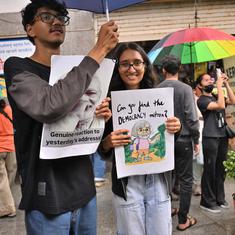
His abduction incensed those already sympathetic to the protest. A crowd of hundreds swelled up to thousands as young people living far away from Delhi took buses and trains to show up for a protest march to Parliament on Monday.
For the first time since Narendra Modi became prime minister, protesters reached the doorstep of Parliament. The police used lathis, teargas, even pellet guns. But instead of instilling fear, the crackdown further loosened its hold.
Since then, Central Delhi has turned into a carnival of protest. The government has closed down metro stations and shut down the internet. But it has not been able to stop the human tide in the heart of the national capital.
The Opposition, recognising that the protest has grown bigger than the Cockroach Janta Party, has found ways to support it and regain political space on its back.
Protests are now spreading to other parts of the country – in Mumbai, celebrities are abandoning caution to speak up for the youth; in Bihar, protesting youth are facing gunfire.
With the crisis snowballing, on Thursday evening, the government fell back on its old playbook. It moved out the education secretary. It sent ministers to stand by Wangchuk’s bedside as he ended his hunger strike. The assurance it gave him in writing is one that no genuinely democratic government would make – that police cases will not be registered “against those protesting peacefully”.
Around midnight, Modi broke his silence – not through a televised address to the nation, but by recording a selfie video for Instagram. It was a brave attempt to speak to the young. But it failed. The prime minister looked like a deer caught in the headlights. Besides, his message was stale: a new law to ensure strict punishment for those responsible for paper leaks, a promise he has made many times in the past.
The next day, Instagram filled up with young people taking potshots at Modi. The comments were not kind.
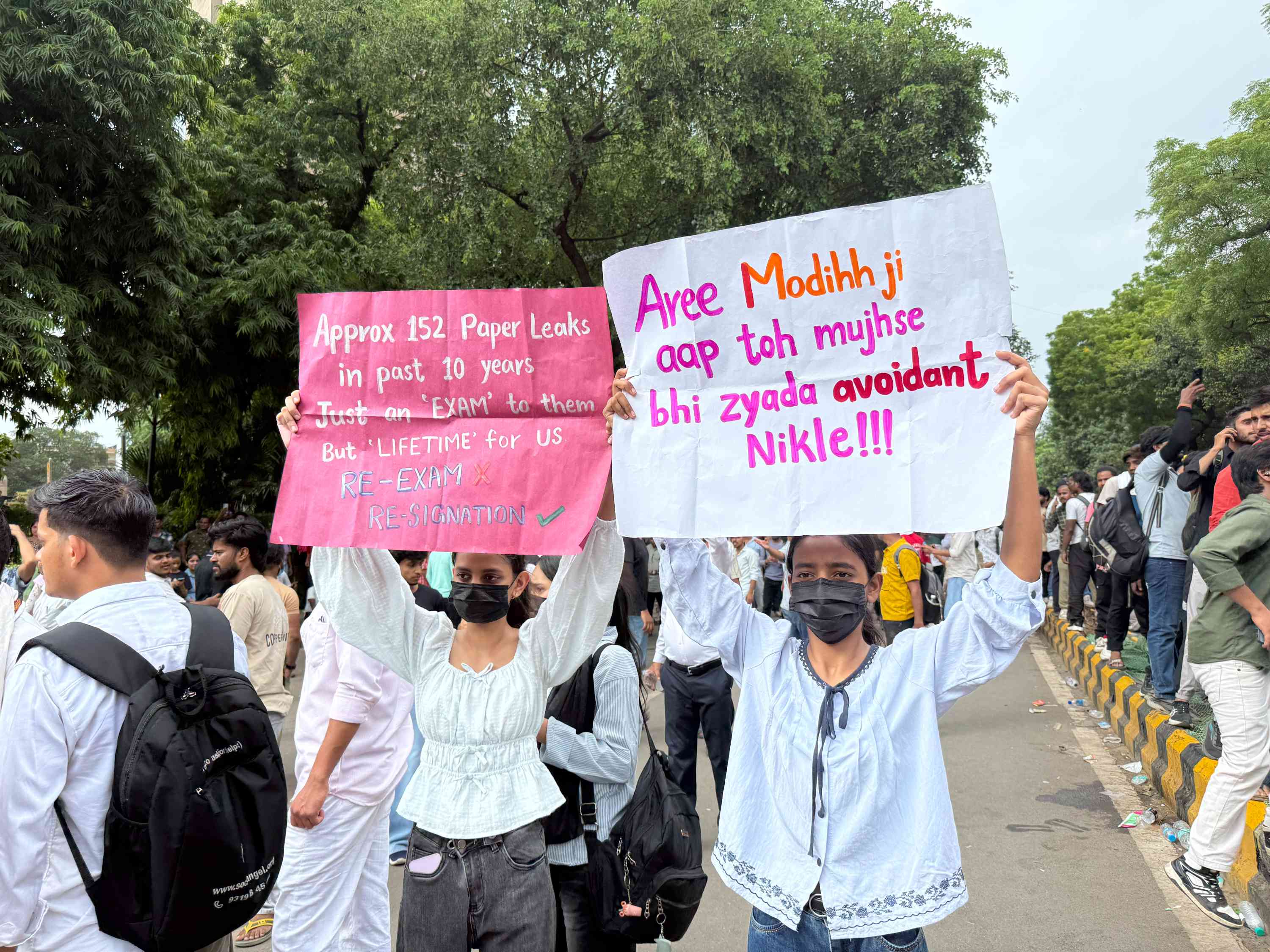
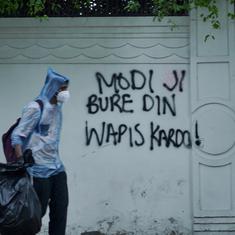
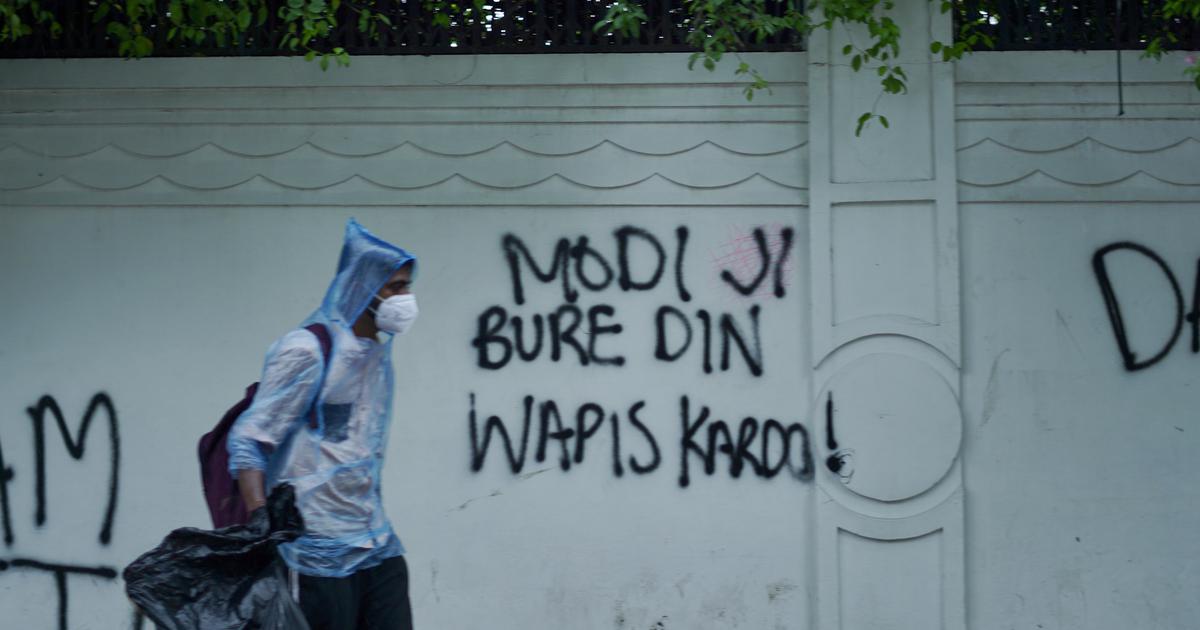
At the protest site and on social media, the young have been openly lampooning, even piling profanities on the only prime minister they have known. In a popular meme, GenZ users are responding to the question “Where were you when Congress was in power?” by posting their baby photos.
Neither the government’s use of surveillance technologies, nor the veiled threats from universities has dampened youth fervour. If anything, they are using the opportunity to show off their Spider-Man masks. Drawn from all classes and castes – overwhelming Hindu, the Bharatiya Janata Party’s core constituency – the protesters can neither be demonised nor crushed through brute force.
Modi, like all authoritarian leaders, rules by projecting strength. But the consummate politician that he is, he knows power must be preserved at all costs, even at the cost of his image. In the past, finding himself in a corner, he has blinked. When the farmer protests of 2020-’21 proved unshakeable, he rolled back the contentious farm laws.
As he runs out of options in the face of a youth juggernaut, Modi might cut his losses and ask Pradhan to step down.
The question is: will that douse the fire?
Perhaps the youth protestors, feeling victorious, will go home. But Modi’s profound disconnect with the youth, once exposed, cannot be covered up.
The genie is out of the bottle. The omerta no longer holds. The youth have made public what adults only said behind closed doors.
As anyone who has been to Jantar Mantar knows, conversations that begin with anger over “paper leaks” quickly move to frustrations about an education system that extracts heavy costs and delivers little. This further leads to discussions about inflation, unemployment, hopelessness, and strikingly, to the arrogance of a dictatorial regime.
“The government must go,” said an autorickshaw driver as we navigated our way through the clogged roads of Central Delhi on Thursday. In his early thirties, from a village in western Uttar Pradesh, he had not been to the protest. But like most working-class migrants in the city, he was sympathetic to it – it was, after all, about “bachchon ka bhavishya”, the future of children. Educating his children, aged 11 and 5, was a struggle, he said. “Just their textbooks have cost me Rs 15,000,” he complained.
In both 2019 and 2024, the two general elections in which he had participated, he said he had voted for the BJP. The party had fielded a strongman from his middle-caste group, a turncoat from the Samajwadi Party who was rewarded by being made a minister in the Modi government.
“Even otherwise, my father is a hard-core BJP supporter,” he explained. “But just as we removed the Congress from power, we now need to remove them.”
I reminded him that Lok Sabha elections were three years away. He smiled as he looked up and made eye contact through the rear-view mirror: “There is an election in UP next year.”
Injecting pragmatism into the conversation, he quickly added: “People in UP vote on caste and community lines. But what stops the Opposition from fielding the right candidate? The moment is ripe.”
