





August 5, 2026, shall mark the seventh anniversary of the abrogation of Article 370 of the Indian Constitution and the downgrading of Jammu and Kashmir to Union territory status. In anticipation of the anniversary, the ruling party in J&K, the National Conference, organised a protest in New Delhi on July 20 to press for the restoration of statehood.
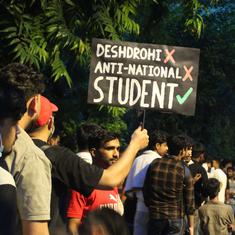
The National Conference’s initiative was not supported by the Peoples Democratic Party (which is influential in the Valley), and got only lukewarm support from other members of the INDIA bloc. Besides, it was ill-timed, since July 20 was the day of the students’ march on Parliament organised by the Cockroach Janta Party.
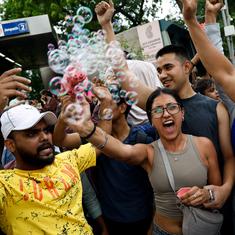
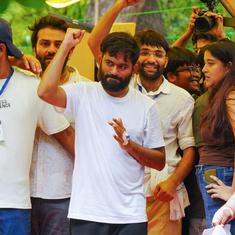
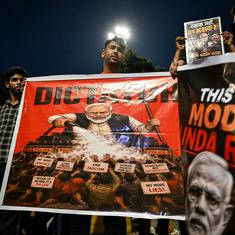
The news cycle was therefore dominated by the massive numbers that showed up for the Cockroach Janta Party march, and its savage suppression by the Delhi Police.
Contrary to the hopes of the National Conference, its protest of July 20 did not bring the issue of statehood for Jammu and Kashmir back into the public conversation. Nonetheless, it remains a vital and unresolved question. A full seven years after the abrogation of Article 370, Jammu and Kashmir remains a mere Union territory, to the shock and dismay not just of those who live there but of democratically-minded Indians everywhere.
In April 2024, the independent website, Kashmir Times, published a timeline of promises made to restore statehood by the Union government which had remained unfulfilled. In October 2019, a mere two months after the abrupt downgrading of Jammu and Kashmir to Union territory status, the home minister, Amit Shah, told a group of police officers that statehood would be restored once “normalcy” returned.
In December of the same year, Ram Madhav, then the national general-secretary of the ruling Bharatiya Janata Party, said statehood would be restored “soon”.
“We have come here to demand our rights, but we are not allowed to protest peacefully.
— News Arena India (@NewsArenaIndia) July 20, 2026
Democracy is being strangled.”
- J&K CM Omar Abdullah at Jantar Mantar protest to demand statehood pic.twitter.com/vySUEFD4Tz
A year and a bit later, in February 2021, the home minister claimed that the Union government would “grant full statehood to Jammu and Kashmir at an appropriate juncture”. Then, in October 2021, while visiting Jammu and Kashmir, the home minister said statehood would be restored after the assembly elections were held.
Next, in January 2022, the home minister was quoted as saying: “Delimitation has commenced, and elections will follow soon. I have assured the Lok Sabha that once normalcy returns to Jammu and Kashmir, statehood will be reinstated.”
A year and a month later, the home minister once more affirmed (this time in an interview to a pro-government television channel) that “I had clearly said that statehood in J&K would be restored after elections are held in J&K.”
In 2022, the delimitation of constituencies in Jammu and Kashmir was carried out, with six assembly seats being added to the Jammu region, and only one to the Kashmir Valley. Elections were scheduled for September 2024; campaigning in Udhampur-Doda in April, Prime Minister Narendra Modi said that the Union government would restore statehood after the polls.
Evidently, Modi and Shah hoped that the gerrymandering of seats and the splitting of votes among the Valley-based parties would lead to a fractured verdict, allowing the BJP to capture power through its tested methods of threats, intimidation, blandishments and seductions. In the event, these machinations could not prevent the INDIA bloc from getting an overall majority in the assembly elections, winning 49 seats out of 90 all told, with the National Conference alone winning 42.
Omar Abdullah was sworn in as chief minister.
The Kashmir Times timeline of failed promises of statehood (appropriately titled “The Promised La La Land”) brings the story up to April 2024, with Modi’s speech in Udhampur-Doda. Then came the assembly elections, and the squashing of the hopes of the ruling party to have a Bharatiya Janata Party-dominated government elected in Jammu and Kashmir. Even so, in March 2025, Amit Shah said at a meeting in Delhi that statehood would be restored, and made the same claim again in October of that year, saying this would be done at an “appropriate time”.
What started in Kashmir is now reaching every corner of India. Peaceful protests silenced with lathis. Constitutional promises broken. Institutions weakened.
— J&K PDP (@jkpdp) July 25, 2026
Today, minority rights are under threat. Tomorrow , no citizen’s voice or vote will matter. The unity seen at Jantar… pic.twitter.com/2FZmL7WzOu
Studying the language used in the making of these unhonoured promises, one is struck by the deliberate vagueness and equivocation, as witness the terms, “normalcy”, “soon”, “appropriate juncture” and “appropriate time”? How is one to judge when any or all of these moments have finally arrived? These phrases are intended to push the can down the road, to further delay granting Jammu and Kashmir the full statehood that is its due.
In all that its has done (and not done) in Jammu and Kashmir since August 2019, the Modi-Shah regime has displayed its arrogant contempt for the democratic rights of the people of the region. The most recent manifestation of this contempt is the arrest of as many as 2,500 people in the Valley in the wake of the killing, in a terrorist attack, of a police constable in Anantnag earlier this month. In which court of law, by which interpretation of the Constitution, could so many Indian citizens be suspected of the murder of a single individual?
Meanwhile, as the prime minister and the home minister disregard the democratic rights of the people of Jammu and Kashmir, the wider Hindutva ecosystem continues to demonise the people of the region and of the Kashmir Valley especially. Consider the recently released trailer of a film called Chauhaan, which mocks and diminishes the violence suffered by ordinary Kashmiris at the hands of the police and the security forces over the years.
The trailer has sparked outrage in the Valley, for apparently suggesting that, if Kashmiris were to ask afresh for their democratic rights they should be subjected to even more brutal violence by the state.
The voter turn-out in the assembly elections of 2024 was a record 64%, signalling a deep commitment of the people of Jammu and Kashmir to the idea of multi-party democracy. It is now a little less than two years since the National Conference came to power, yet the Union government, in a mockery of the democratic process, has still refused to restore statehood.
Earlier this month, Jammu and Kashmir’s deputy chief minister, Surinder Choudhary, spoke of how in the absence of statehood, the elected government had few powers. A report in The Print quoted him as saying: “We want to deliver for the people. There is unemployment in every household, yet we cannot even appoint a single daily wager.”
Between 1950 and 2019, Jammu and Kashmir was a full-fledged state of the Union of India. In that time, as many as nine other Himalayan territories within India found themselves upgraded to a statehood that was hitherto deemed unfeasible. They are Arunachal Pradesh, Nagaland, Mizoram, Meghalaya, Sikkim, Tripura, Manipur, Himachal Pradesh and Uttarakhand.
Notably, all these states have fewer inhabitants than Jammu and Kashmir, indeed in most cases far fewer inhabitants. How then is it that all these territories can qualify as states, whose elected governments have real powers, but not Jammu and Kashmir, where since August 2019 an unelected lieutenant-governor rules as a de facto Viceroy sent by the Imperial Government in New Delhi?
I think that the answer is not hard to seek. It is that none of those other states has a majority Muslim population. And the ideology of Hindutva to which the prime minister and home minister subscribe tends to view Muslims as subjects and supplicants, not as full-fledged citizens of the Republic.
The continuing, unconscionable, denial of statehood to Jammu and Kashmir is consistent with the pernicious majoritarianism that is rending asunder the Indian Republic.
This article first appeared in The Telegraph.
Ramachandra Guha’s latest book, Speaking with Nature: The Origins of Indian Environmentalism, is now in stores. His email address is ramachandraguha@yahoo.in.
