

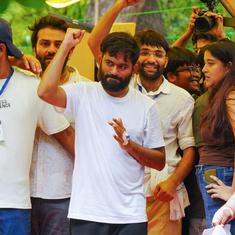
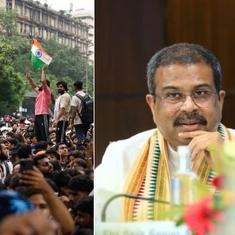

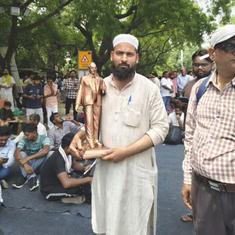


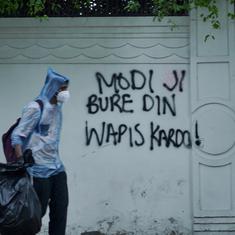
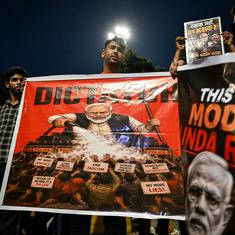
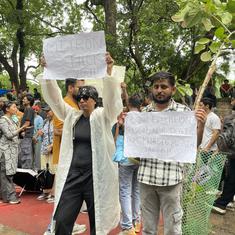
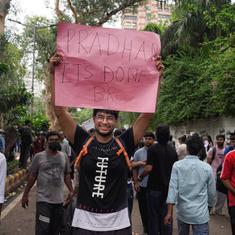
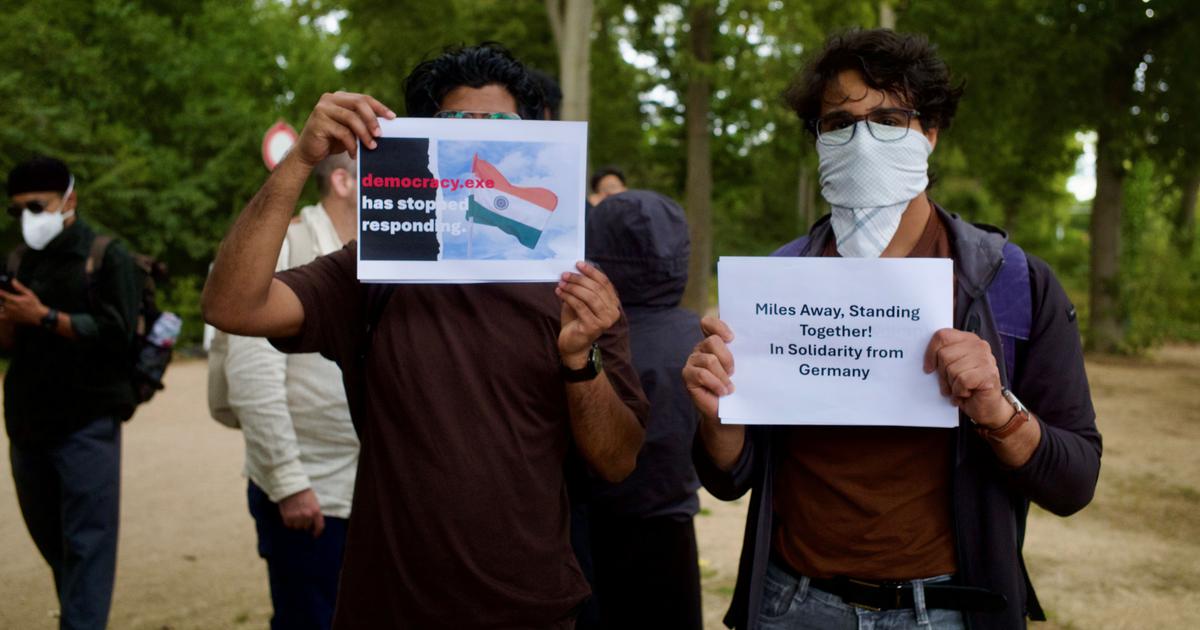
On July 19, a small group of Indian students in Berlin held a demonstration at the iconic Brandenburg Gate to protest against the mismanagement of the NEET-UG examination for seats in medical colleges in their home country.
Since then, protests have been held in other German cities such as Stuttgart and Frankfurt.
The students say their agitation against the leak of the test paper is also an attempt to draw attention to the rising authoritarianism in their home country.
“We are fighting the regime,” said Avni G, a protester in Berlin. “We are peaceful protesters. But we want to raise bigger questions – from paper leak to the atrocities of the government, their fascist agenda.”
This week, there have been at least four demonstrations in Berlin at tourist-friendly public landmarks such as Alexanderplatz. The protestors say that they aim to ensure that they are visible to passers-by even as they are careful not to disrupt life but to ensure.
On July 21, demonstrators also gathered in front of the Indian Embassy in Berlin standing in solidarity with the students in India. They read out poetry and held up placards. “Educate, Agitate, Organise”, said one, echoing BR Ambedkar’s advice. Another said, “Hum Dekhenge”, the title of the stirring poem by Faiz Ahmed Faiz about fighting oppression.
There are around 60,000 Indian students in Germany, of whom approximately 6,000 are in universities in Berlin. In addition, the city is home to an estimated 20,000 Indian skilled migrants who hold European Union Blue Cards. Indians are Germany’s seventh-largest immigrant community.
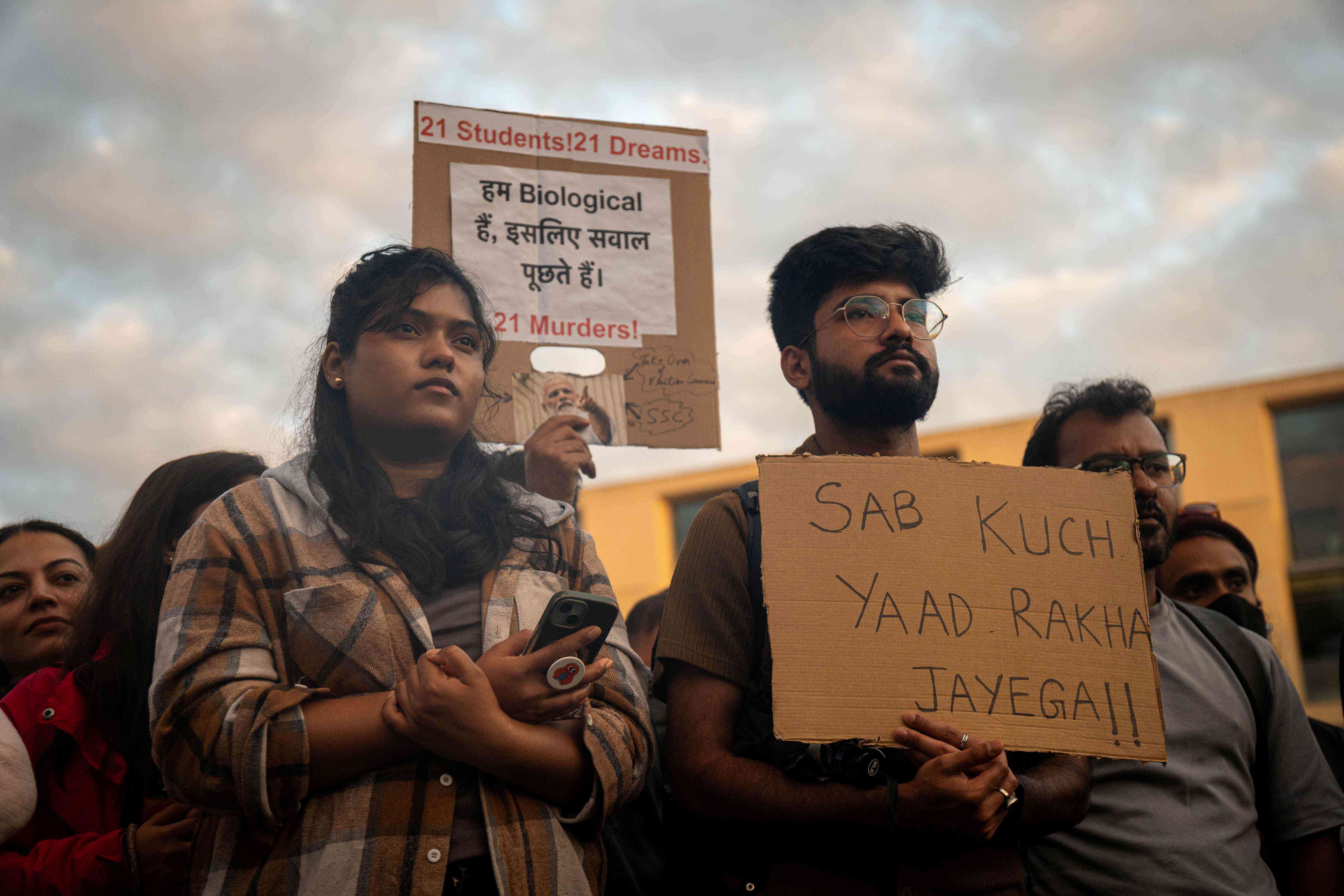
In addition to being expressions of solidarity with the youth protests in India, the Berlin protests reveal how a domestic student movement has acquired a transnational dimension, mobilising a diaspora whose migration trajectories are themselves shaped by India’s changing political economy.
Many who arrive in Germany on study visas from India are not 18-year-olds pursuing credentials as an end in itself. They are people in their late twenties or even late thirties.
In Stories of the Indian Immigrant Communities in Germany: Why Move?, one of the authors of this article describes the pattern of emigration from India specifically since the pandemic as the “shadow migration pathways”: for many Indian students in Germany, higher education is not only a route to global mobility but also an escape from shrinking employment opportunities at home, political disillusionment, the lack of safety for women and queer individuals, caste-based discrimination and an increasingly majoritarian state.
For instance, fieldwork conducted by one of the authors of this article in India and Germany between 2021 and 2023 showed an increasing exit sentiment among the women and queer people in India to move abroad for what they term as “mobility, survival, freedom”. Caste-based discrimination, according to researcher Gajendra Ayyathurai, remains a significant reason for emigration from India.
But often, exit does not resolve the precarity these students tried escaping. Many land in Germany’s gig economy, as DeutscheWelle reported, delivering food on contracts that compound rather than relieve the vulnerabilities that sent them abroad in the first place.
This is why the youth protests in India resonated so specifically with students in Germany. It is not simply that paper leaks are unjust. They are a symptom of a broken system characterised by unaffordable privatised higher education, unemployment and job instability.
The demonstrations in Berlin and the protests inside India were not discrete phenomena: they represent the disenchantment of youth who believe that the 12-year-old Modi regime has failed them.
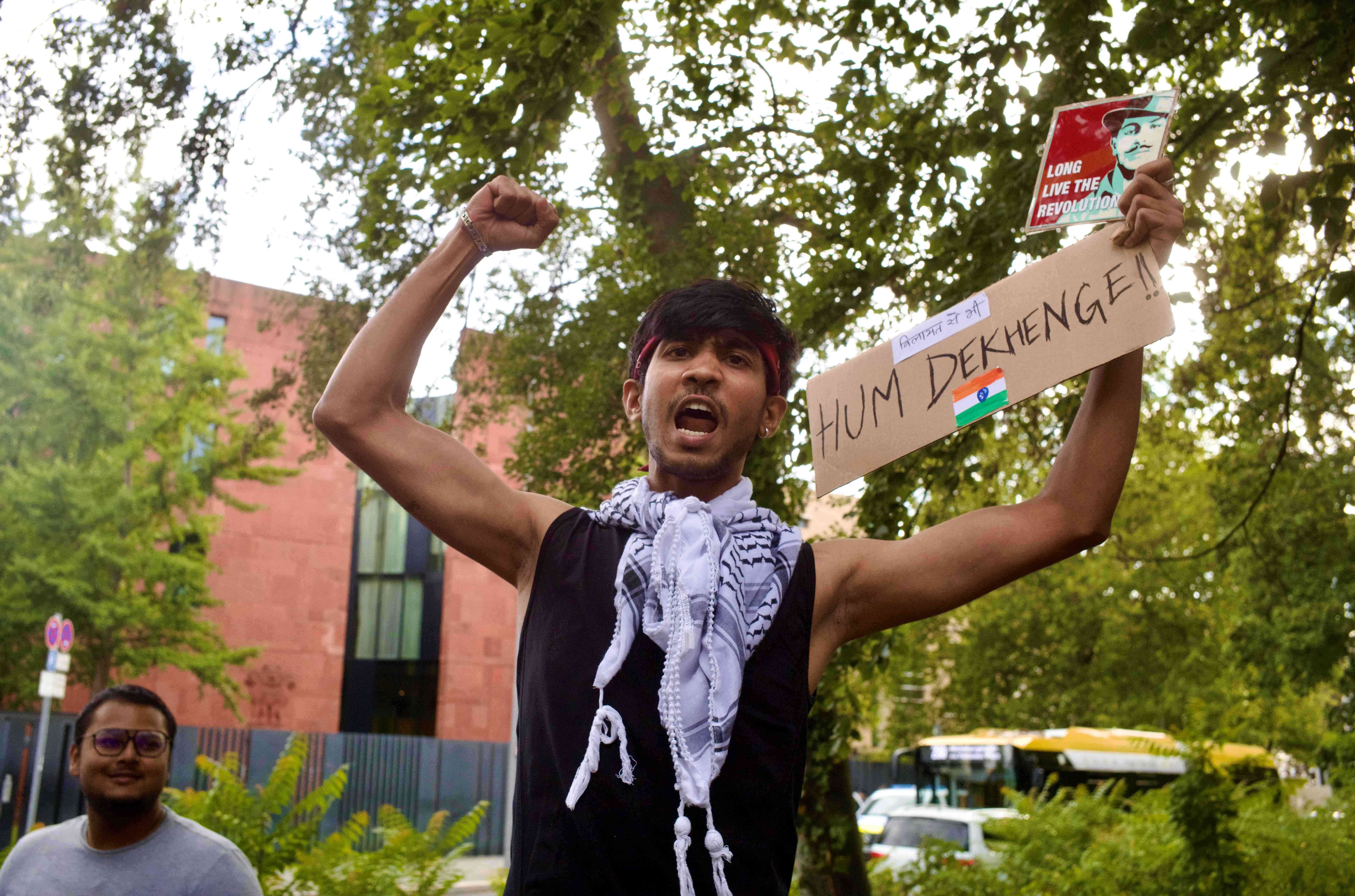
There is a second dimension to the protests in Germany that is worth noting. As documented in a book by one of the authors of this article, Understanding Propaganda: A Study of Media in Contemporary India, there are several social-media groups among the Indian diaspora in Germany – some run by Hindutva networks that routinely troll and discredit protest movements both in India and its diaspora echo, while others are organised by the students such as the ones who are driving the current protests in Germany.
Many of these student-led networks have been organised specifically to counter the claims of diasporic Hindutva supporters that they alone represent the opinion of Indians abroad.
What started as anger over one leaked exam has grown into something much bigger: a call for real change in how India is run. This debate is not just unfolding on the streets. Indian students online are also pushing back against Hindu nationalist groups that have long dominated diaspora social media, telling a different story about what Indians abroad actually think.
In both spaces, on the streets and online, students are refusing to stay quiet any longer.
Amrita Datta is a Berlin-based migration scholar.
Arani Basu is a media sociologist in Germany.
