









In the early 1990s, I was working for some months on the borders of Iran and Iraq. We lived in tents on a sort of heavily mined demilitarised zone on a plateau in the dun hills that rose steadily into the Zagros mountains. On one trip into Suleymaniah, the nearest city, to which we repaired once a fortnight or so, I swung through the crowded bazaars in search of a particular brand of cigarette. The constricted street led into a small square, which was crowned with a cinema hall. That evening’s show was a potboiler called Insaaf ke Tarazu. I had been aware that Bollywood films were popular beyond the borders of India but this was the first time I had actually seen Indian heroes and heroines doing their moves and making their faces on posters in a foreign land.
Raj Kapoor’s giant hit of 1955, Shri 420 , had been a major hit in the Soviet Union and other East European countries. Across the Middle East and South East Asia, people who otherwise spoke not a word of Hindi, could rattle off entire sections from Indian films. Indeed, for the developing and recently independent former colonies of Asia and Africa, the films of Bombay were a sort of cultural security blanket, far more important to popular culture than the films and heroes of Hollywood that were causing similar waves in post-war Europe.
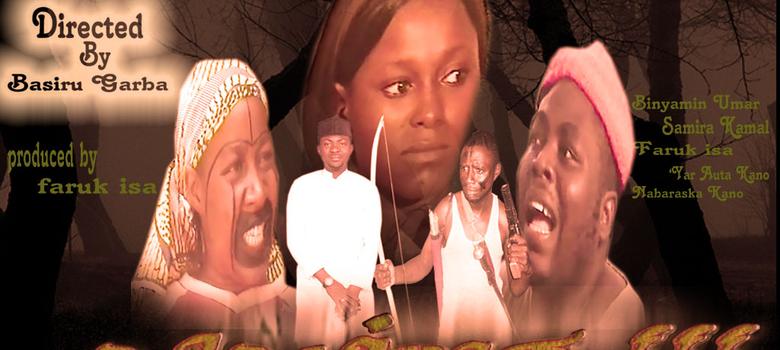
The following clips are from a very unlikely, and until recently, almost unknown corner of the Bollywood Empire: Nigeria.
Sanafana
Northern Nigeria (currently suffering a haphazard, terror-based harassment by Boko Haram) is a conservative, Islamic region. For many years the main (almost only) form of entertainment was videotapes of Hindi films imported into the area by Lebanese traders in the early 1960s.
Ranan Mourna
Abdalla Uba Adamu, an academic at the Center for Hausa Cultural Studies in Kano, Nigeria, has done considerable research into this unlikely cultural sangam and I quote from one of his articles.
"From 1945, when the first cinema, Rio (often called Kamfama, after the fact of its being located initially in a former French Military Confinement area, now Hotel De France) was opened in Kano, to 1960, film distribution was exclusively controlled by a cabal of Lebanese merchants who sought to entertain the few British colonials and other imported non-Muslim workers in northern Nigeria by showing principally American and British films.
"Despite strict spatial segregation (from 1903 when the British conquered the territory to 1960), the British did acknowledge that the locals (i.e., Muslim Hausa) may be interested in the new entertainment medium, and as such, special days were kept aside for Hausa audience in the three theatres then available. The British, however, were not keen on seeing films from either the Arab world, particularly Egypt with its radical cinema, or any other Muslim country that might give the natives some revolutionary ideas. Indeed there was no attempt to either develop any local film industry, or even provide African-themed entertainment for the locals.
"After 1960s there were few attempts to show cinema from the Arab world, as well as Pakistan, due to what the distributors believed to be common religious culture between Middle East and Muslim northern Nigeria. However, these were not popular with the Hausa audience, since they were not religious dramas, but reflect a culture of the Arabs. And although the Hausa share quite a lot with the Arabs (especially in terms of dress, food and language), nevertheless they had different entertainment mindsets, and as such these Arab films did not go down well.
"The experimental Hindi films shown from November 1960 proved massively popular, and the Lebanese thus found a perfect formula for entertaining the Hausa audience. Subsequently, throughout the urban clusters of northern Nigeria, namely Kano, Jos, Kaduna, Bauchi, Azare, Maiduguri and Sokoto, Lebanese film distribution of Hindi films in principally Lebanese controlled theatres ensured a massive parenting by Hindi film genre and storyline, and most especially the song and dance routines, on urban Hausa audience.
"Thus from 1960s all the way to the 1990s, Hindi cinema enjoyed significant exposure and patronage among Hausa youth…It subsequently provided a template for future young filmmakers."
Zakka
Harafina So
Girma Girma
Listen to these tracks as a single playlist on our YouTube channel.
We welcome your comments at
letters@scroll.in.
Raj Kapoor’s giant hit of 1955, Shri 420 , had been a major hit in the Soviet Union and other East European countries. Across the Middle East and South East Asia, people who otherwise spoke not a word of Hindi, could rattle off entire sections from Indian films. Indeed, for the developing and recently independent former colonies of Asia and Africa, the films of Bombay were a sort of cultural security blanket, far more important to popular culture than the films and heroes of Hollywood that were causing similar waves in post-war Europe.
The following clips are from a very unlikely, and until recently, almost unknown corner of the Bollywood Empire: Nigeria.
Sanafana
Northern Nigeria (currently suffering a haphazard, terror-based harassment by Boko Haram) is a conservative, Islamic region. For many years the main (almost only) form of entertainment was videotapes of Hindi films imported into the area by Lebanese traders in the early 1960s.
Ranan Mourna
Abdalla Uba Adamu, an academic at the Center for Hausa Cultural Studies in Kano, Nigeria, has done considerable research into this unlikely cultural sangam and I quote from one of his articles.
"From 1945, when the first cinema, Rio (often called Kamfama, after the fact of its being located initially in a former French Military Confinement area, now Hotel De France) was opened in Kano, to 1960, film distribution was exclusively controlled by a cabal of Lebanese merchants who sought to entertain the few British colonials and other imported non-Muslim workers in northern Nigeria by showing principally American and British films.
"Despite strict spatial segregation (from 1903 when the British conquered the territory to 1960), the British did acknowledge that the locals (i.e., Muslim Hausa) may be interested in the new entertainment medium, and as such, special days were kept aside for Hausa audience in the three theatres then available. The British, however, were not keen on seeing films from either the Arab world, particularly Egypt with its radical cinema, or any other Muslim country that might give the natives some revolutionary ideas. Indeed there was no attempt to either develop any local film industry, or even provide African-themed entertainment for the locals.
"After 1960s there were few attempts to show cinema from the Arab world, as well as Pakistan, due to what the distributors believed to be common religious culture between Middle East and Muslim northern Nigeria. However, these were not popular with the Hausa audience, since they were not religious dramas, but reflect a culture of the Arabs. And although the Hausa share quite a lot with the Arabs (especially in terms of dress, food and language), nevertheless they had different entertainment mindsets, and as such these Arab films did not go down well.
"The experimental Hindi films shown from November 1960 proved massively popular, and the Lebanese thus found a perfect formula for entertaining the Hausa audience. Subsequently, throughout the urban clusters of northern Nigeria, namely Kano, Jos, Kaduna, Bauchi, Azare, Maiduguri and Sokoto, Lebanese film distribution of Hindi films in principally Lebanese controlled theatres ensured a massive parenting by Hindi film genre and storyline, and most especially the song and dance routines, on urban Hausa audience.
"Thus from 1960s all the way to the 1990s, Hindi cinema enjoyed significant exposure and patronage among Hausa youth…It subsequently provided a template for future young filmmakers."
Zakka
Harafina So
Girma Girma
Listen to these tracks as a single playlist on our YouTube channel.
