





Are the Bharatiya Janata Party’s years of electoral failure in Kerala about to draw to a close? The rise in the party’s vote share in this year’s Lok Sabha elections has infused state leaders with optimism for the assembly elections in 2016. The BJP polled 10.3% of the vote, up from the 6.4% it won in 2009. The party's central leadership has decided that a concerted effort to win the Dalit vote in Kerala might pay off for them, though they first have to address the severe infighting within the state unit.
Encouraged by indications that the youth of Kerala voted for the BJP, party president Amit Shah visited Kerala on Monday to meet members. “The people are gradually shifting loyalties towards the BJP, especially the youth in the state,” said M Nalapat, a political commentator and professor at Manipal University.
But the BJP faces several challenges in the southern state. Though the party has grown in membership and support over the years, it still finds it difficult to attract smaller parties as allies. A political observer Scroll spoke with attributed this to factional tussles within the state leadership.
Internal feud
The Kerala unit of the BJP is dominated by two men, current state president V Muraleedharan and former president PK Krishnadas.
Krishnadas met Shah as soon as he reached Kerala, an official in BJP’s national office revealed, handing him a letter that blamed Muraleedharan for the party’s inconsistent performances in the state. The letter reportedly contained a number of other complaints, including one about the failure to win the Thiruvananthapuram constituency in the Lok Sabha elections, which the party felt was theirs for the taking.
The letter also noted that Muraleedharan held office without the support of the Rashtriya Swayamsevak Sangh. Krishnadas asked for a change in the party’s state leadership before the assembly elections in 2016.
Shah rebuked both the Krishnadas faction and Muraleedharan and his supporters for the unseemly infighting. He asked both leaders to show results instead of squabbling with each other.
BJP’s electoral push
Shah’s strategy in the state replicates the micro-managing strategy that proved so successful in Uttar Pradesh. He has directed Kerala’s leaders to increase the number of booth-level committees from 5,000 to 20,000 before March 2015. He also asked the party to begin door-to-door campaigns and membership recruitment drives from November 1.
Shah also asked the state leadership to focus on winning Dalit votes.
Prime Minister Narendra Modi is scheduled to travel to the state to attend the 152nd birth anniversary of Dalit icon Ayyankali on September 8, and is likely to try to win the favour of the community on the occasion.
The event is being organised by the National Scheduled Caste Morcha of BJP along with Kerala Pulayar Mahasabha, a Dalit group that was close to the CPI(M) not too long ago. This is a new direction for the BJP in the state, which has long been accused of having an upper caste bias by the Congress and the CPI(M).
Shah also asked for a detailed analysis of the factors responsible for the defeat of senior BJP leader O Rajagopal from Thiruvananthapuram in the Lok Sabha elections.
The party received a significant boost this weekend when 500 new members joined their ranks in northern Kerala. 350 CPI(M) workers from Kannur – a Communist stronghold – were among them.
Sangh’s cultural push
Just before Shah got here, Rashtriya Swayamsevak chief Mohan Bhagwat spent five days in the state (the BJP is the political wing of the Sangh Parivar, a network of socio-political groups headed by the RSS). According to reports, Bhagwat has been making frequent visits to oversee the establishment of Sangh shakhas in Kerala.
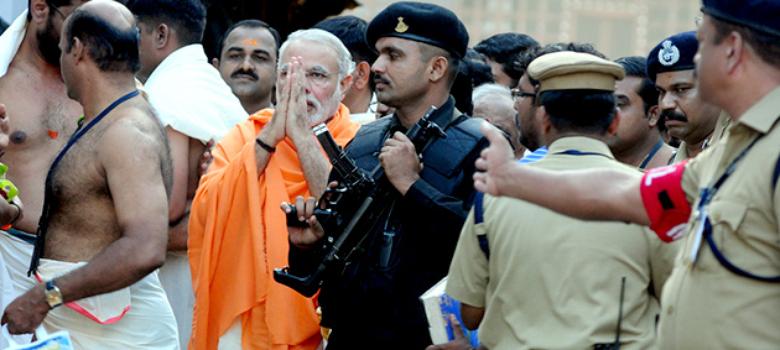
The Sangh Parivar has made great inroads in rural Kerala through a number of temple-centred activities. Several temples have been renovated by Sangh Parivar organisations, while festivals and old rituals are being resurrected. Festivals like Raksha Bandhan and Vinayak Chaturthi, previously inconsequential in Kerala, are now gaining prominence.
We welcome your comments at
letters@scroll.in.
Encouraged by indications that the youth of Kerala voted for the BJP, party president Amit Shah visited Kerala on Monday to meet members. “The people are gradually shifting loyalties towards the BJP, especially the youth in the state,” said M Nalapat, a political commentator and professor at Manipal University.
But the BJP faces several challenges in the southern state. Though the party has grown in membership and support over the years, it still finds it difficult to attract smaller parties as allies. A political observer Scroll spoke with attributed this to factional tussles within the state leadership.
Internal feud
The Kerala unit of the BJP is dominated by two men, current state president V Muraleedharan and former president PK Krishnadas.
Krishnadas met Shah as soon as he reached Kerala, an official in BJP’s national office revealed, handing him a letter that blamed Muraleedharan for the party’s inconsistent performances in the state. The letter reportedly contained a number of other complaints, including one about the failure to win the Thiruvananthapuram constituency in the Lok Sabha elections, which the party felt was theirs for the taking.
The letter also noted that Muraleedharan held office without the support of the Rashtriya Swayamsevak Sangh. Krishnadas asked for a change in the party’s state leadership before the assembly elections in 2016.
Shah rebuked both the Krishnadas faction and Muraleedharan and his supporters for the unseemly infighting. He asked both leaders to show results instead of squabbling with each other.
BJP’s electoral push
Shah’s strategy in the state replicates the micro-managing strategy that proved so successful in Uttar Pradesh. He has directed Kerala’s leaders to increase the number of booth-level committees from 5,000 to 20,000 before March 2015. He also asked the party to begin door-to-door campaigns and membership recruitment drives from November 1.
Shah also asked the state leadership to focus on winning Dalit votes.
Prime Minister Narendra Modi is scheduled to travel to the state to attend the 152nd birth anniversary of Dalit icon Ayyankali on September 8, and is likely to try to win the favour of the community on the occasion.
The event is being organised by the National Scheduled Caste Morcha of BJP along with Kerala Pulayar Mahasabha, a Dalit group that was close to the CPI(M) not too long ago. This is a new direction for the BJP in the state, which has long been accused of having an upper caste bias by the Congress and the CPI(M).
Shah also asked for a detailed analysis of the factors responsible for the defeat of senior BJP leader O Rajagopal from Thiruvananthapuram in the Lok Sabha elections.
The party received a significant boost this weekend when 500 new members joined their ranks in northern Kerala. 350 CPI(M) workers from Kannur – a Communist stronghold – were among them.
Sangh’s cultural push
Just before Shah got here, Rashtriya Swayamsevak chief Mohan Bhagwat spent five days in the state (the BJP is the political wing of the Sangh Parivar, a network of socio-political groups headed by the RSS). According to reports, Bhagwat has been making frequent visits to oversee the establishment of Sangh shakhas in Kerala.
The Sangh Parivar has made great inroads in rural Kerala through a number of temple-centred activities. Several temples have been renovated by Sangh Parivar organisations, while festivals and old rituals are being resurrected. Festivals like Raksha Bandhan and Vinayak Chaturthi, previously inconsequential in Kerala, are now gaining prominence.
