



Above the Fold: Top stories of the day
1. President Pranab Mukherjee, in a speech with pointed relevance to current events, sought to assert that plurality and tolerance is what has kept India together.
2. Threats from the Shiv Sena have convinced organisers to cancel concerts of Pakistani ghazal legend Ghulam Ali, despite the government claiming he would be afforded adequate security.
3. US President Barack Obama has personally apologised for the alleged mistaken bombing of a Doctors Without Borders hospital in Afghanistan, but the organisation still wants an investigation.
The Big Story: Supreme Court's yellow card
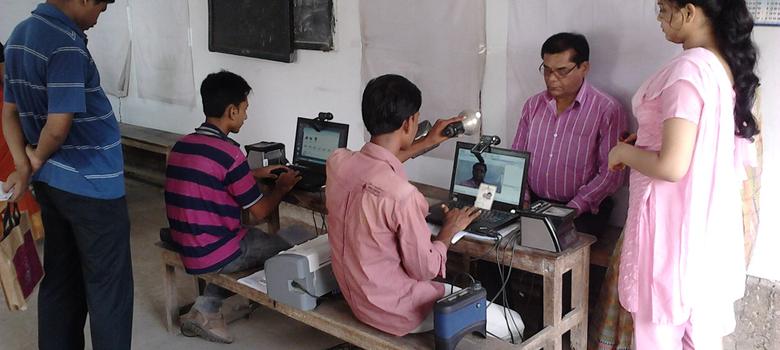
The Supreme Court on Wednesday refused to modify its own order from August that restricted the use of the Aadhar card to being used only for the public distribution system and the Liquid Petroleum Gas subsidy, saying instead the matter will be looked at by a constitutional bench. The hearing is part of a set of rights-based legal challenges to the Aadhaar card, a grand project of the previous government to give every citizen a biometrics-based network-linked identity card. Effectively, though, the Supreme Court's refusal on Wednesday means that the government's hope of linking its broader subsidy schemes and new Digital India project through the Aadhaar card has come unstuck.
The Supreme Court has decided that the matter needs to go to a constitutional bench, since previous benches have been unclear on the exact extent of the right to privacy in India, which is not clearly articulated in extant law but has developed through court precedents. The bench decided that even the order asking for Aadhaar to be allowed beyond the public distribution system and LPG schemes would have to be taken up by the constitutional bench.
The government has already asked for that bench to be set up as soon as possible, saying Aadhaar is needed to deliver services to the poor. But seeing as the case is now going to be a constitutional matter regarding what many see as a crucial right, the question of privacy, it is unlikely that there will be a quick decision either way in the matter.
The Big Scroll
India's Unique Identity Dilemma isn't about those who enrol in Aadhaar, but those who don't. And the poor argument doesn't work, because privacy is not an elitist concern – it's the only way to secure equality. Moreover, by limiting Aadhaar, Supreme Court may have given government a way to expand its reach.
Politicking & Policying
1. The Centre finally seems to have woken up to the way the Dadri killing might be seen, at home and internationally, and has begun to insist that it was wrong.
2. But, as Union Minister Nitin Gadkari says here, the government still believes Prime Minister Narendra Modi need not say anything about the brutal incident.
3. The cabinet has finally cleared a long-awaited proposal for a war memorial and a national war museum, with Rs 500 crore earmarked for the project.
4. New Delhi continues to insist that it cannot be blamed for Nepal's complaints that it is being "choked" and denied essential supplies by India, because of a protester-forced shutdown of trade on the border.
5. An expert panel has recommended a four-fold increase in the salaries of Members of Legislative Assembly in Delhi, prompting some to discover Aam Aadmi Party schadenfreude.
Punditry
1. India's institutional underpinnings are coming undone, writes Salil Tripathi in Mint, suggesting it is happening with tacit approval from the prime minister.
2. Advanced technology neither ensures a successful government nor does it mean a progressive one, as Rajiv Gandhi learnt, writes Kanika Datta in Business Standard.
3. India appears unable to grasp just how important and useful the Sustainable Development Goals can be, writes Sanjay Reddy in the Indian Express.
We welcome your comments at
letters@scroll.in.
1. President Pranab Mukherjee, in a speech with pointed relevance to current events, sought to assert that plurality and tolerance is what has kept India together.
2. Threats from the Shiv Sena have convinced organisers to cancel concerts of Pakistani ghazal legend Ghulam Ali, despite the government claiming he would be afforded adequate security.
3. US President Barack Obama has personally apologised for the alleged mistaken bombing of a Doctors Without Borders hospital in Afghanistan, but the organisation still wants an investigation.
The Big Story: Supreme Court's yellow card
The Supreme Court on Wednesday refused to modify its own order from August that restricted the use of the Aadhar card to being used only for the public distribution system and the Liquid Petroleum Gas subsidy, saying instead the matter will be looked at by a constitutional bench. The hearing is part of a set of rights-based legal challenges to the Aadhaar card, a grand project of the previous government to give every citizen a biometrics-based network-linked identity card. Effectively, though, the Supreme Court's refusal on Wednesday means that the government's hope of linking its broader subsidy schemes and new Digital India project through the Aadhaar card has come unstuck.
The Supreme Court has decided that the matter needs to go to a constitutional bench, since previous benches have been unclear on the exact extent of the right to privacy in India, which is not clearly articulated in extant law but has developed through court precedents. The bench decided that even the order asking for Aadhaar to be allowed beyond the public distribution system and LPG schemes would have to be taken up by the constitutional bench.
The government has already asked for that bench to be set up as soon as possible, saying Aadhaar is needed to deliver services to the poor. But seeing as the case is now going to be a constitutional matter regarding what many see as a crucial right, the question of privacy, it is unlikely that there will be a quick decision either way in the matter.
The Big Scroll
India's Unique Identity Dilemma isn't about those who enrol in Aadhaar, but those who don't. And the poor argument doesn't work, because privacy is not an elitist concern – it's the only way to secure equality. Moreover, by limiting Aadhaar, Supreme Court may have given government a way to expand its reach.
Politicking & Policying
1. The Centre finally seems to have woken up to the way the Dadri killing might be seen, at home and internationally, and has begun to insist that it was wrong.
2. But, as Union Minister Nitin Gadkari says here, the government still believes Prime Minister Narendra Modi need not say anything about the brutal incident.
3. The cabinet has finally cleared a long-awaited proposal for a war memorial and a national war museum, with Rs 500 crore earmarked for the project.
4. New Delhi continues to insist that it cannot be blamed for Nepal's complaints that it is being "choked" and denied essential supplies by India, because of a protester-forced shutdown of trade on the border.
5. An expert panel has recommended a four-fold increase in the salaries of Members of Legislative Assembly in Delhi, prompting some to discover Aam Aadmi Party schadenfreude.
Punditry
1. India's institutional underpinnings are coming undone, writes Salil Tripathi in Mint, suggesting it is happening with tacit approval from the prime minister.
2. Advanced technology neither ensures a successful government nor does it mean a progressive one, as Rajiv Gandhi learnt, writes Kanika Datta in Business Standard.
3. India appears unable to grasp just how important and useful the Sustainable Development Goals can be, writes Sanjay Reddy in the Indian Express.
