




Above the fold: Top stories of the day
1. Maoist hit districts are to vote today, in the second phase of the Bihar elections.
2. The Supreme Court has ordered the reopening of dance bars across Maharashtra.
3. Muslims can live in the country if they don't eat beef, says Haryana Chief Minister Manohar Lal Khattar.
The Big Story: Geeta
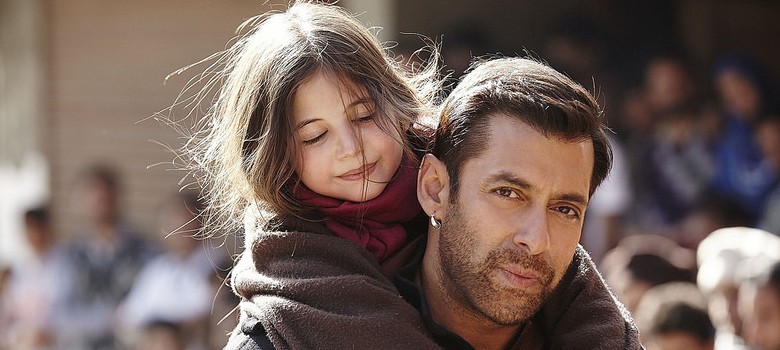
In the real life version of Bajrangi Bhaijan, Geeta, an Indian girl stranded in Pakistan for 13 years, will return home. Back in 2002, soldiers of the Pakistan Rangers found an 11-year-old girl wandering near the border at Lahore. She could not speak or hear. They handed her over to the Edhi Foundation in Karachi, where she found a surrogate family who named her Geeta, encouraged her to practise her own faith and hoped she would "settle down" with a Hindu man in Pakistan. But Geeta kept memories of home alive and scribbled pages in the Devanagari script, illegible to those around her.
Geeta first shot to fame in 2012, when her story was published in the Aman Ki Asha page printed in The News, Pakistan. In the initial media frenzy that followed, Indian officials visited her in Karachi. But nothing happened. This year, as the Bollywood blockbuster Bajrangi Bhaijan told the story of an Indian man braving the frontier to take a mute Pakistani girl back home, Geeta was back in the spotlight. This time, the Indian government has stirred itself to bring her back home, identify her parents and hand her back after a DNA test. Geeta's story is the only bright spot in India-Pakistan ties, which have hit a new low at the moment. And there is, no doubt, much to say about people to people contact triumphing over political tactics, about the transformative power of the movies.
But it should not have taken a movie to pierce long years of institutional indifference. Hundreds of families, especially in Kashmir, are divided by one of the most heavily militarised frontiers in the world. Back in 2003, people separated by decades of Partition and conflict decided to open up a "peace village" on the Line of Control, where divided families could meet. But such valiant efforts cannot succeed with a restrictive, regulatory state prone to denying visas and permits, demanding reams of documentation from displaced people. Both countries need to consider a mechanism to make such journeys routine.
The Big Scroll: Scroll.in on the day's big story
Ammar Shahbaz visits Geeta in Karachi.
Ipsita Chakravarty on how Bajrangi Bhaijaan brought peace to the Line of Control and apparently solved the Kashmir issue.
Politicking and policying
1. Clashes in Punjab continued for a second day, as the entire Malwa region went into shutdown and protestors armed with swords took to the streets.
2. Prime MInister Narendra Modi to go on a slew of foreign visits after the Bihar campaign.
3. The price of pulses soars, as dal reaches Rs 200 per kilogram.
4. The Supreme Court is to rule on the National Judicial Appointments Commission today.
Punditry
1. In the Hindu, Happymon Jacob explain why India should give conditional support to a US-Pakistan civilian nuclear treaty.
2. In the Indian Express, Khaled Ahmed writes of how India is starting to look like Pakistan.
3. In the Business Standrad, Jaimini Bhagwati warns that India should not over-depend on the financial sector, like the West.
Don't Miss
Ajaz Ashraf on how Bharatiya Janata Party veteran LK Advani needs to atone for his past before he preaches tolerance:
We welcome your comments at
letters@scroll.in.
1. Maoist hit districts are to vote today, in the second phase of the Bihar elections.
2. The Supreme Court has ordered the reopening of dance bars across Maharashtra.
3. Muslims can live in the country if they don't eat beef, says Haryana Chief Minister Manohar Lal Khattar.
The Big Story: Geeta
In the real life version of Bajrangi Bhaijan, Geeta, an Indian girl stranded in Pakistan for 13 years, will return home. Back in 2002, soldiers of the Pakistan Rangers found an 11-year-old girl wandering near the border at Lahore. She could not speak or hear. They handed her over to the Edhi Foundation in Karachi, where she found a surrogate family who named her Geeta, encouraged her to practise her own faith and hoped she would "settle down" with a Hindu man in Pakistan. But Geeta kept memories of home alive and scribbled pages in the Devanagari script, illegible to those around her.
Geeta first shot to fame in 2012, when her story was published in the Aman Ki Asha page printed in The News, Pakistan. In the initial media frenzy that followed, Indian officials visited her in Karachi. But nothing happened. This year, as the Bollywood blockbuster Bajrangi Bhaijan told the story of an Indian man braving the frontier to take a mute Pakistani girl back home, Geeta was back in the spotlight. This time, the Indian government has stirred itself to bring her back home, identify her parents and hand her back after a DNA test. Geeta's story is the only bright spot in India-Pakistan ties, which have hit a new low at the moment. And there is, no doubt, much to say about people to people contact triumphing over political tactics, about the transformative power of the movies.
But it should not have taken a movie to pierce long years of institutional indifference. Hundreds of families, especially in Kashmir, are divided by one of the most heavily militarised frontiers in the world. Back in 2003, people separated by decades of Partition and conflict decided to open up a "peace village" on the Line of Control, where divided families could meet. But such valiant efforts cannot succeed with a restrictive, regulatory state prone to denying visas and permits, demanding reams of documentation from displaced people. Both countries need to consider a mechanism to make such journeys routine.
The Big Scroll: Scroll.in on the day's big story
Ammar Shahbaz visits Geeta in Karachi.
Ipsita Chakravarty on how Bajrangi Bhaijaan brought peace to the Line of Control and apparently solved the Kashmir issue.
Politicking and policying
1. Clashes in Punjab continued for a second day, as the entire Malwa region went into shutdown and protestors armed with swords took to the streets.
2. Prime MInister Narendra Modi to go on a slew of foreign visits after the Bihar campaign.
3. The price of pulses soars, as dal reaches Rs 200 per kilogram.
4. The Supreme Court is to rule on the National Judicial Appointments Commission today.
Punditry
1. In the Hindu, Happymon Jacob explain why India should give conditional support to a US-Pakistan civilian nuclear treaty.
2. In the Indian Express, Khaled Ahmed writes of how India is starting to look like Pakistan.
3. In the Business Standrad, Jaimini Bhagwati warns that India should not over-depend on the financial sector, like the West.
Don't Miss
Ajaz Ashraf on how Bharatiya Janata Party veteran LK Advani needs to atone for his past before he preaches tolerance:
"But it was Advani who sowed the seeds of intolerance in Indian politics – we are merely reaping the bitter harvest 25-30 years later. This is why to all of us grey-heads his sermons on democracy and tolerance are bereft of any meaning. Their only purpose is to embarrass his former acolyte, Prime Minister Narendra Modi.
It was Advani who articulated the idea of cultural nationalism with the numbing ferocity not seen before. It was he who popularised the term pseudo-secularism. The politics of language barely concealed what was in reality a brand of amoral politics. It was he who clambered onto a rath to crisscross the country, driving a stake into communitarian togetherness.
This stake was plunged even deeper as he delivered speeches in one town after another on his way to Ayodhya, where, on December 6, 1992, the Babri Masjid was demolished. On that day Advani stood watching as Uma Bharti, now a Union minister, chanted hypnotically, “Ek dhakka aur do, Babri Masjid ko tod do (One more push and break the mosque).” This is why Advani is facing a trial for making provocative speeches in the Babri Masjid demolition cases."
