




What did Bihar vote for? Bihar voted for a combination of two faces – one that had somewhere changed a feudal and captured society to a somewhat more equitable platform of social respect and political participation, but unwittingly unleashed the lumpen and the criminal. The other face added to this process of social and political empowerment, the benefits of a better performing welfare state and economic growth, and harnessing the unleashed.
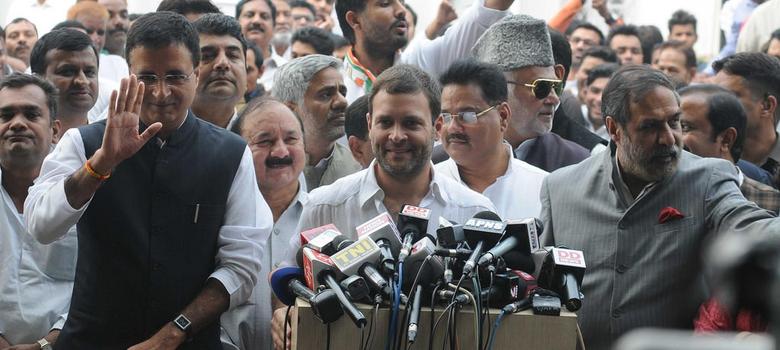
Though bitter enemies for years, they read the strength of the Bharatiya Janata Party-Narendra Modi challenge and built an alliance, co-ordinated by the Congress, ensuring it had a positive energy. Alliances with positive energies keep together even contradictory interests, and this ensured that voters of Janata Dal (United), Rashtriya Janata Dal and Indian National Congress came together. Another learning was that subtle to open naked polarisation in an election works for the BJP, but not substantially, and only in the absence of a stronger social appeal on the other side.
A factor was also the gradual collapse of the Modi promise.
The Modi model
What we need to first understand is that there is no Gujarat model of Narendra Modi. Gujarat progresses and does well at the same pace and with the same parameters, from much before Modi, and Modi did nothing extraordinary in that state.
Modi’s real model is a sum total of 2002, usurping credit of work of others, propaganda, Adani and Ambani, capital-led control of a willing and philistine media. His is a communal appeal garbed in the illusion of a development messiah, a model of subjugating the state to the needs of capital, Hindutva, its institutions and their politics and beliefs of pride and hate.
The 2014 vote was for a Disneyland he told everyone he had built in Gujarat. What he had built actually was Orwell's Animal Farm. The hype of the promises has been weakened by real experience of the last 18 months at the national level. At the same time, people realised that the dreams promised by Nitish, however limited, were actually converted into a comforting reality.
What next?
What should we expect now? Experience tells us that the prime minister and the Rashtriya Swayamsevak Sangh will launch, through malleable media, a blitzkrieg of propaganda on what they have done or will do, while blaming the wasted years under other party governments. The personality of the prime minister and BJP chief ministers shall be woven in appropriately in this myth. The Gujarat Model type propaganda and hype shall be replicated, and it will be done in a more sophisticated manner and will be sought to be made more intoxicating through manipulation of statistics and unashamed muffling of counter voices.
As Modi learnt in Gujarat, the one issue with a powerful narrative that works for his party and remains its exclusive domain is the exploitation of the religious and national identity and India's glorious past. This is supplemented with a cocktail of distorted history and demonisation of all non-Hindutva people as "others", be they nominally Hindu or non-Hindu , through crafted tales of their uncivilised nature. This shall be pushed, using mass communication, over minds dulled by electronic screens and short attention spans.
That it did not bear results in Bihar shall not be a deterrent for the future, since more than winning elections, it is their strategy to implant Hindutva propaganda amongst all men and women. A real possibility is the revival of the Babri Masjid-Ram Mandir issue and sporadic to mass scale communal upheavals.
Modi and his party seem to think that, despite Bihar, that is how the votes will eventually come.
Challenges ahead
Countering this will not be easy. As the largest opposition party in the non-BJP space, it will rest upon the Congress to ensure that intelligent alliances are put in place in various states on a reliable platform of secular, anti-communal and left-of-centre forces. The experience of putting together a coalition in Bihar, and its success has to be the inspiration. Where the Congress is the principal party, it will have to give confidence to other parties, and undertake the painful task of accommodating them. In states where it is the second or third opposition, the task at hand will be to ensure an honourable place for itself.
The Congress and other parties also have to keep in mind that their unity must have a social coalition, as we must not over-read Bihar to believe that there was a rejection of communal politics. The BJP and RSS and their communal propaganda shall continue with greater vigour, and social alliances that reinforce each other politically in the short run, and committed secular messaging and secular policies in the long run should be the foundation for alliances. Parties will have to move on from sectional pandering to inclusive and secular appeals.
The Congress must also lead political and non-political activism against the divisive agenda of the RSS-BJP combine and their government by leveraging its pan-India presence and legacy. At one level, it needs to work through its cadres with civil society and academia, and at another it needs to build a network of fellow travellers who may not be party members. The bogey of communalism, and fascism needs to be checked by supporting liberal voices that may not be political in the strict sense of the word.
But, before all this, Congress needs to sensitively deal with the accusations against it – with humility and acceptance where possible, and resolve and confrontation where necessary.
The Bihar verdict also tells that it is not reforms or growth that people relate with "development". To them it means basic services, delivered through a public service framework, the space to undertake their livelihoods without the demon of the government controller, a state that stands by its people, and infrastructure that enables. The Grand Alliance with Nitish and Lalu projected social justice, visible empowerment, participation in power, and experience of promises with bettered delivery, impacting lives.
The agenda
The agenda for Congress then seems clear. It needs to build alliance with parties that have a shared vision, and a basic commitment to common principles, the earlier the better. The departure of opportunists like the Samajwadi Party in Bihar makes it clear what kind of partners we must have and not have. Second is to take head-on the propaganda and policies of the Modi government, forcing a real look at the Gujarat story and break down their national hype. Third is to confront the communal and divisive agenda, and prepare for what a challenged fascist leader does when the mask comes off.
Modi has succeeded with projections of dreams and nightmares. He sold a dream, which is coming undone, and the appeal is disintegrating. The only option for him is to unleash a scare by painting all others as the nightmare, and himself as the saviour. Only a combined political alternative, a sustained and consistent counter-narrative and constructing a pro-poor agenda can counter this.
Sandeep Dikshit is a former member of Parliament and a national spokesperson of the Indian National Congress.
We welcome your comments at
letters@scroll.in.
Though bitter enemies for years, they read the strength of the Bharatiya Janata Party-Narendra Modi challenge and built an alliance, co-ordinated by the Congress, ensuring it had a positive energy. Alliances with positive energies keep together even contradictory interests, and this ensured that voters of Janata Dal (United), Rashtriya Janata Dal and Indian National Congress came together. Another learning was that subtle to open naked polarisation in an election works for the BJP, but not substantially, and only in the absence of a stronger social appeal on the other side.
A factor was also the gradual collapse of the Modi promise.
The Modi model
What we need to first understand is that there is no Gujarat model of Narendra Modi. Gujarat progresses and does well at the same pace and with the same parameters, from much before Modi, and Modi did nothing extraordinary in that state.
Modi’s real model is a sum total of 2002, usurping credit of work of others, propaganda, Adani and Ambani, capital-led control of a willing and philistine media. His is a communal appeal garbed in the illusion of a development messiah, a model of subjugating the state to the needs of capital, Hindutva, its institutions and their politics and beliefs of pride and hate.
The 2014 vote was for a Disneyland he told everyone he had built in Gujarat. What he had built actually was Orwell's Animal Farm. The hype of the promises has been weakened by real experience of the last 18 months at the national level. At the same time, people realised that the dreams promised by Nitish, however limited, were actually converted into a comforting reality.
What next?
What should we expect now? Experience tells us that the prime minister and the Rashtriya Swayamsevak Sangh will launch, through malleable media, a blitzkrieg of propaganda on what they have done or will do, while blaming the wasted years under other party governments. The personality of the prime minister and BJP chief ministers shall be woven in appropriately in this myth. The Gujarat Model type propaganda and hype shall be replicated, and it will be done in a more sophisticated manner and will be sought to be made more intoxicating through manipulation of statistics and unashamed muffling of counter voices.
As Modi learnt in Gujarat, the one issue with a powerful narrative that works for his party and remains its exclusive domain is the exploitation of the religious and national identity and India's glorious past. This is supplemented with a cocktail of distorted history and demonisation of all non-Hindutva people as "others", be they nominally Hindu or non-Hindu , through crafted tales of their uncivilised nature. This shall be pushed, using mass communication, over minds dulled by electronic screens and short attention spans.
That it did not bear results in Bihar shall not be a deterrent for the future, since more than winning elections, it is their strategy to implant Hindutva propaganda amongst all men and women. A real possibility is the revival of the Babri Masjid-Ram Mandir issue and sporadic to mass scale communal upheavals.
Modi and his party seem to think that, despite Bihar, that is how the votes will eventually come.
Challenges ahead
Countering this will not be easy. As the largest opposition party in the non-BJP space, it will rest upon the Congress to ensure that intelligent alliances are put in place in various states on a reliable platform of secular, anti-communal and left-of-centre forces. The experience of putting together a coalition in Bihar, and its success has to be the inspiration. Where the Congress is the principal party, it will have to give confidence to other parties, and undertake the painful task of accommodating them. In states where it is the second or third opposition, the task at hand will be to ensure an honourable place for itself.
The Congress and other parties also have to keep in mind that their unity must have a social coalition, as we must not over-read Bihar to believe that there was a rejection of communal politics. The BJP and RSS and their communal propaganda shall continue with greater vigour, and social alliances that reinforce each other politically in the short run, and committed secular messaging and secular policies in the long run should be the foundation for alliances. Parties will have to move on from sectional pandering to inclusive and secular appeals.
The Congress must also lead political and non-political activism against the divisive agenda of the RSS-BJP combine and their government by leveraging its pan-India presence and legacy. At one level, it needs to work through its cadres with civil society and academia, and at another it needs to build a network of fellow travellers who may not be party members. The bogey of communalism, and fascism needs to be checked by supporting liberal voices that may not be political in the strict sense of the word.
But, before all this, Congress needs to sensitively deal with the accusations against it – with humility and acceptance where possible, and resolve and confrontation where necessary.
The Bihar verdict also tells that it is not reforms or growth that people relate with "development". To them it means basic services, delivered through a public service framework, the space to undertake their livelihoods without the demon of the government controller, a state that stands by its people, and infrastructure that enables. The Grand Alliance with Nitish and Lalu projected social justice, visible empowerment, participation in power, and experience of promises with bettered delivery, impacting lives.
The agenda
The agenda for Congress then seems clear. It needs to build alliance with parties that have a shared vision, and a basic commitment to common principles, the earlier the better. The departure of opportunists like the Samajwadi Party in Bihar makes it clear what kind of partners we must have and not have. Second is to take head-on the propaganda and policies of the Modi government, forcing a real look at the Gujarat story and break down their national hype. Third is to confront the communal and divisive agenda, and prepare for what a challenged fascist leader does when the mask comes off.
Modi has succeeded with projections of dreams and nightmares. He sold a dream, which is coming undone, and the appeal is disintegrating. The only option for him is to unleash a scare by painting all others as the nightmare, and himself as the saviour. Only a combined political alternative, a sustained and consistent counter-narrative and constructing a pro-poor agenda can counter this.
Sandeep Dikshit is a former member of Parliament and a national spokesperson of the Indian National Congress.
