











Supreme Court seeks EC, Centre’s reply on plea against anonymous cash donations to political parties
The Income Tax Act allows political parties to receive cash donations up to Rs 2,000 anonymously.
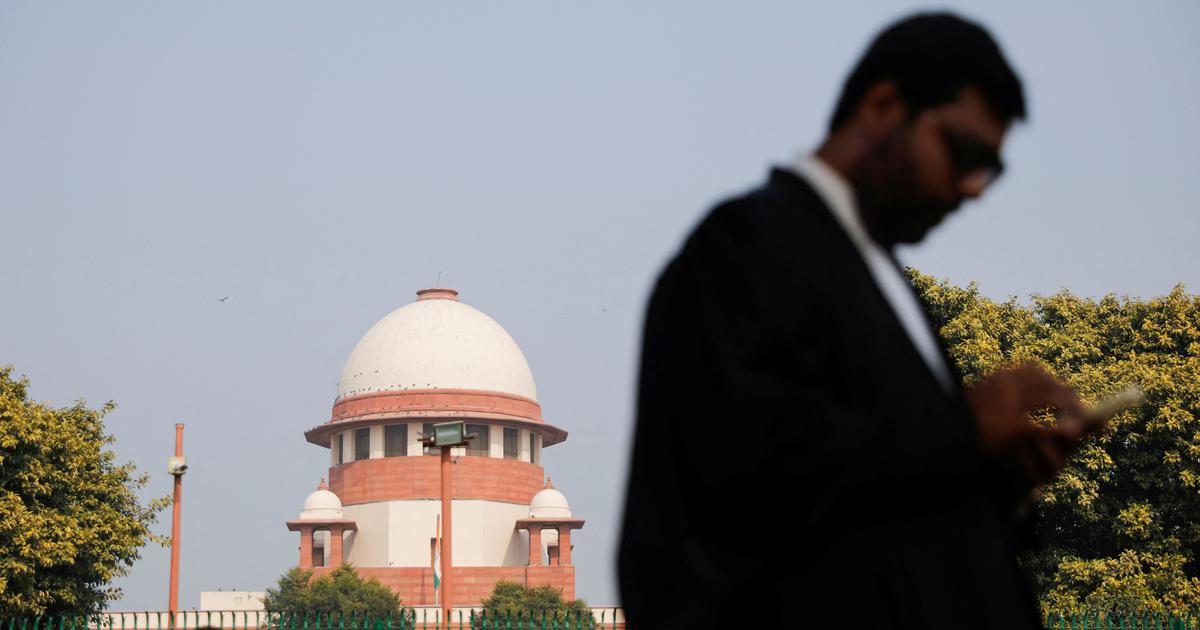
The Supreme Court on Monday sought responses from the Election Commission and the Union government on a petition challenging the constitutional validity of a section of the Income Tax Act, which permits political parties to accept cash donations of up to Rs 2,000 anonymously, PTI reported.
A bench of Justices Vikram Nath and Sandeep Mehta issued notice after hearing the petitioner who argued that Section 13A(d) of the Act undermines financial transparency and violates Article 14 and Article 19(1)(a) of the Constitution by restricting voters’ right to know the source of political funding, Bar and Bench reported.
Article 14 guarantees the right to equality and 19(1)(a) the freedom of speech.
The court said it will hear the matter after four weeks.
“Ultimately, this undermines the purity of the election process and compromises the integrity and accountability of a healthy democracy by allowing the potential influence of undisclosed or tainted money,” PTI quoted the plea as saying.
The petition said there is no justification for continuing with cash donations when digital payments in India have expanded rapidly, pointing to Unified Payments Interface transactions of more than Rs 24 lakh crore in June, Bar and Bench reported.
Some parties such as the Bahujan Samaj Party, the petition said, reported “nil contributions” by recording their entire income as membership fees received in cash for several years, Live Law reported.
The plea also argued that political parties enjoy significant statutory benefits such as tax exemptions, reserved symbols, subsidised land and accommodation, and should therefore meet higher standards of accountability, Bar and Bench reported.
The petition asked the court to strike down Section 13A(d) of the Income Tax Act as unconstitutional.
It cited the Supreme Court’s February 2024 judgement that struck down the electoral bonds scheme as unconstitutional saying it could foster quid pro quo relationships between donors and political parties.
Electoral bonds were paper instruments that anyone could buy from the State Bank of India and give to a political party, which could redeem them for money.
Also read: Will the Rs 2,000 cap on cash donations for political parties bring more transparency in the system?
