








Judiciary has no ‘magic wand’ to end Delhi pollution, experts should find solution: Supreme Court
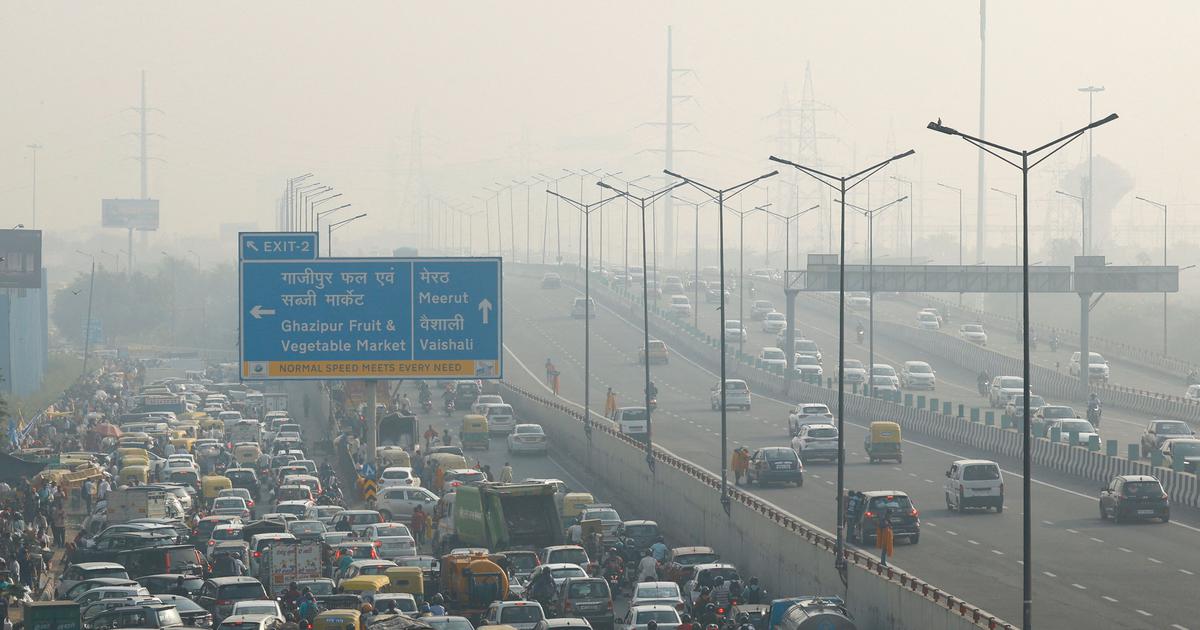
A day after GRAP 3 restrictions were withdrawn, the average AQI in the national capital was at the higher end of the ‘very poor’ category on Thursday.
The Supreme Court on Thursday said that it does not have a magic wand to solve the air pollution crisis in Delhi, Bar and Bench reported.
Chief Justice Surya Kant said that there are several causes for the deteriorating air quality in the national capital and it is up to scientists and experts to find a solution to the problem.
“Then we have to see what can be the solutions in each region,” Kant said. “Let us see what the government has constituted in terms of committee.”
“What magic wand can a judicial forum exercise?” Live Law quoted Kant as saying. “I know this is hazardous for Delhi-NCR...Tell me, what can we direct so that there is clean air immediately.”
The comment came after amicus curiae Aparajita Singh mentioned the matter for listing, saying that the air pollution in the national capital was a “health emergency”.
An amicus curiae is a person who is not a party to the case but provides advice or information to the court.
Kant said that the matter needs to be monitored regularly. The bench will hear it next on Monday.
Air quality deteriorates sharply in the winter months in Delhi, which is often ranked the world’s most polluted capital.
Stubble burning in Punjab and Haryana, vehicular pollution, along with the lighting of firecrackers during Diwali, falling temperatures, decreased wind speeds and emissions from industries and coal-fired plants contribute to the problem.
Delhi has been recording air quality in the “poor” or worse categories since mid-October, leading to Stage 3 restrictions under the Graded Response Action Plan being imposed on November 11.
GRAP is a set of incremental anti-pollution measures that are triggered to prevent further worsening of air quality once it reaches a certain threshold in the Delhi-NCR region.
On Wednesday, the Commission for Air Quality Management withdrew the Stage 3 restrictions, citing improved air quality. The restrictions under the GRAP 1 and GRAP 2 remain in force.
At 2.05 pm on Thursday, Delhi’s average Air Quality Index stood at 373, placing it at the higher end of the “very poor” category, as per the Sameer application, which provides hourly updates from the Central Pollution Control Board.
The AQI at 13 of the 39 monitoring stations in Delhi recorded readings above 400, categorised as “severe”, the data showed.
An index value between 0 and 50 indicates “good” air quality, between 51 and 100 indicates “satisfactory” air quality and between 101 and 200 indicates “moderate” air quality. As the index value increases further, air quality deteriorates. A value of 201 and 300 means “poor” air quality, while between 301 and 400 indicates “very poor” air.
Between 401 and 450 indicates “severe” air pollution, while anything above the 450 threshold is termed “severe plus”.
