








Rush Hour: SC stays UGC equity rules, Economic Survey predicts 6.8%-7.2% growth in 2026-’27 and more
Become a Scroll member to get Rush Hour – a wrap of the day’s important stories delivered straight to your inbox every evening.
India’s real gross domestic product is expected to grow between 6.8% and 7.2% in the financial year 2026-’27, the government’s annual Economic Survey projected. The cumulative impact of policy reforms in recent years appeared to have lifted the economy’s medium-term growth potential closer to 7%, the Department of Economic Affairs said.
The document, tabled in Parliament ahead of the Union Budget on Sunday, details the state of the country’s economy and suggests measures to boost growth.
“With domestic drivers playing a dominant role and macroeconomic stability well anchored, the balance of risks around growth remains broadly even,” it said. “The outlook, therefore, is one of steady growth amid global uncertainty, requiring caution, but not pessimism.” Read on.
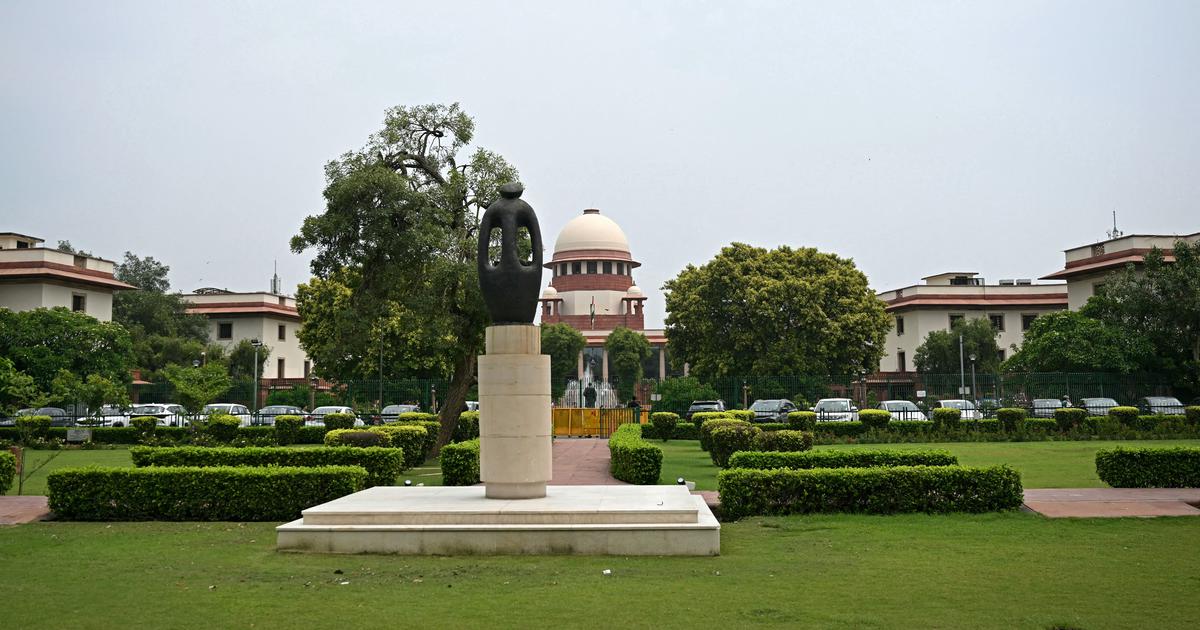
The Supreme Court stayed the 2026 University Grants Commission’s Promotion of Equity in Higher Education Institutions Regulations. The provisions were “prima facie vague and capable of misuse”, the court observed, asking the Union government to redraft the regulations. Until then, the operation of the rules will be in abeyance.
The bench verbally raised questions about why “caste-based discrimination” had been separately defined when the definition of “discrimination” already covered all forms of discriminatory treatment.
The regulations, notified on January 13, led to protests by upper-caste students, who have argued that the framework could lead to discrimination against them. The protesters have contended that the rules are biased against students from the general category as they do not provide for measures against “false complaints”. Read on.
The Supreme Court refused to entertain a public interest litigation seeking a declaration that domestic workers have a fundamental right to be paid minimum wages. The plea, filed by domestic workers’ unions, sought to bring domestic workers under the minimum wages notification.
A bench held that the reliefs sought were legislative in nature and that the court could not issue a writ asking the Union government and the states to consider amending the laws.
The court expressed concerns that fixing a mandatory minimum wage could lead to fears that trade unions may drag “every household” into litigation. This could backfire and result in a reluctance to hire domestic workers, the bench added. Read on.
The Indian rupee fell to a record low of nearly 92 against the United States dollar. The currency sank to 91.98 per US dollar, before marginally improving to 91.95 at the close of the trading session.
A widened balance of payments deficit, along with uncertainty about the trade deal with the US, has exerted pressure on the rupee, causing it to weaken, said the Economic Survey tabled in Parliament on Thursday.
The Indian currency has plummeted more than 2% this month after falling about 5% in 2025. Read on.
Activist Sonam Wangchuk told the Supreme Court that he has the democratic right to criticise the government and that it did not amount to a threat to national security. His counsel told the court that no act of violence was attributed to the activist and that the grounds of detention relied only on verbal statements, a protest march and a hunger strike, which were not violent acts.
The lawyer said that several statements cited by the authorities were either misattributed or misconstrued, including allegations that Wangchuk had threatened to overthrow the government or suggested that Ladakhis would not help the Army.
The authorities had ignored speeches in which Wangchuk had praised the government and Prime Minister Narendra Modi, and relied selectively on material to justify the detention, the counsel added.
Wangchuk was detained under the National Security Act on September 26 following protests in Leh demanding statehood for Ladakh and its inclusion in the Sixth Schedule of the Constitution. The bench was hearing a plea by his wife challenging the detention. Read on.
If you haven’t already, sign up for our Daily Brief newsletter.
