


Sonam Wangchuk wanted violence like Nepal, Bangladesh in Ladakh, alleges Centre
Justifying his detention under the National Security Act, the solicitor general said that the activist had referred to the Union government as ‘them’.
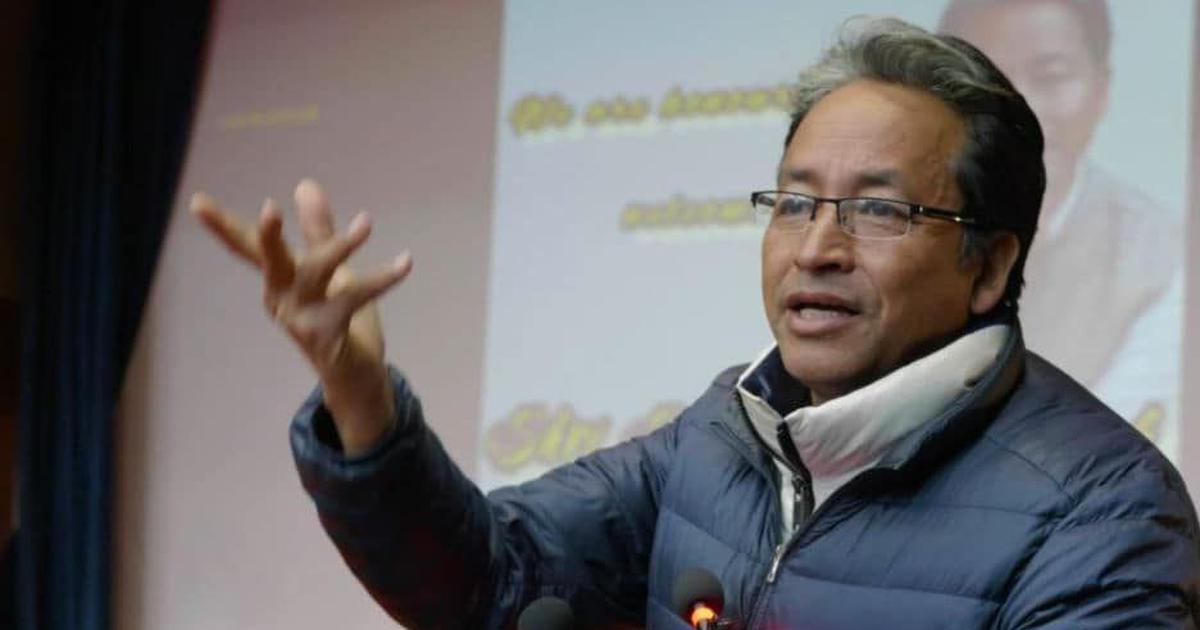
The Union government on Monday claimed that activist Sonam Wangchuk wanted Ladakh to face a violent agitation similar to the ones that took place in Bangladesh and Nepal, Bar and Bench reported.
The submissions were made before a Supreme Court bench of Justices Aravind Kumar and PB Varale by Solicitor General Tushar Mehta in a petition filed by Wangchuk’s wife Gitanjali Angmo challenging the activist’s detention under the National Security Act.
Wangchuk was detained on September 26 after protests in Leh demanding statehood for Ladakh and its inclusion in the Sixth Schedule of the Constitution. During the protests, demonstrators clashed with and threw stones at security personnel, injuring several of them. Four persons were killed in police firing.
On Monday, the government said that Wangchuk had referred to the Centre as “them”, alleging that it showed secessionist tendencies, Bar and Bench reported.
“This ‘us’ and ‘them’ is enough for NSA detention,” the government was quoted as having argued. “There is no us and them. We are all Indians.”
The activist had instigated “Gen Z” to indulge in a civil war, the legal news portal quoted the government as having alleged. Gen Z generally refers to persons born between the late 1990s and 2010.
“He [Wangchuk] wants Ladakh to become Nepal or Bangladesh?” Mehta asked. “This is what clearly he wants to say. We all know what happened in Bangladesh. He is targeting the impressionable youth.”
He added: “The moment you say ours and theirs in this country, you are doing something against the country. There is no ‘they’. It is ‘our’ government.”
In August 2024, Bangladeshi Prime Minister Sheikh Hasina had been forced to flee to India after several weeks of widespread student-led protests against her Awami League government. She had been in power for 16 years.
In Nepal, the political crisis began following protests sparked by the government’s ban on 26 social media platforms on September 4. Although the KP Sharma Oli government lifted the ban four days later, the agitation evolved into a broader protest against alleged corruption and misgovernance.
The deadly protests forced Oli to resign as the prime minister. The demonstrations were described as a protest mainly by Gen Z.
Citing a speech by Wangchuk, Mehta alleged on Monday that the activist had hoped for a riot-like situation similar to Nepal.
“He is misleading the young generation to do what Nepal did,” Bar and Bench quoted him as alleging. “The illustration of Mahatma Gandhi is only a facade to hide an inflammatory speech.”
On Thursday, Wangchuk had told the court that criticising the government is a democratic right and that such statements do not threaten national security.
His lawyer Kapil Sibal had said that there was no case of violence against Wangchuk, and that only acts of violence attributed to him would constitute grounds of detention.
Sibal said that several statements cited to justify Wangchuk’s detention were either misattributed or misconstrued. He added that it had been wrongly alleged that the activist said he would overthrow the government if Ladakh was not given statehood. There was nothing wrong with protesting against the destruction of the environment in Ladakh, he added.
Wangchuk was quoted by his counsel as having said that a government that did not have affection for citizens and did not care for the environment was “an obstacle in the progress of the nation”.
Also read: Nine false claims about Sonam Wangchuk – and why they fall flat
