





SC says Sonam Wangchuk’s health not good, urges Centre to review detention
The additional solicitor general told the bench that he will put the suggestion before the authorities.
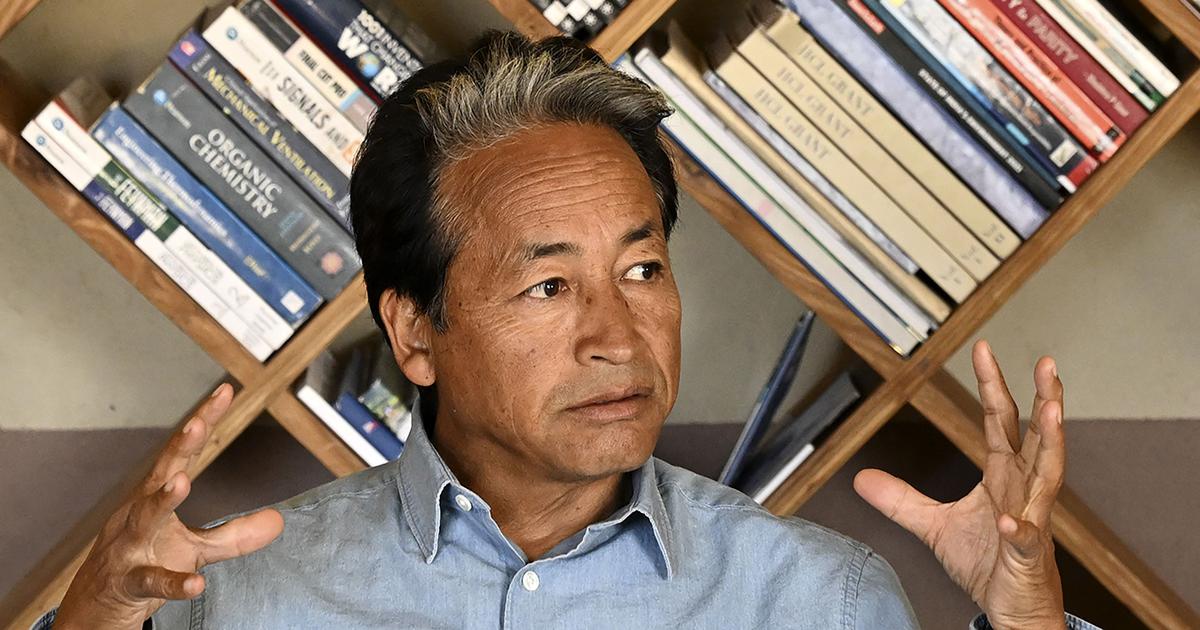
The Supreme Court on Wednesday verbally asked the Union government to rethink the continued detention of activist Sonam Wangchuk, who has been detained since September, considering that “his health is not that good”, Live Law reported.
A bench of Justices Aravind Kumar and PB Varale was hearing a petition filed by Wangchuk’s wife Gitanjali Angmo challenging the activist’s detention under the National Security Act.
Wangchuk was detained on September 26 and taken to a jail in Rajasthan’s Jodhpur after protests in Leh demanding statehood for Ladakh and its inclusion in the Sixth Schedule of the Constitution. During the protests, demonstrators clashed with and threw stones at security personnel, injuring several of them. Four persons were killed in police firing.
Varale told Additional Solicitor General KM Nataraj that it had been nearly five months since Wangchuk was detained and highlighted the activist’s worsening health condition.
“Considering more particularly his health and condition of the detenue, which is certainly not very good,” Live Law quoted Varale as saying. “Even the report which we saw on the earlier occasion, it shows that his health is not that good, and there are certainly [other factors] age-related. Is there any possibility for the government to rethink?”
Nataraj responded that he will place the suggestion before the authorities, Bar and Bench reported.
During the hearing on Wednesday, Nataraj alleged that Wangchuk had been responsible for the violence in Leh.
“The person need not actively participate, the propensity of person to influence a group of persons...that is more than sufficient [for preventive detention],” he said.
Nataraj also argued that Wangchuk had not challenged the subsequent orders of the state government and the advisory board upholding the detention order passed by the Leh district magistrate, Live Law reported.
He highlighted that there are several layers of screenings under the National Security Act to ensure the person who has been detained is treated fairly, the legal news outlet reported.
In response, the court observed that the petitioner’s arguments were on the very foundation of the detention order, Bar and Bench reported.
Including Ladakh in the Sixth Schedule of the Constitution would allow for the creation of autonomous development councils to govern land, public health and agriculture.
In August 2019, the Bharatiya Janata Party-led Union government abrogated the special status of Jammu and Kashmir under Article 370 of the Constitution and bifurcated the state into the Union Territories of Jammu and Kashmir and Ladakh.
The lack of a legislature in Ladakh has led to increasing insecurities among the residents of the Union Territory about their land, nature, resources and livelihoods, and stoked fears that the region’s cultural identity and fragile ecosystem may be in jeopardy.
Following Wangchuk’s detention, key regional groups Apex Body Leh and Kargil Democratic Alliance withdrew from the talks with the government, stating that “talks cannot be held at gunpoint”.
Also read: Nine false claims about Sonam Wangchuk – and why they fall flat
