




Chhattisgarh: SC restrains forcible exhumation and relocation of Adivasi Christians’ bodies
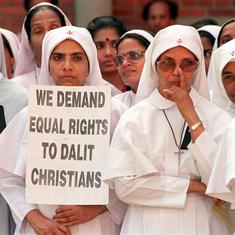
A petition alleged that the community was being denied burial rights in their villages, and their bodies were being dug up and reburied elsewhere.

The Supreme Court on Wednesday issued an interim order restraining the forcible exhumation and relocation of the bodies of Adivasi Christians from their village burial grounds in Chhattisgarh, Live Law reported.
A bench of Justices Vikram Nath, Sandeep Mehta and NV Anjaria was hearing a public interest litigation alleging that the bodies of Adivasi Christians were being forcibly exhumed and relocated to undisclosed locations.
The petitioners also alleged that the community was being denied burial rights in their villages, Bar and Bench reported.
The bench sought a response from the Chhattisgarh government and directed that no further exhumation of buried bodies be carried out in the meantime.
The petition was filed by the Chhattisgarh Association for Justice and Equality, some pastors, social activists, a doctor and three residents of the state under Article 32 of the Constitution, Live Law reported.
Article 32 allows individuals to directly approach the Supreme Court for the enforcement of fundamental rights.
The petitioners alleged that a split verdict delivered by the Supreme Court on January 26, 2025, in another case was being used by the Chhattisgarh Police to prevent the burial of Adivasi Christians in their villages, Live Law reported. This was taking place even in villages where there was no local dispute, it added.
The January 26 verdict had come on a petition challenging the Chhattisgarh High Court’s January 9 ruling denying a Christian pastor’s son the right to bury his father’s body at a graveyard in Bastar’s Chhindawada village.
While Justice BV Nagarathna permitted the petitioner to bury his father in his private property, Justice Satish Chandra Sharma held that the burial could be held only at the area designated for Christians, which was at Karkapal village.
Since the pastor’s body had remained in a morgue since January 7, the judges issued common directions instead of referring the matter to a larger bench. The body was directed to be buried about 20 km from the village, as suggested by the Chhattisgarh government.
On Wednesday, the petition in the Supreme Court claimed that incidents of bodies being exhumed after burial and removed without the family’s consent were not isolated but form a recurring pattern across districts in Chhattisgarh, particularly in Adivasi areas, Bar and Bench reported.
It added that the exhumation and forced reburial of bodies at distant locations, sometimes more than 50 km away, constituted “cruel, inhuman, and degrading treatment of the deceased and their families”.
The petition sought directions to restrain state government authorities and others from interfering with the burial of deceased persons in their native villages, the legal news portal reported.
It asked the Supreme Court to affirm that all persons, irrespective of religion, caste or Adivasi status, are entitled to burial in the village where they lived, in the same manner as other communities.
The petition also sought directions to all gram panchayats to demarcate burial areas for all communities without discrimination. It also urged the state to encourage common or shared graveyards to promote equality and social harmony, Live Law reported.
