









MEA says West Asia conflict causing ‘great anxiety’, confirms Indian casualties
The ministry said that nearly one crore Indians live and work in the Gulf region, and their safety and well-being remain its ‘utmost priority’.
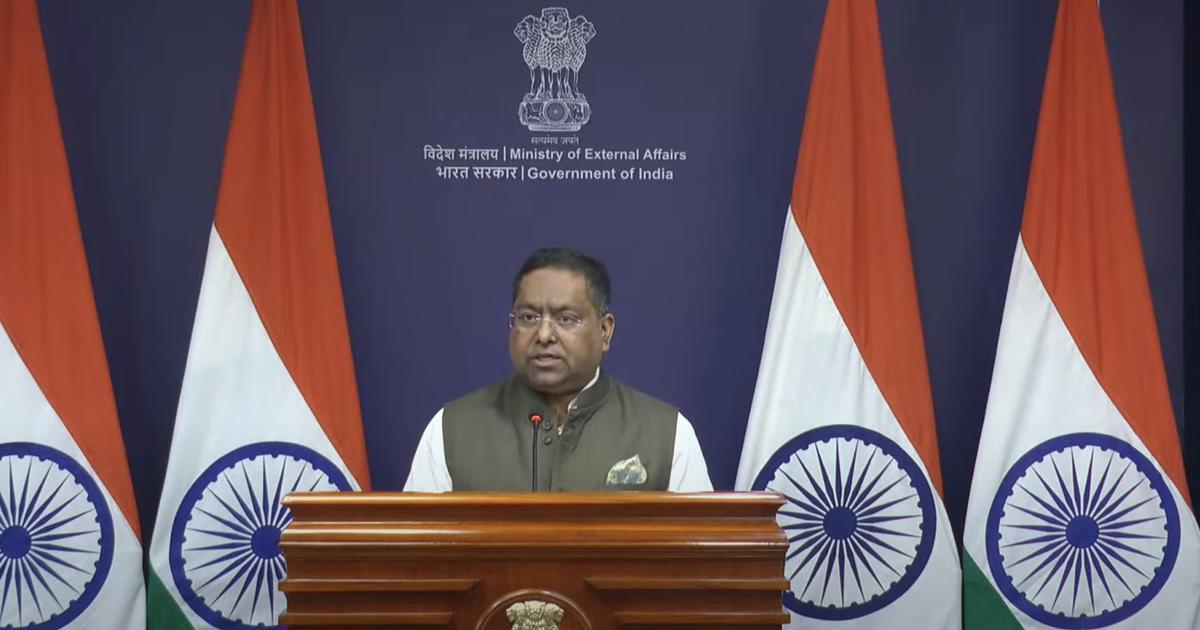
The Indian government on Tuesday said the ongoing conflict in Iran and the Gulf region was evoking “great anxiety” and confirmed that some Indian nationals have been killed while others remain missing.
“As a proximate neighbour with critical stakes in the security and stability of the region, these developments evoke great anxiety,” the Ministry of External Affairs said in its second statement since the conflict began on Saturday.
Referring to its earlier statement, the foreign ministry said India had urged all sides to exercise restraint, avoid escalation and prioritise civilian safety at the onset of hostilities.
The ministry highlighted that nearly one crore Indians live and work in the Gulf region, and said that their safety and well-being remain its “utmost priority”.
It also warned of the wider impact on trade routes and energy supply chains and firmly opposed attacks on merchant shipping.
The ministry confirmed that the recent hostilities have resulted in the deaths of some Indian nationals, while others remain missing following attacks on ships.
“India strongly reiterates its call for dialogue and diplomacy,” the ministry said. “We raise our voice clearly in favour of an early end to the conflict.”
The statement added that Indian embassies and consulates in the affected countries continue to maintain close contact with Indian nationals and community organisations, issuing regular advisories and providing assistance to those stranded.
On Monday, the Directorate General of Shipping had confirmed that three Indian seafarers were killed and one injured amid the conflict while serving on board foreign-flagged vessels.
The department did not provide further details but clarified that no Indian-flagged ships have reported casualties, detentions or hostile forces boarding.
One Indian mariner was reported killed on Monday on a Marshall Islands-flagged oil tanker in the Gulf of Oman, after a bomb-carrying drone boat struck the vessel.
Another incident occurred a day earlier when a Palau-flagged oil tanker, was attacked off the coast of Oman, injuring four crew members. Fifteen of the 20 persons on the tanker were Indians. The remaining were Iranians. All affected personnel were evacuated, according to the Oman Maritime Security Centre.
Also read the top updates about the West Asia conflict here
The conflict began on Saturday after Israel and the US launched a joint operation targeting the Iranian regime, alleging that its actions constituted an “existential threat to Israel”. Tel Aviv has been claiming that Iran is “closer than ever” to obtaining a nuclear weapon, which could alter the regional security balance.
Iran has long maintained that its nuclear programme is for civilian purposes.
The ongoing attacks came amid tensions between the three countries over Tehran’s nuclear programme. Washington acts as a guarantor of Israel’s security.
Iran retaliated to the attacks by striking not only Israel and US military bases in the region, but also some ships.
On Monday, Iran claimed that the Strait of Hormuz was “closed” for shipping traffic, warning that any vessel attempting to pass through the strategic waterway would be set on fire.
The Strait of Hormuz is a narrow waterbody that connects the Gulf to the Arabian Sea.
Also read: How the Israel-Iran conflict could impact India
