








Trump urges other nations to send warships to secure Strait of Hormuz
Many countries will be sending Navy ships to keep the strategic waterway open and safe, the United States president said.
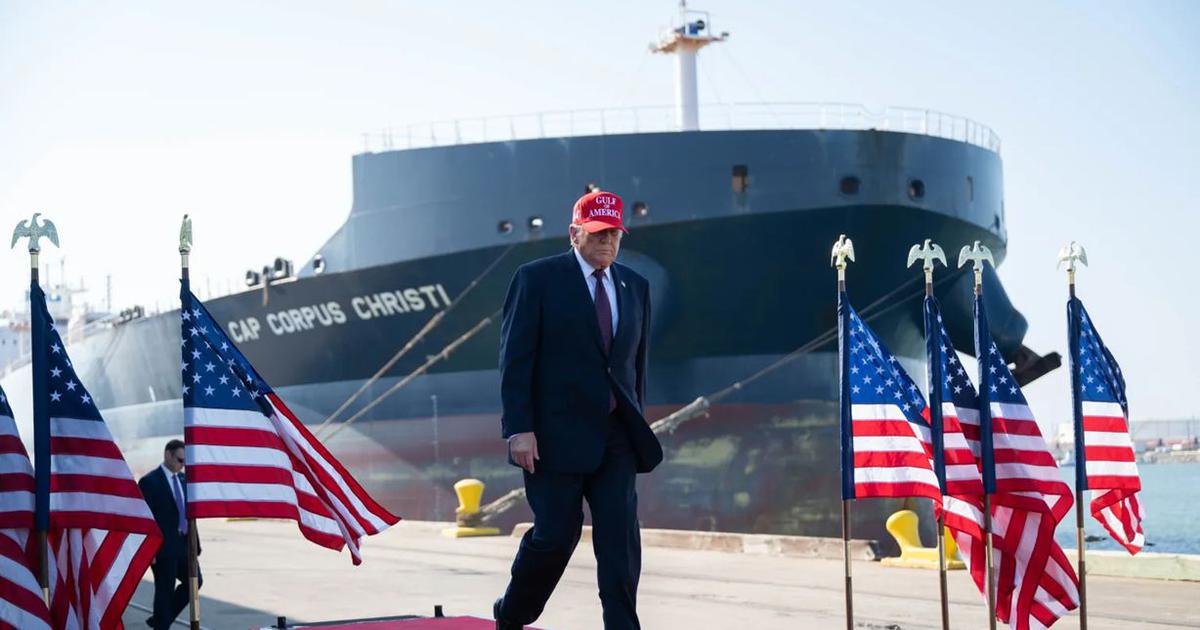
United States President Donald Trump on Saturday urged other countries to send warships to help secure the Strait of Hormuz amid the conflict in West Asia.
“Many countries, especially those who are affected by Iran’s attempted closure of the Hormuz strait, will be sending warships, in conjunction with the United States of America, to keep the strait open and safe,” Trump said on social media.
Trump claimed that the US and Israel had “already destroyed 100% of Iran’s military capability”. But he added that it was easy for Tehran to use drones, close-range missiles or drop mines in the strategic waterway “no matter how badly defeated they are”.
“Hopefully China, France, Japan, South Korea, the UK and others that are affected by this artificial constraint, will send ships to the area so that the Hormuz strait will no longer be a threat by a nation that has been totally decapitated,” Trump said.
He said that in the meantime, the US military will bomb Iran’s shoreline and shoot Iranian “boats and ships out of the water”.
“One way or the other, we will soon get the Hormuz strait open, safe and free!” he added.
Trump’s comment came two days after US Energy Secretary Chris Wright told CNBC on Thursday that the US military was “not ready” to escort oil tankers through the Strait of Hormuz as its resources are focused on the operations against Iran.
Speaking to the TV channel, Wright had said that the US Navy would begin escorting tankers through the waterway “relatively soon”, likely by the end of the month.
On March 3, Trump said that the US would provide protection for oil tankers passing through the strait.
The conflict in West Asia began on February 28 when the United States and Israel launched an attack on the Iranian government. Tehran has retaliated by striking Israel and US military bases in the region, and targeting major cities in Gulf countries and some ships.
Iran has effectively blocked the Strait of Hormuz, the narrow waterbody connecting the Gulf to the Arabian Sea, for most international commercial vessels. About 20% of global petroleum supply passes through the maritime chokepoint.
The International Energy Agency on Thursday said that the fighting has caused the “largest supply disruption in the history of the global oil market”.
Global oil prices have surged since the conflict began. The benchmark Brent crude oil price has crossed the $100 per barrel-mark. The price was about $72.8 per barrel on February 27, a day before the conflict began.
Also read: Two India-bound LPG ships crossed Strait of Hormuz, confirms Centre
