








‘Premature’: SC rejects challenge to government order on playing all six paras of ‘Vande Mataram’
The bench observed that the advisory neither makes singing the song mandatory, nor prescribes penal consequences for non-compliance.
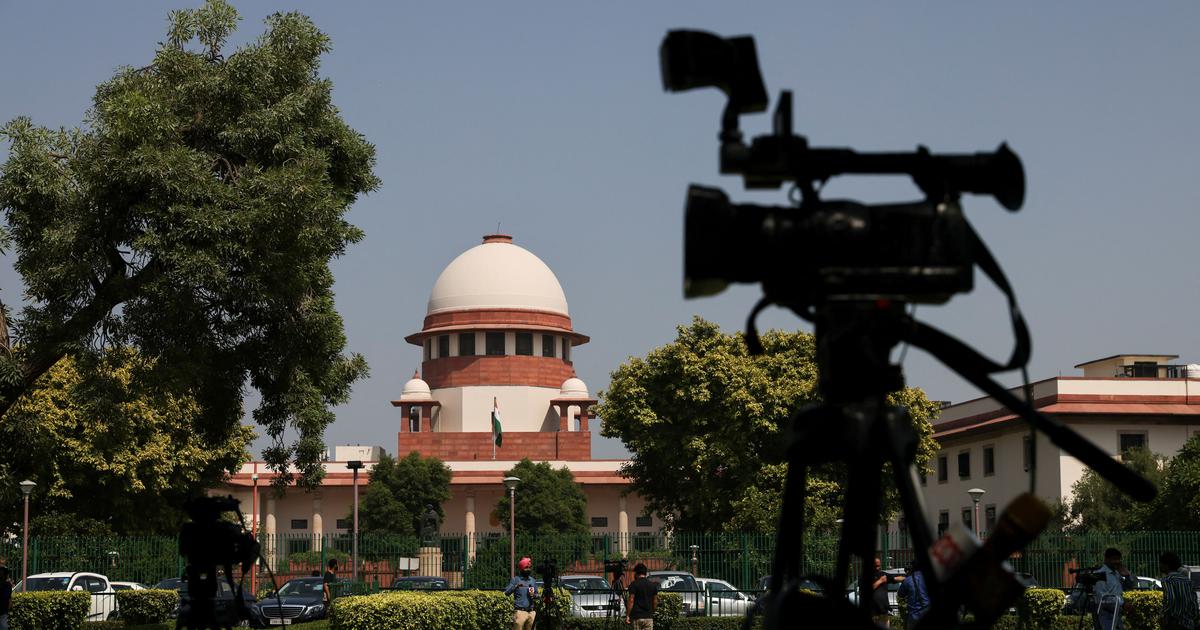
The Supreme Court on Wednesday declined to entertain a petition challenging the Union government’s advisory on the playing and singing of all six stanzas of the patriotic song Vande Mataram at government and public functions, Bar and Bench reported.
A bench comprising Chief Justice Surya Kant, and Justices Joymalya Bagchi and Vipul Pancholi was hearing a writ petition filed by Muhammed Sayeed Noori, who runs an academic institution.
Noori had challenged the January 28 Ministry of Home Affairs circular, which directed that all six stanzas of Vande Mataram be sung first when it is played together with the national anthem Jana Gana Mana.
Only the first two stanzas of the song had been played at official functions earlier. The remaining stanzas, which invoke Hindu goddesses Durga, Lakshmi and Saraswati, had been omitted.
The counsel for the petitioner argued that even without formal penalties, the advisory could lead to social pressure and compel individuals to participate.
The persons who do not follow it will be “singled out and discriminated against”, the counsel argued.
The petitioner submitted that persons of all religious backgrounds, including atheists, would eventually be forced to sing the song as a “social demonstration of loyalty”, adding that “patriotism cannot be compelled”.
On Wednesday, the Supreme Court held that the plea was “premature” and based on “vague apprehensions”, Live Law reported.
The bench observed that the advisory neither makes singing the song mandatory nor prescribes penal consequences for non-compliance, Bar and Bench reported.
“We will hear all this when there are penal consequences or [it is] made mandatory,” Bar and Bench quoted the court as saying.
Vande Mataram was written in Sanskrit by Bankim Chandra Chatterjee in 1875 and is a popular patriotic song from India’s freedom movement.
A Press Information Bureau note issued on November 6 to mark 150 years of the song stated that the Constituent Assembly had adopted Jana Gana Mana as the national anthem and Vande Mataram as the national song.
The note quoted Rajendra Prasad, the first president, as having told the Assembly in January 1950 that Vande Mataram, because of its role in the freedom movement, “shall be honoured equally with Jana Gana Mana and shall have equal status with it”.
However, the Constitution mentions only the national anthem, not Vande Mataram.
Also read: Vande Mataram debate: The novel in which the poem appears is a cry for freedom – but from whom?
