









Trump says US will not lift blockade on Iranian ports till Iran agrees to peace deal
Iran’s President Masoud Pezeshkian said there is deep historical mistrust in his country toward the US government and that Iranians ‘do not submit to force’.
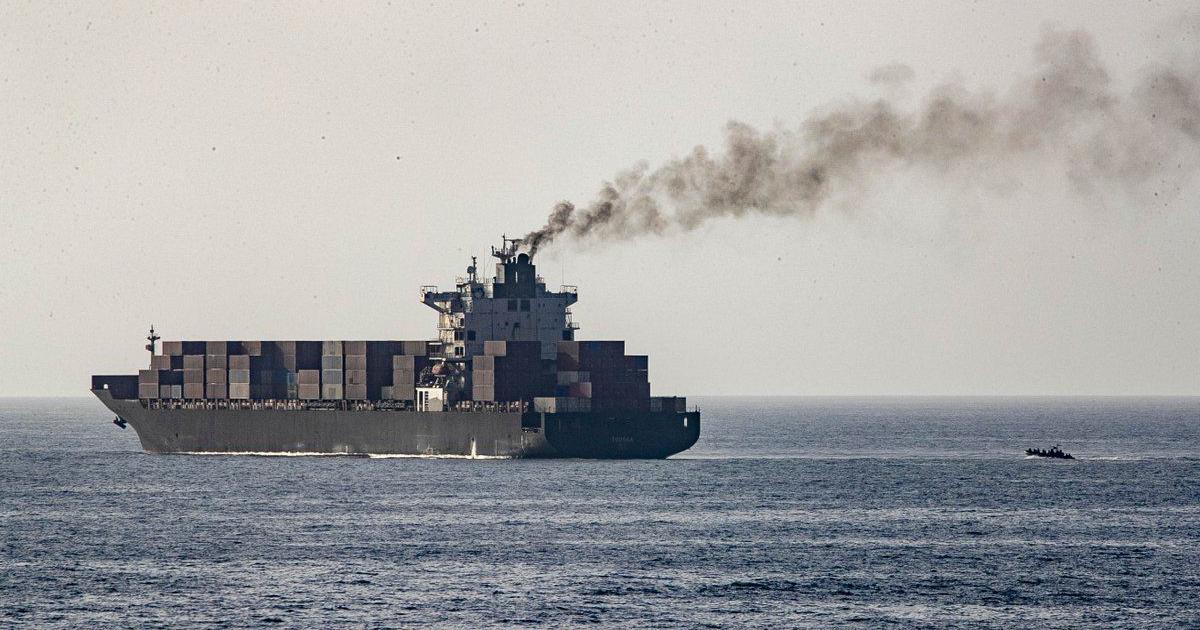
United States President Donald Trump on Monday said that his country will not lift its blockade on Iranian ports until Tehran agrees to a peace deal to end the war in West Asia.
“The blockade, which we will not take off until there is a ‘deal,’ is absolutely destroying Iran,” Trump claimed on social media. “They are losing $500 million dollars a day, an unsustainable number, even in the short run.”
Washington on April 13 had begun blockading all ports in the Iranian gulf region.
The developments come amid continuing uncertainty over whether fresh talks between the two countries to end the war will take place. On Monday, Iranian broadcaster IRIB said that Tehran has no plans to participate in the second round of negotiations with the US in Pakistan.
The two-week ceasefire in West Asia, which took effect on April 8, will end on Wednesday.
On Monday, Iranian President Masoud Pezeshkian on social media said that there continues to be “deep historical mistrust in Iran” towards the United States government.
“…Unconstructive and contradictory signals from American officials carry a bitter message; they seek Iran’s surrender,” Pezeshkian said. “Iranians do not submit to force.”
Since the naval blockade imposed on April 13, US forces have directed 27 vessels to turn around or return to an Iranian port, the BBC quoted the United States’ Central Command as saying. On Sunday, Trump said that the US Navy had fired at and captured a sanctioned Iranian cargo vessel after it attempted to breach the blockade.
Iranian state-owned news agency Tasnim said that after the US Navy struck the vessel, Iranian forces also attacked US military ships with drones. Tehran said that it will retaliate against the US’ actions.
Iran has also maintained its own blockade on the Strait of Hormuz, a narrow waterbody connecting the Gulf to the Arabian Sea, triggering a global energy crisis. About 20% of global petroleum supply passes through the maritime chokepoint.
The war
The US and Israel launched an attack on Iran on February 28, claiming that Tehran’s action posed an existential threat to Israel. Washington acts as a guarantor of Israel’s security. Iran retaliated by striking Israel and US military bases in the region and targeting major cities in Gulf countries.
On April 8, Washington and Tehran agreed to a two-week ceasefire to allow further negotiations to end the conflict. While Israel, which was not involved in the talks, has not struck Iran since the ceasefire took effect, it had continued to attack Lebanon until the deal reached on Thursday.
The peace talks between Iran and the US that were held in Islamabad collapsed on April 12.
Israel has been claiming that Iran is close to obtaining a nuclear weapon, which could alter the regional security balance. Tehran has long maintained that its nuclear programme is for civilian purposes.
