








SC quantifies Rs 30,000 as monthly value of homemakers’ labour in motor accident claims
The determination shall be revised by 10% cumulatively every three years, the bench said.
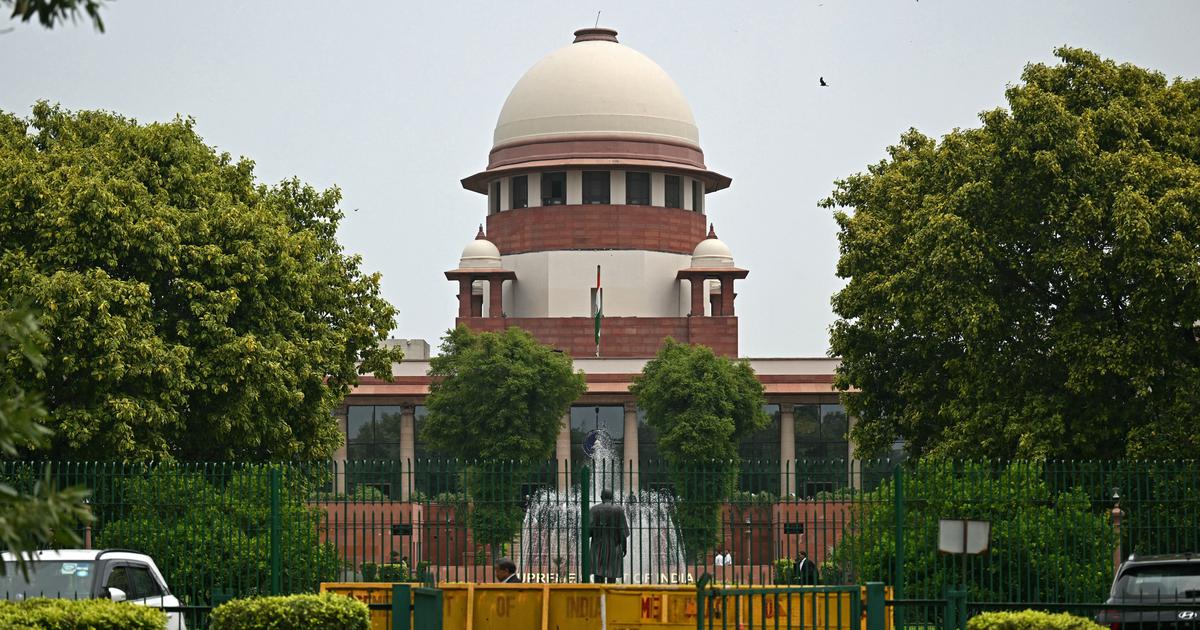
The Supreme Court on Thursday quantified the value of domestic labour by homemakers at Rs 30,000 per month while hearing a man’s appeal demanding additional compensation for the death of his wife in a 2001 motor accident in Haryana, Live Law reported.
The Punjab and Haryana High Court had awarded a compensation of Rs 8 lakh to the family in 2024, Bar and Bench reported.
On Thursday, a Supreme Court bench of Justices Sanjoy Karol and NK Singh said it had arrived at the value of Rs 30,000 by quantifying the minimum “loss of domestic care” in the absence of a homemaker.
“This determination shall be revised by 10%, cumulatively, every three years,” the court added.
The bench noted that caregiving work, mostly by women in the country, is estimated to contribute to about 15% to 17% of the gross domestic product.
“We are also of the view that the housewife contributes to the growth of the human being and the nation,” the court said. “The homemaker builds the nation.”
The court expressed hope that the word “homemaker” would “acquire the acronym of nation builder”, Live Law quoted Karol as saying.
“It is ironic to describe a homemaker as dependent on earning members, when, in reality, the household’s functioning depends substantially on the homemaker,” the bench said.
The bench further clarified that the amount is to be taken into account in cases “where the homemaker does not have an input into the house, in strictly conventional, monetary terms”.
However, it said that in cases where the homemaker is part of the workforce, “the component of loss of domestic care shall be in addition to the monthly income as may be proved before the tribunal/courts”.
Karol added that the “loss of domestic care” in the present case would be in addition to damages recognised by the Supreme Court in a 2017 judgement about compensation in motor accident claims.
In the Pranay Sethi judgement, a Constitution bench of the court had issued guidelines for calculating future income of those killed in motor accidents based on the age and occupation of the deceased.
Edited by Nachiket Deuskar.
