

Artwork removed from London gallery after row about Winston Churchill’s role in Bengal famine
The video installation had referred to the ‘wilful starvation’ of Indians by the former British prime minister, which sparked criticism from some quarters.
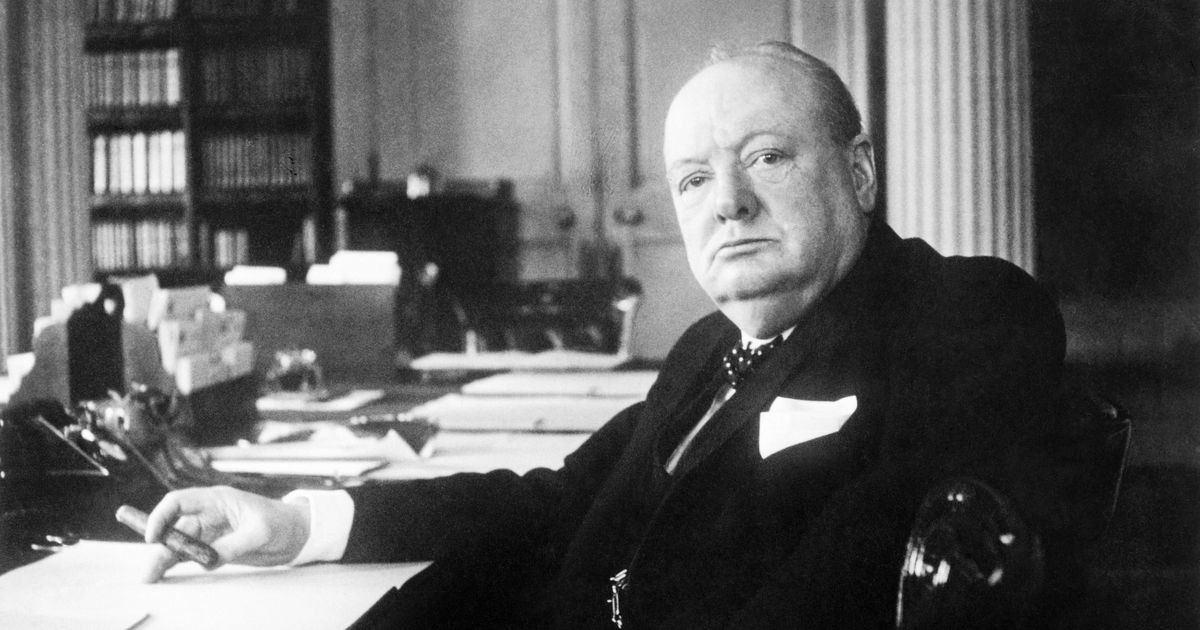
A video installation at London’s National Portrait Gallery has been withdrawn after a controversy erupted over claims about the role of former British Prime Minister Winston Churchill in the Bengal famine in colonial India, the BBC reported on Tuesday.
The 40-minute video by artist Helen Cammock, titled Persistence, had been on temporary display at the gallery, scheduled to end in August. In the video, which Cammock narrated, she described 17th-century English soldier and parliamentarian Oliver Cromwell’s military campaigns in Ireland, and remarked that he “starved people en masse, a little like the wilful starvation of the Indian population by Winston Churchill”, The Guardian reported.
The Bengal famine of 1943 resulted in the deaths of an estimated 30 lakh persons in eastern India. Many scholars, including Nobel laureate economist Amartya Sen, have argued that the famine was caused by the wartime policies of the Churchill-led British government, such as failure to control inflation and the prioritisation of food for soldiers.
However, some have maintained that the Japanese invasion of Burma in 1941, which cut off a major source of rice to India, was the primary reason for the famine, rather than Churchill’s policies.
Cammock’s video installation at the National Portrait Gallery earlier this month prompted an open letter to the gallery by historian Andrew Roberts. The letter, signed by 50 peers, alleged that the video’s description of Churchill was an “ideologically motivated rant”, The Guardian reported. Nicholas Soames, Churchill’s grandson, was among the signatories to the letter.
On Monday, the gallery said that the installation was removed at Cammock’s request.
“We respect her decision, just as we acknowledge the opinions of those who were offended by what was said in the film,” BBC quoted the National Portrait Gallery as saying. “The aim of this project was to give artists the opportunity to create works as personal and creative responses to our collection.”
It clarified that the work was an artistic piece, not a documentary, and the views expressed in the film do not necessarily reflect those of the gallery.
Cammock said her installation was based on academic work, and that it “asks us to think about who is honoured and valorised and who is not; whose stories are told and whose are not”, the BBC reported.
She was further quoted as saying: “Nina Simone [American musician and civil rights activist] once said ‘An artist’s duty, as far as I’m concerned, is to reflect the times’ and sometimes this means revisiting, enquiry and challenge.”
Edited by Sara Varghese.
Also read: This work of micro-history illustrates how laissez faire economics killed millions in British India
