






Delhi SIR process to include persons whose homes have been demolished, says poll panel
Booth level officers will visit the registered address of electors even if it is a pillar under a flyover, the chief electoral officer said.
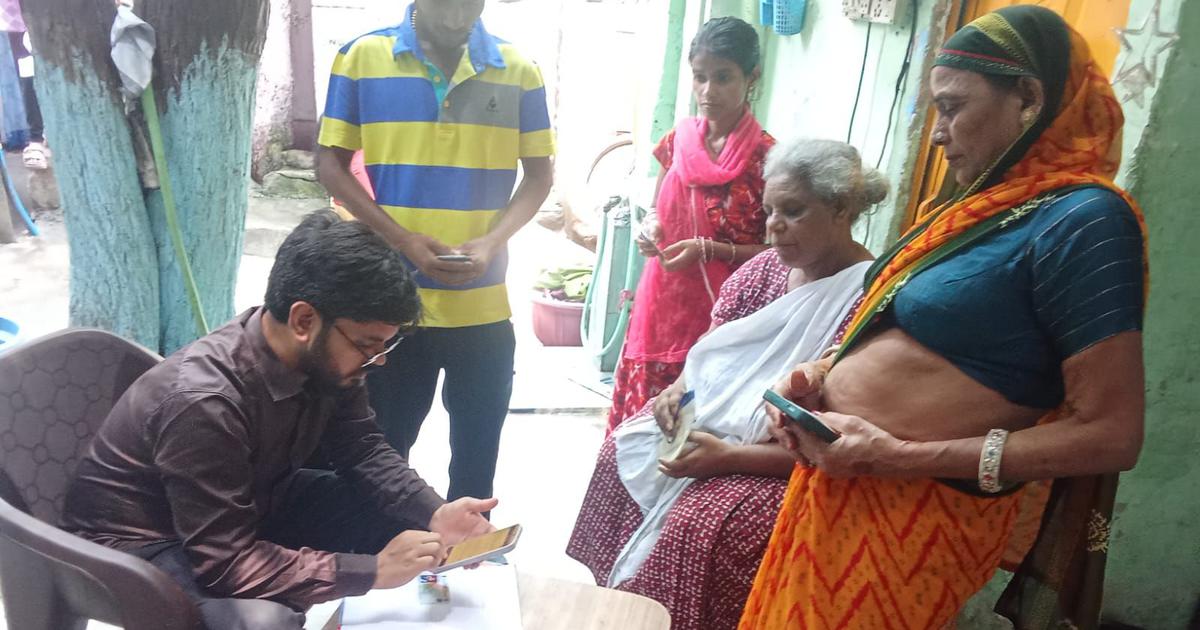
Delhi Chief Electoral Officer Ashok Kumar on Monday said that the Election Commission will come up with a mechanism to ensure that voters whose homes have been demolished recently are not excluded from the special intensive revision of electoral rolls, The Hindu reported.
Kumar’s statement came a day before the door-to-door enumeration exercise for the revision of electoral rolls began in the national capital under phase three of the special intensive revision. The month-long enumeration drive will be carried out from June 30 to July 29 in Delhi, as well as in Jharkhand, Karnataka, Maharashtra and Meghalaya.
Addressing a press conference on Monday, Kumar said that there could be electors whose registered addresses no longer exist because their houses have been demolished by the time of the booth level officer’s visit.
“They might not be able to obtain alternative residence proof during the duration of the [special intensive revision],” The Hindu quoted him as saying. “We will work out a plan to ensure their inclusion.”
Responding to a question about homeless persons, Kumar said that booth level officers would visit every registered address, even if it was a temporary location.
“BLOs will visit the registered address of the elector, even if it is a pillar under a flyover,” the newspaper quoted him as saying. “If they are not there, they can file claims and objections after the draft list is published.”
Delhi has 13,033 polling booths with 1.4 crore voters.
The draft electoral roll will be published on August 5, following which claims and objections can be filed until September 4. These will be disposed of by October 3 and the final electoral roll will be published on October 7.
The third phase of the special intensive revision is underway in 16 states and three Union Territories.
With this phase, the exercise will cover the entire country except Himachal Pradesh, Jammu and Kashmir, and Ladakh. The Election Commission said that the schedule for the revision in these regions will be announced later considering the Census exercise and the adverse weather.
In 2025, the first phase of the voter roll revision exercise was conducted in Bihar and the second phase in 12 states and Union Territories.
Concerns have been raised that the exercise could remove eligible voters from the roll.
Several petitions were filed in the Supreme Court against the voter roll revision.
On May 27, the Supreme Court upheld the legality of the special intensive revision of electoral rolls conducted by the Election Commission, saying that the exercise “advances the constitutional imperative of free and fair elections”.
However, the court said that the poll panel’s inquiries for the purpose of including a person in the voter list do not mean that it can decide on whether the person is an Indian citizen.
Edited by Nachiket Deuskar.
Also read:
Where did your father vote in 2003? Why demand for legacy documents under SIR has no legal basis
Why a scholar of citizenship is taking on Bengal SIR exclusions
An ex-editor writes: My name was deleted during SIR. Now police won’t clear my passport application
