



HC says Sonam Wangchuk’s life must be protected, orders daily health monitoring
The activist has lost more than 9 kg since his hunger strike began on June 28 to demand Union Minister Dharmendra Pradhan’s resignation after exam paper leaks.
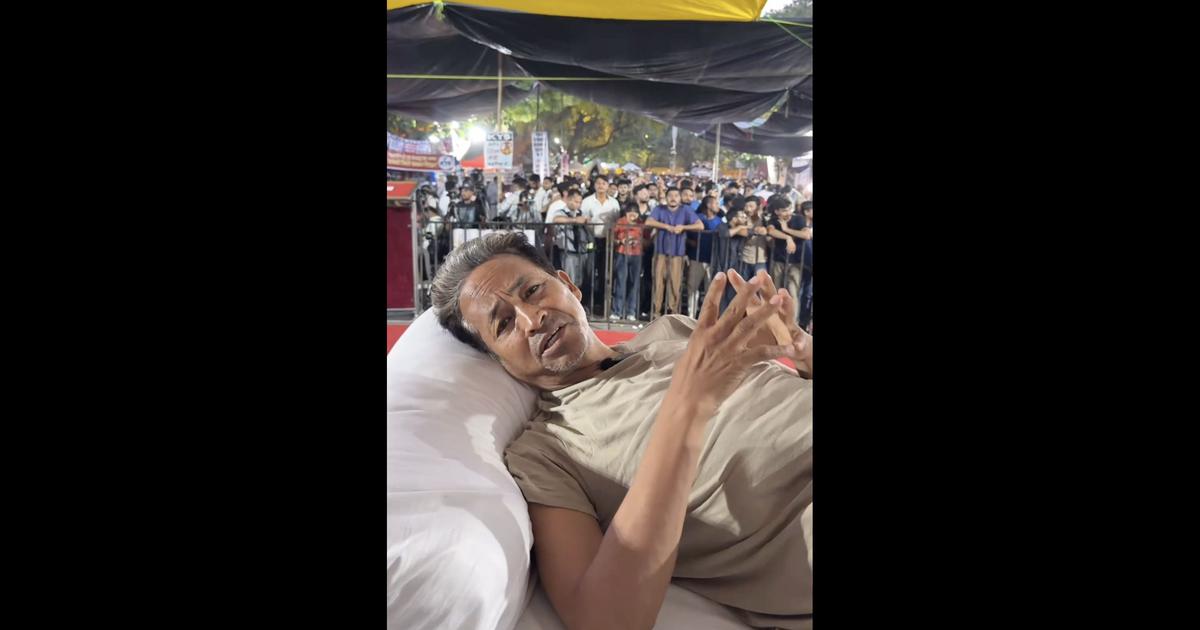
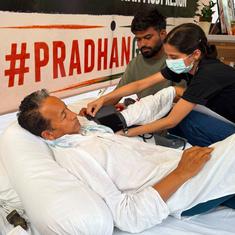
The Delhi High Court on Thursday directed the Centre and the Delhi government to ensure that the health and medical condition of activist Sonam Wangchuk, who has been on a hunger strike at Delhi’s Jantar Mantar since June 28, is monitored daily, Bar and Bench reported.
The court added that any medical intervention required to improve his health should be undertaken by the government.
Wangchuk’s fast is part of a protest by the political campaign Cockroach Janta Party to demand the resignation of Union Education Minister Dharmendra Pradhan after alleged mismanagement in conducting competitive exams.
On Thursday, the court said that “life of any citizen is previous and all efforts ought to be made by government authorities to save the same”, Live Law reported.
The court also took note of the Centre’s submission that Wangchuk’s health was already being monitored by government doctors before disposing of a petition seeking intervention to break the activist’s fast.
The petition, filed by lawyer and activist Rakesh Kumar Saini, stated that Wangchuk’s health had deteriorated rapidly and that he had lost 8.5 kg during the demonstration. If the hunger strike continued, he could lose his life within two days, it added.
Saini had sought directions to the Centre and the Delhi government for taking Wangchuk to a hospital and force-feeding him.
If the activist dies, it would be a matter of great shame for the country and the world, the lawyer had said in his petition.
On Thursday, Wangchuk’s physician, Dr Satish Lamba, said that the activist had lost more than 9 kg since beginning his fast, ANI reported.
“He is mentally alert,” Dr Lamba said. “His current weight is 56.9 kg.”
#WATCH | Delhi: On the health of activist Sonam Wangchuk, Dr Satish Lamba says, "Today, on the 19th day of hunger strike, his total weight loss exceeds 9 kilograms. His blood sugar today is 80 mg/dL, and his pulse is 72 beats per minute. His blood pressure readings are 105/61… https://t.co/6miDskF7S7 pic.twitter.com/hMyR7HBbXJ
— ANI (@ANI) July 16, 2026
On Tuesday, more than 1,800 members of civil society urged Wangchuk to withdraw his hunger strike.
In a letter, the signatories said that they were appealing for an end to the hunger strike because the Union government “does not have a heart or a conscience”.
The signatories include actors Naseeruddin Shah and Ratna Pathak Shah, author Arundhati Roy, academics Nivedita Menon and Jean Drèze, and activists Lalita Ramdas and Kavita Srivastava.
Abhijeet Dipke, who founded the campaign, said on Tuesday that after 17 days of the hunger strike, Wangchuk had started losing muscle mass and was in “immense pain”.
Dipke added that he had “begged him to end his fast”. He quoted Wangchuk as having asked in response why the Union government was not willing to hold a dialogue with the protesters.
Edited by Sneha.
