









Christopher Nolan’s latest movie takes him back nearly 3,000 years, to Greek writer Homer’s epic poem Odyssey. Nolan’s The Odyssey is an immersive, contemporary adaptation of a text that has influenced storytelling in all forms through the centuries.
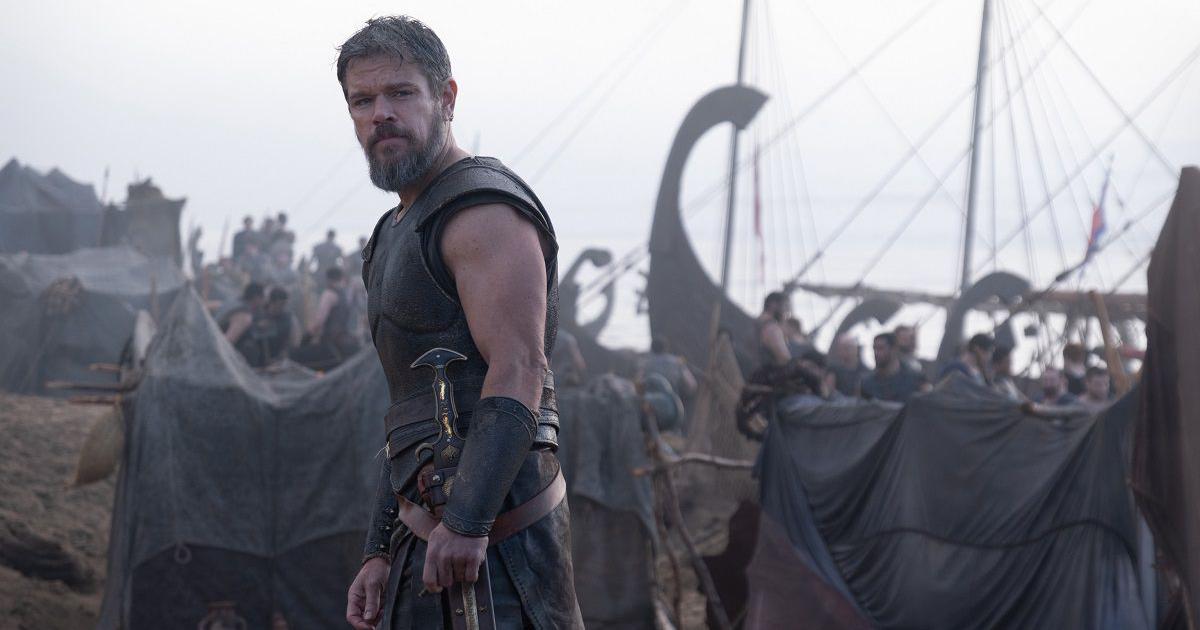
It’s taken the warrior Odysseus (Matt Damon) a decade to win the Trojan War for the king Agamemnon. Odysseus’s brilliant ruse of the Trojan Horse, the sacred offering in whose belly were hidden Odysseus and his men waiting to sack Troy, turned the tide in their favour. Others have returned from the carnage, but not Odysseus.
His kingdom Ithaca has fallen into disarray in his absence. His wife Penelope (Anne Hathaway), their son Telemachus (Tom Holland) and their servant Eumaeus (John Leguizamo) cling to the hope that Odysseus will return.
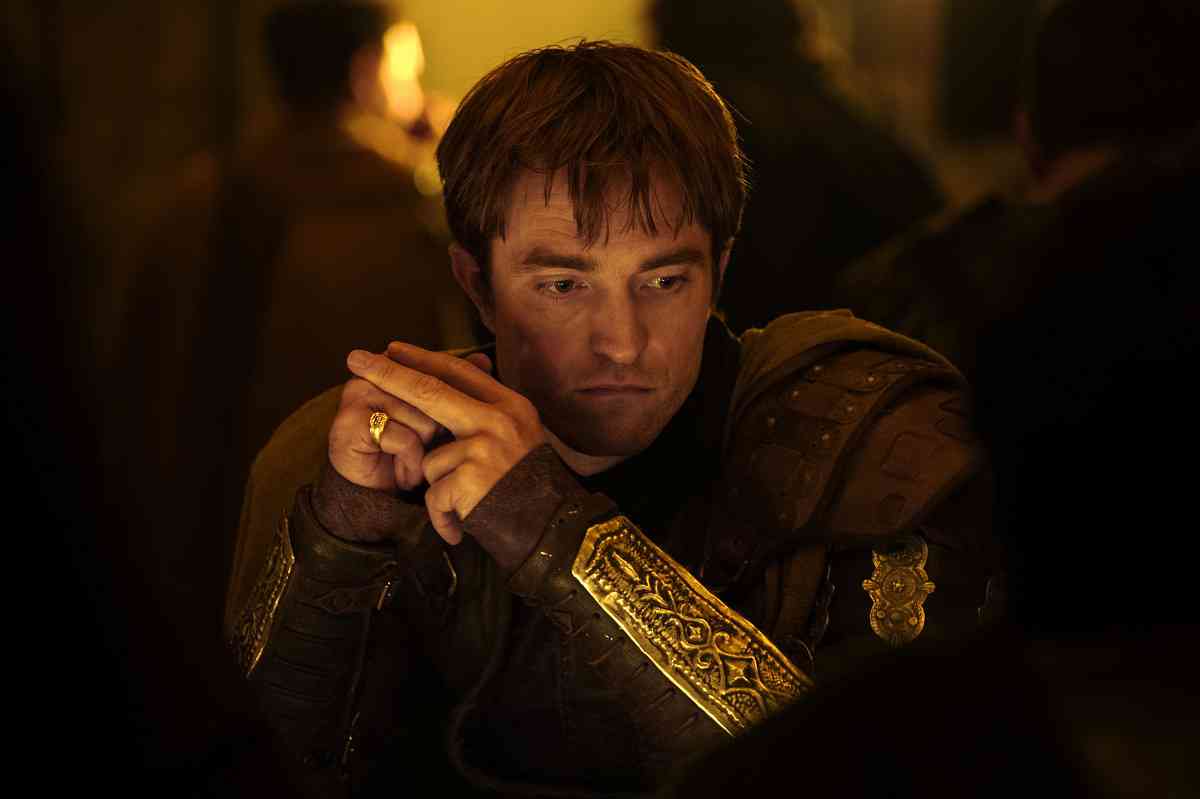
Penelope is refusing to remarry any one of the loutish nobles who have overrun her palace and ridicule the untested Telemachus. Led by Antinous (Robert Pattinson), the men wait for Penelope to yield. Other men in Nolan’s screenplay too ignore the desires of women, adding a layer of re-gendering to a monomythical tale of one man’s travails.
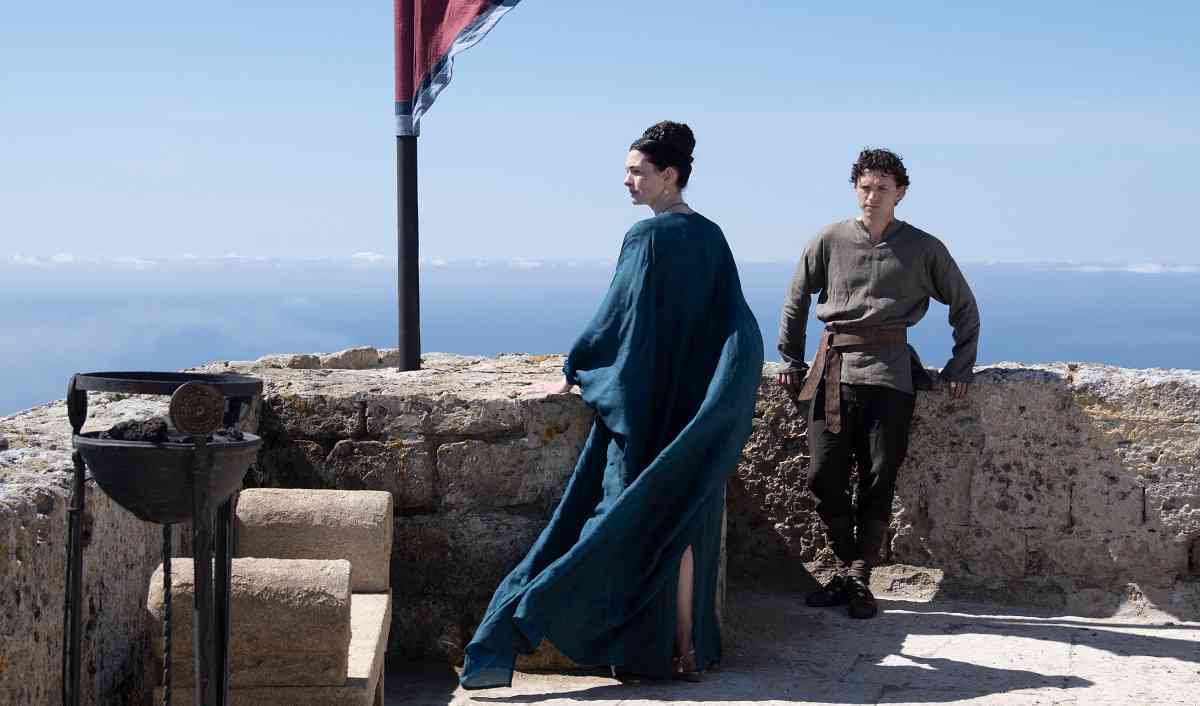
Blown off course by bad weather, questionable choices and hubris, Odysseus is adrift in more ways than one. His homeward voyage is turning out to be less of a heroic adventure and more of a journey within. The legendary hero has begun to doubt the awe-inspiring lore that clings to his very name.
Odysseus and his soldiers confront unsettling adversaries, from the one-eyed Polyphemus to the witch Circe, a tribe of giants and zombie-like warriors in the netherworld Hades. Each of these challenges, accompanied by Ludwig Goransson’s part plangent and part operatic score, yields heart-stopping set pieces seen from the point of view of the warriors.
Nolan is aiming for a sinew-and-spine saga, rather than a swords-and-sandals entertainer. A man sees best when he is on the floor, Odysseus remarks. The movie too offers a ground-up perspective of mythical creatures and larger-than-life characters.
The film covers much of the source material, unlike Uberto Pasolini’s The Return (2024), which explores the final chapter of Odysseus’s return to Ithaca. Both adaptations share a disinterest in meddling gods and confounding prophecies, instead focusing on human experiences and humanist truths about the complicated nature of heroism and the ravages of conflict.
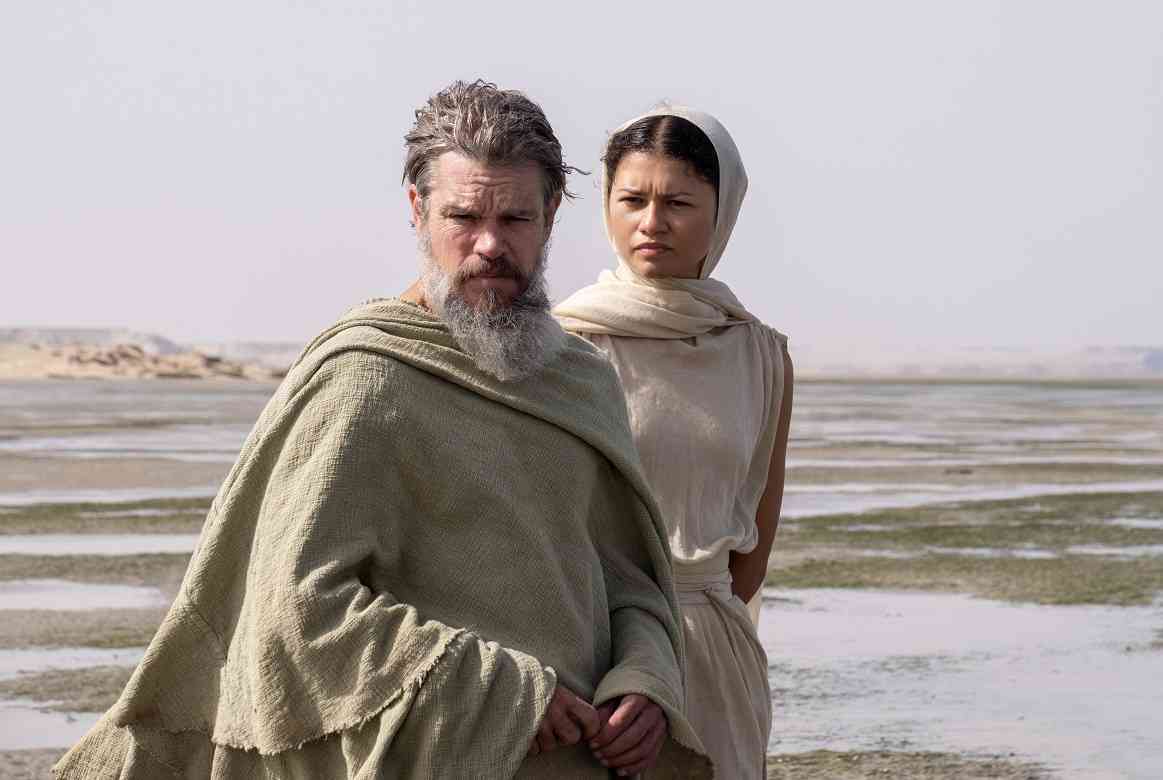
That warmongering comes with a heavy price tag emerges through key players: Odysseus’s increasingly sceptical deputy Eurylochus (Himesh Patel), the enigmatic Circe (Samantha Morton), the unfortunate soldier Sinon (Elliot Page), the apparition (Zendaya).
Calypso (Charlize Theron) turns Odysseus into a lotus-eater. Menelaus’s wife Helen (Lupita Nynog’o), whose extra-marital affair set off the Trojan War, isn’t allowed to forget that hers was the “face that launched a thousand ships”.
The final hours of the Trojan War are a chaotic jumble. Although massive creatures rampage across the screen, they are seen as frightening glimpses in the rush of survival. It’s a tale of “apparent magic”, as Odysseus says, rather than actual magic.
Despite trying to be modest about its grandeur and spectacle, the movie can’t help but be ravishing. Shot on IMAX 70mm film stock, The Odyssey has some of the most striking frames ever created for the big screen. Nolan’s hugely complicated action sequences acquire palpable texture and detailing.
Cinematographer Hoyte Van Hoytema’s magnificent wide-screen compositions are evenly balanced with tender close-ups. The lambent lighting pattern is especially powerful in the terrific extended finale, in which Matt Damon, who is a compelling Odysseus, excels himself. While Damon can’t capture Odysseus’s inner life, as Ralph Fiennes did in The Return, Damon effectively conveys the hero’s yearning for a homecoming.
The practical effects and extensive location shooting anchor the plot in antiquity. The realistic treatment and occasionally prosaic dialogue (any and all mentions of “Mom” and Dad” are always jarring) make this age-old story a present-day chronicle of penitence and redemption. Nolan bypasses the sexual themes in Homer’s Odyssey, finding other ways to show how women are affected by the actions of men.
While Nolan’s command doesn’t flag over 173 minutes, his preferred non-linear storytelling doesn’t always convey the decades-long ordeal faced by the key characters. The sense of waiting, wasting away and wrestling with temptation isn’t always apparent in the fractured narrative. But Odysseus’s fragmentary memories do make the combat veteran an early exemplar of the lingering traumas of war.
Among the standout actors in the sprawling cast are Tom Holland as the earnest Telemachus, John Leguizamo as the loyal Eumaeus and Robert Pattinson as the odious Antinous. Among the women Odysseus meets as he makes his way back to Penelope, Samantha Morton’s ferocious Circe is the most memorable.
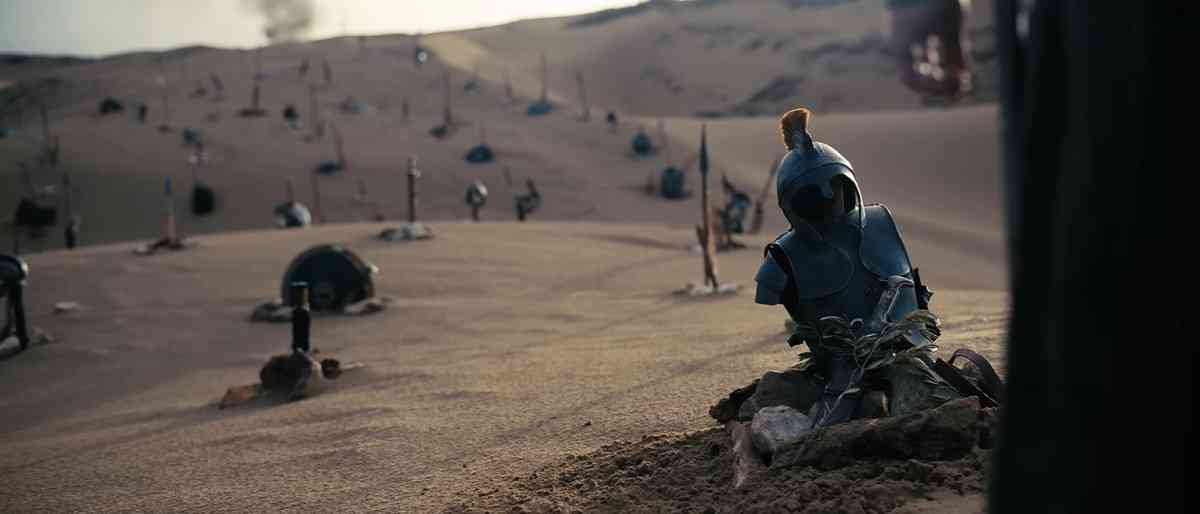
One of the film’s most inventive motifs is in the foreshadowing of the Trojan War’s outcome in Agamemnon’s headgear, which has a tail made of what look like bones. Agamemnon, played by a mostly masked Benny Safdie, is less than flesh-and-blood man than a distant symbol of blinkered loyalty and battlefield valour. Heavy lies the head that wears the helmet, Odysseus realises too.
