










Stephen King’s The Running Man is set in 2025, in a totalitarian, Orwellian America. The book’s impoverished hero, Ben Richards, participates in a gladiatorial game show called The Running Man. Ben and the other contestants must evade being captured and killed for a prize of a billion dollars within 30 days – all during a live broadcast.
The novel yielded a loose adaptation starring Arnold Schwarzenegger in 1987 (available on Netflix). Edgar Wright (Shaun of the Dead, Baby Driver) has directed a new version that doesn’t feel futuristic but very much a tract of the present.
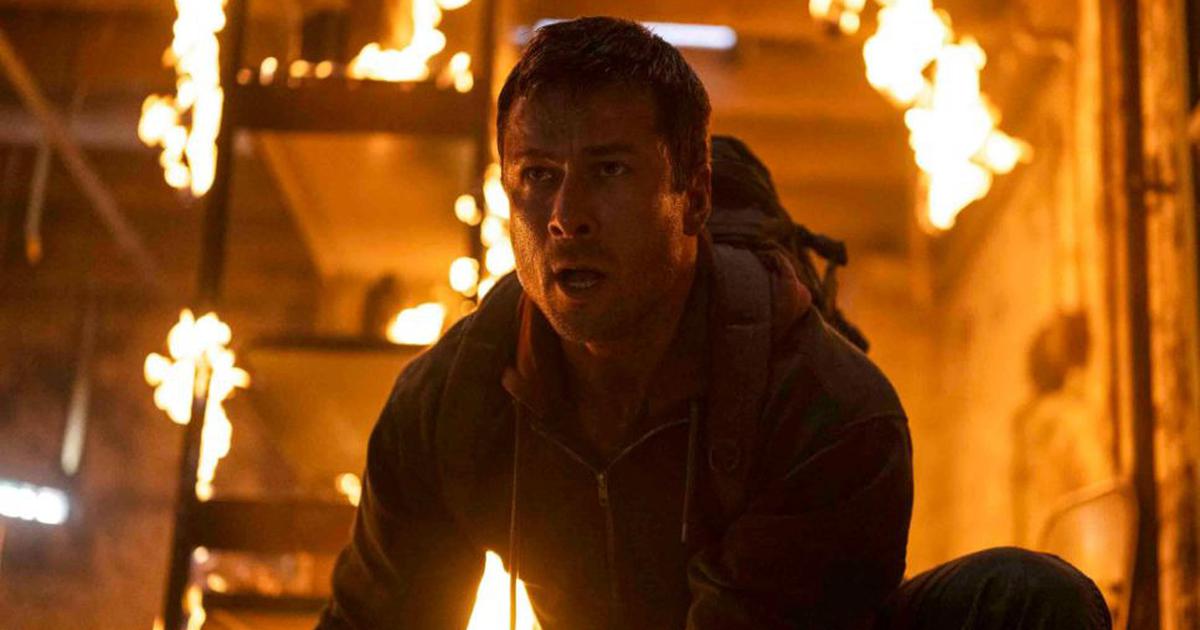
The screenplay, by Wright and Michael Bacal, stays largely faithful to King’s prescient novel. Top Gun: Maverick and Hit Man star Glen Powell plays Ben, an industrial worker who has been blacklisted over his union activities. Solidarity is the one quality that helps as well as hinders Ben when he literally starts running for his life.
Driven to despair by the plight of his wife Sheila (Jayme Lawson) and ailing child, Ben signs up for the show, barely aware of what awaits him. Producer Dan Killian (Josh Brolin) and host Bobby (Colman Domingo) see in Ben the perfect contestant for high ratings.
Near-constantly monitored by cameras, Ben must rely on his personality traits – aggression, empathy, honesty, inventiveness – to make it to the end. Ben meets several characters along the way – played by Emilia Jones, William H Macy, Michael Cera and Daniel Ezra – while trying to dodge a deadly team of killers led by McCone (Lee Pace).

The film perfectly replicates the design, hectic pacing and sudden twists involved in reality television. The mixed visual aesthetic – slummy living conditions, cutting-edge technology, drab backdrops, the TV studio’s razzmatazz – captures the state of near-collapse that has led to Ben’s bread-and-circuses misadventure.
The Running Man adds to enduring concerns about tyrannical regimes and dumbed-down TV culture current anxieties over omniscient social media and the dangers posed by artificial intelligence. Sticking closely to Stephen King’s novel while also putting his own stamp on the source material means that Edgar Wright has a lot of ground to cover.
Information comes thick and fast across 133 minutes. The tone careens between tension and satire, suited perhaps for an attention-deficit audience but not for the more complex themes that the film is tackling.
Ben battles very real obstacles in a kind of simulated reality that is being expertly manipulated by Dan Killian. This aspect of the plot is supposed to draw attention to the rampant fakery involved not just in reality TV but also in a post-truth world. But it means that the movie’s audiences too stop believing what is being fed to them.
Even as the stakes are raised for Ben, the emotional involvement in his survival drops. Why don’t you just mock up the whole game, an irate Ben asks Dan. The response – that human vulnerability cannot be rigged beyond a point – itself feels fake.
After a bracing start, The Running Man comes to depend heavily on the very mind-numbing seductions of reality TV that it has been warning about. At least in terms of delivering a pulsating action thriller, the film rarely disappoints.
An excellent Glen Powell, fraught as well as composed, tough but tender too, steers the movie from one nerve-shredding scene to the next. Deeply invested in Ben’s bust-to-boom journey, Powell stays on course in a movie that loses sight of the finishing line.
