








He is barely out of his teens. His face is slathered with cake – it’s his 21st birthday – and his eyes gleam with anticipation. Are we going to war, he wants to know. Ikkis is the story of this cake-smeared young man and the gung-ho valour beneath the icing.
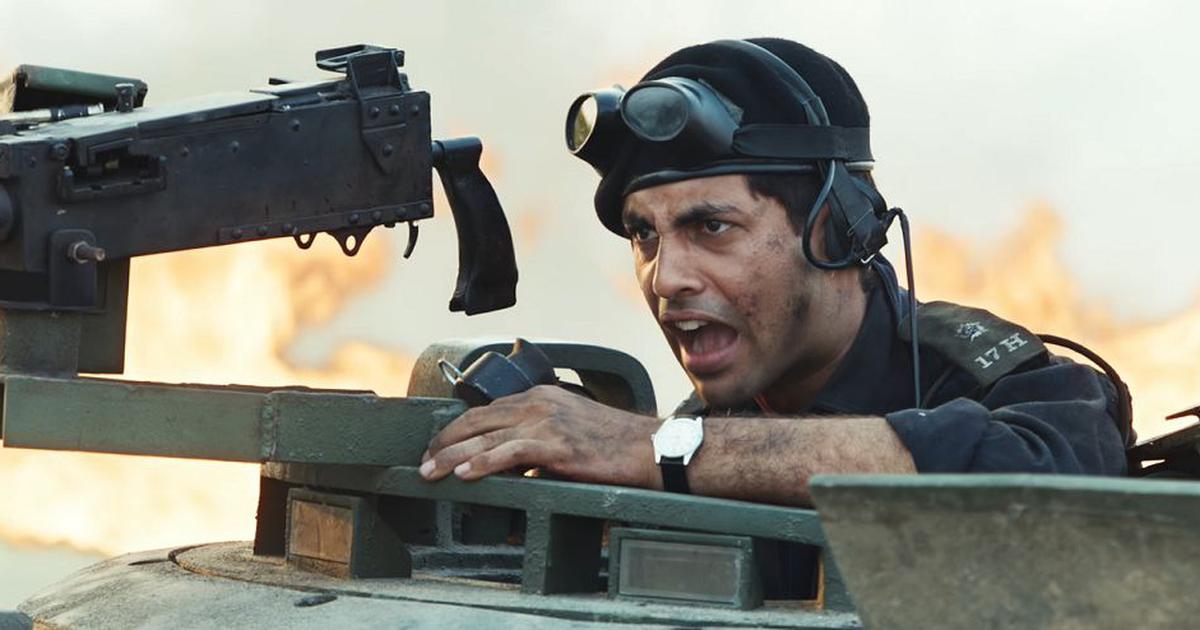
It’s the early 1970s. Arun (Agastya Nanda) is training hard to be a tank commander in the Army. He has proven his leadership skills. He has fallen in love with Kiran (Simar Bhatia). His whole life is ahead of him – until war with Pakistan breaks out in 1971.
Arun is raring to go. He reports for duty with a set of golf clubs, declaring that he will “play golf in Lahore”. His superior officer Hanut (Mukul Dev) is unimpressed, telling him, you know nothing about war.
What is war, indeed? What does it mean to recognise the difference between enemy soldiers and the humans inside the uniforms, to be decisive in combat but graceful in victory? These are among the questions driving Sriram Raghavan’s Ikkis (Twenty One).
The period war drama finds Raghavan in uncharted terrain, far from the corpse-littered homes and spy-heaving European hotels that his films usually inhabit. Having buried his fair share of corpses, the Andhadhun director now deals with the moral consequences of a real person’s untimely loss.
Ikkis is based on Arun Khetarpal, who was posthumously awarded the Param Vir Chakra for his actions during the 1971 war. Since Khetarpal’s life has been amply documented, Ikkis aims higher, trying to understand what unites men who are sworn to kill each other.
The screenplay by Raghavan, Pooja Ladha Surti and Arijit Biswas is divided between Arun’s exploits and its aftermath. Thirty years after Arun’s death, his father Madan (Dharmendra) travels to Pakistan for a personal visit. Madan’s tour guide is Nisar (Jaideep Ahlawat), who was among the Pakistani soldiers who faced Arun on the battlefield in 1971.
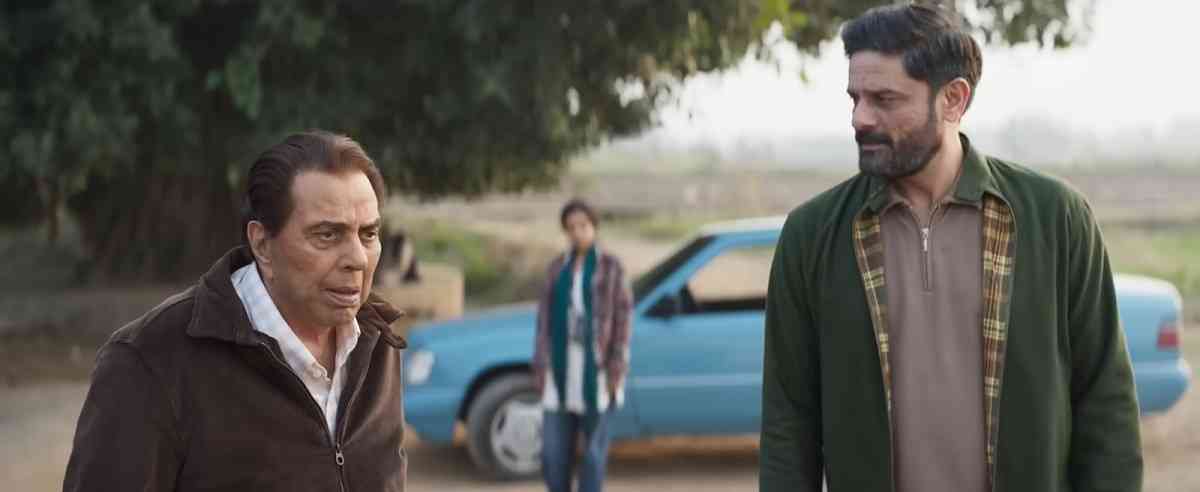
When Arun’s tank rolls across the border for the first time, he remarks that Pakistan does not feel any different. Ikkis too plays up Indo-Pak bonhomie, sometimes overdoing the warmth that Madan encounters as he visit old sites and makes new friends.
Do Pakistanis in 2001 listen only to old Hindi film songs? Can the festering wounds of Partition be healed with a hug and a fond memory? Ikkis is wistful for the times when wars were bitterly fought but the poison caused by these encounters dried up after the last bugle was sounded.
Ikkis sidesteps the vengeance-fuelled hyperbole that results when Indians run into Pakistanis. Scene after scene reveals Raghavan’s efforts to put his own stamp on a genre that has been lost to jingoism.
Ikkis distinguishes itself from nearly every war movie made in the past few decades. Raghavan downscales as well as cools down the military conflict drama, reducing it to its basic elements of bravery and battlefield strategy. The film proves that it’s possible to recast such stories and rescue them from excess.
The overall feeling is of a production from the 1970s itself. The pacing is initially slow, the storytelling old-fashioned, the visuals consciously unmonumental.
The climactic battle between lumbering Indian and Pakistani tanks – the film’s showiest section – is transfixing and surprisingly fleet too. The rest of the time, Ikkis eschews varnishing and garnishing. The soldiers carry out their duties in a business-like manner. Anil Mehta’s cinematography is workmanlike.
The plotting locates Arun’s courage within a larger ethos of discipline and proper conduct, also seen in the other soldiers such as Sagat (Sikandar Kher) and Vijendra (Vivaan Shah). Madan, himself an ex-Army officer, recognises why his son had to die, even as he movingly declares that Arun will be “forever 21” for him.
Not all of Ikkis’s punts pay off. The stop-start clutter created by repeated flashbacks undercuts the emotional impact on occasion.
Arun’s relationship with Kiran is cute but overextended, just like the focus on Madan. It appears that Ikkis has used up every single frame featuring Dharmendra, in his final role before his demise on November 24.
Rather than a talismanic presence, Dharmendra is the second lead, with many scenes that draw unwanted attention to his advanced age and strained dialogue delivery. Although Jaideep Ahlawat provides a fine foil to Dharmendra, their conversations drag on for far too long.
There’s an uneven balance between Arun’s journey, his father’s Pakistan sojourn and Nisar’s remorse. Nisar’s lingering regret never quite comes through, given the film’s assertion that in war, soldiers do what they must do.
After a bumpy start, Ikkis inches towards its real goal: to celebrate a 21-year-old soldier’s sacrifice while also daring to ask if it was necessary in the first place. Agastya Nanda is solid as the boy who loses his life soon after understanding what it takes to be a man.
A spirit of empathy, as casual as it is bold, courses through the 147-minute narrative. Ikkis always benefits from Raghavan’s fondness for no-nonsense, wry characters.
One of the most effective moments occurs when Madan and Nisar realise that they are being tailed by Pakistani spies. Never mind them, they have a job to do, Nisar shrugs. Ikkis too makes its plea for peace and tolerance quietly and coolly, if not always smoothly.
