




The day starts like any other. It will involve oceans of regret, though nobody knows it just yet.
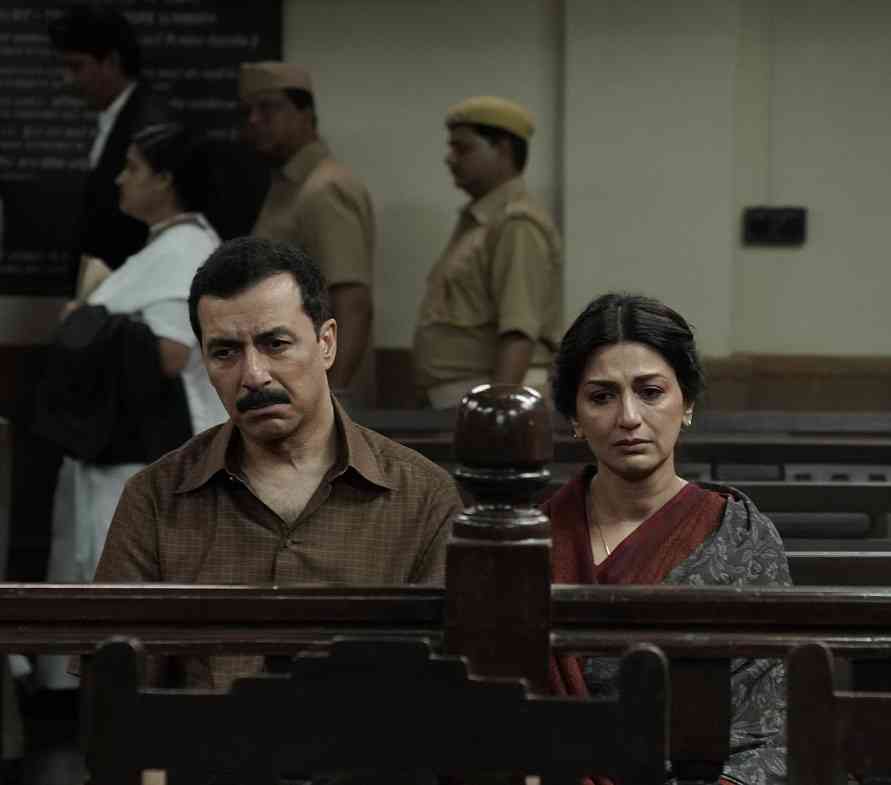
Suman (Divya Sharma) and her younger brother Sahil (Vihaan Sharma) bid goodbye to their mother Mona (Sonali Bendre) and head off to an event. Sahil doesn’t want to go but Mona orders him to. Be your sister’s bodyguard, Mona tells Sahil.
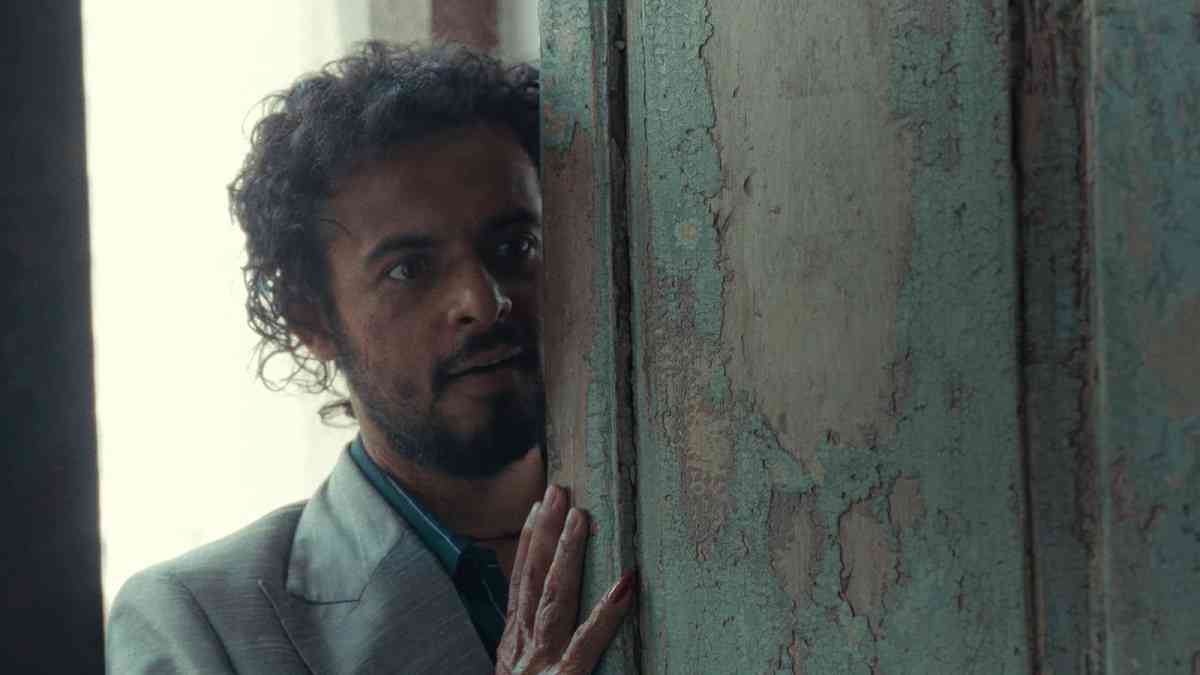
Their father Ashok (Aamir Bashir) was supposed to have dropped them, but he couldn’t. When it starts to rain, the teenagers hitch a ride. The car is being driven by Babu (Akash Makhija) and Rajjo (Ramandeep Yadav), who have fled from Mumbai to Delhi after having committed a couple of brutal crimes.
The children never come home. Their parents grapple with shock and guilt. The investigating sub-inspector Jayaprakash (Ali Fazal) too has moments of what-ifs and what-could-have-beens – one of the more nuanced strands in the often sensationalist and gratuitously grisly Raakh.
The Hindi-language Prime Video series is a fictionalised account of the kidnapping-murders of the siblings Geeta and Sanjay Chopra in 1978 in New Delhi. The killers, Billa and Ranga, were arrested, convicted and eventually hanged in 1982.
The adaptation’s creators and writers, Anusha Nandakumar and Sandeep Saket, share directing duties with Prosit Roy across eight episodes. A tale of depravity and urban horror is packaged through rich production values, stellar cinematography by Saumyananda Sahi and some excellent performances.
Details of the original tragedy have been repurposed to allow Jayprakash to take the lead. In the time-honoured tradition of the police procedural, the hero of Raakh is honest and dogged but also mired in office politics. Jayprakash has his own minor demons.
His father Ghanshyam (Rakesh Bedi), who is keen on Jayprakash’s career advancement, hinders rather than helps. As does Jayprakash’s journalist friend Nisar (Anshul Chauhan), a composite of the real-life journalists Usha Rai and Prabha Dutt, who closely reported on the Chopra case.
The 1970s setting yields relatively empty Delhi streets, fixed telephones and old car models. Otherwise, there’s a modern sense of urgency to the investigation, a demand for quick results, speedy movements between cities and states.
Raakh doesn’t give a proper sense of the time taken to catch the killers, nor of the way in which time itself might have moved more slowly all those decades ago. A promising sub-plot, about the relatively new advancements in forensics, is cancelled out by the forensic investigator neglecting to pass on a vital clue to Jayprakash.
What is effective is the flashback-heavy device of showing the killers to be a few steps ahead of their hunters. Jayprakash and his colleagues are perpetually playing catch up, even as Babu and Rajjo carve up the countryside.
Inevitably in a series about a sickening crime, the human furnaces of Raakh begin to dominate the narrative.
There’s an uneasy mix of curiosity about and disgust towards the killers, who are even referred to as “cockroaches” and “termites”. While the bug-eyed Babu is irredeemably noxious, Rajjo has the more heart-tugging story, which is reminiscent of the social background of the perpetrators behind the Delhi gang-rape in 2012.
Without making concessions for Rajjo, Raakh creates a measure of empathy for a serial criminal. Ramandeep Yadav movingly plays a desperado who’s far gone even before he meets Babu.
Ayush Trivedi’s dialogue is heavy on profanity, with Babu and Rajjo never dropping sentences without swear words in them. While the cussing is instantly tiresome, the shifting power dynamic between Babu and Rajjo is gripping in the way a train wreck is.
Like the murderers in The Honeymoon Killers or Monster, the men are locked into a symbiotic relationship that has a homoerotic edge. The actor Mukund Pal features in a sad, beautifully observed sub-plot about queer subculture in 1970s Delhi.
Raakh adds lashings of cruelty to the manhunt. The series treats the grieving parents with tenderness, and gives Sonali Bendre and Aamir Bashir some heartrending scenes. But Raakh can’t help playing out the source of their anguish in full.
The need to tell as well as show is strong. As if the kidnapping and slaying of children isn’t disturbing enough, Raakh goes full-tilt graphic with the gruesomeness.
It was entirely unnecessary to witness the agony suffered by Suman and Sahil, but Raakh doesn’t let go of the ultimate opportunity to shock. The series redeems itself in its poignant coda, which pays tribute to the ill-fated adolescents and their gutted parents with a grace that is sometimes missing from the sordid storytelling.
