



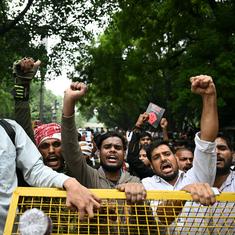
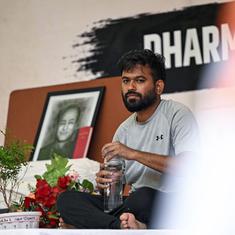


Last Friday, while the country reeled from a cash crunch, a group of 60 millennials gathered at a café on Hudson Lane in North Delhi to protect the privacy of a woman. Lawyers, students, photographers, engineers – the millennials had never met the woman, yet they felt passionately about the clarion call from a Facebook page in support of Sonam Gupta.
“Of course I stand with Sonam Gupta, whoever and wherever she is,” said Aastha Kapoor, a lawyer. “I am against the victimisation of any woman.”
At the beginning of 2016, the images of a few currency notes had gone viral on social media, because of the plaintive, yet sullen words, written on the notes in blue ballpoint ink. The words, written in Devanagari, said: “Sonam Gupta bewafa hai.” Sonam Gupta is unfaithful.
In tone, the message resembled the graffiti produced by thousands of jilted lovers and trampled egos across bathroom walls, classroom tables and bus seats in the country – an attempt to make notorious the name of a female who knew what she wanted, that is, not the writer of the complaint.
The meme was forgotten – until November 8, when the demonetisation of Rs 500 and Rs 1, 000 notes brought the phrase #SonamGuptaBewafa back into circulation. A brand new Rs 2,000 note appeared online, with the same message inscribed on it – suggesting that both the wilful Sonam Gupta, and her stubborn slanderer, were still around.
The reason behind raghuram's resign.."sonam gupta bewafa hai" pic.twitter.com/maSHGod635
— The_Good_Indian (@bhai_bechain) June 24, 2016
Relationship Status: #BewafaaiZoned By Sonam Gupta. ;)#BlackMoney #blackMoneycleanup #ModiFightsCorruption #digitalbanking #SonamGupta pic.twitter.com/bgRibML7bp
— Sir Ravindra Jadeja (@SirJadeja) November 13, 2016
She's a brand now. International Bewafa#SonamGupta pic.twitter.com/PHB13T3VyU
— Littlerebel (@iuagarwal) November 14, 2016
Government of India should declare Sonam Gupta as National Bewafa of India! 😂 pic.twitter.com/sJNJvF5JMs
— Ishita. (@KajuKatli__) November 13, 2016
On Twitter, users defended the mysterious Gupta, while on Facebook, her disloyalty was decried. A third school of thought, as with most millennial causes, wondered what the fuss was all about.
Sonam Gupta Bewafa Nahin Hai...that's the verdict from the commentary box 😊🙏😂 Three cheers to you, Sonam. pic.twitter.com/itM6txGj4v
— Aakash Chopra (@cricketaakash) November 20, 2016
[Job interview]
— EngiNerd. (@mainbhiengineer) November 16, 2016
HR: I'm done with the interview, if you've anything else to say, you can.
Guy: Sonam Gupta bewafa hai.
Shouted "Sonam Gupta bewafa hai" while standing in the queue outside an ATM. 7 guys committed suicide and 10 guys started crying.
— Pakchikpak Raja Babu (@HaramiParindey) November 15, 2016
Evidently, something about the narrative touched a nerve. A media company called The Visual Radio made Snapchat videos from the point of view of Sonam Gupta’s fictional father. It also created a Facebook event to support Gupta, organising a discussion between Gupta’s fictitious father and an actor who plays the writer of the note.
“She represents the frustration of every Indian in today’s time,” said Nishant Verma, one of the actors in TVR’s viral videos. “It has become taboo to honestly talk about the things you care about, things that matter, but luckily people and topics like Sonam Gupta give us the opportunity to talk about them.”
“We just stand for every Sonam Gupta and the likes who are belittled by their rejected aashiques [lovers] who can’t take no for an answer,” said Shrey Chhabra, who essayed the role of a jilted lover at the Facebook event.
A 22-year-old resident of Bengaluru, who shares her name with the muse behind the meme, said she was hounded by friends, family and strangers who learnt her name, and wanted to know if she was the ostensible unfaithful one.
“Initially, I thought it was fun to become so popular all of a sudden, but now I am not so keen on the fame,” she said. “Will the real Sonam Gupta please stand up and take the spotlight away from me!”
Another Sonam Gupta was invited as the chief guest for the Facebook event I stand For Sonam Gupta.
“I got 500 friend requests after this trend started,” she said. “I went through the random messages and most of them were cheap and all they wanted to know was if I was bewafa (unfaithful). I don’t get it... don’t people have real things in life to worry about?”

A few e-commerce apps and cafes soon began to cash in on the social-media fixation. Raasta, a resto-bar at Hauz Khas Village in Delhi, offered 10% discount and a free dessert for all Sonam Guptas, while The Chatter House, a pub with several outlets in Delhi, offered a Rs 1,000 meal voucher as well as a #SonamGuptaCocktail.
“At a time when everybody is only talking about business losses, cash crunch and our favourite subject of the day is demonetisation, I don’t mind a few such offers coming my way,” said another Sonam Gupta, who had come to enjoy her free beer at the Beer Cafe in Connaught Place.
Pic1: Enjoying conversations with Sonam Gupta
— The Viral Fever (@TheViralFever) November 15, 2016
Pic2: When told Sonam Gupta bewafa hai pic.twitter.com/zsTHyWi1I4
A Facebook event, slated for January 26, 2017, plans to “organise a million man march against Bewafa Sonam Gupta”, and asks participants to help pass an anti-bewafai (anti-unfaithfulness) bill against Gupta.
At the time of publication, 1,700 Facebook users were interested in the event, with 913 RSVPs. Will the real Sonam Gupta attend?
