




How old were you when you wrote Jian?
I was either seventeen or eighteen. Jian was my first full-length play. I was living in London at that time. I think one of the factors that led to it was that I was suffering from a breakdown without really knowing it, or I knew about it, and could have named it as such. Let’s just say it was the deprivation of food and the lack of a sexual life, and feeling overworked at my college of architecture. My breakdown was such that I looked into the mirror and thought I’d turned into a lizard. When I left my bedsitter in Dollis Hill in northwest London, and went to the park near it, Gladstone Park, there were all these thoughts. I recalled my own dependence on religious thought in my boyhood. I was brooding about an uncle of mine who had given up his naturopathic practice and become a guru of sorts in Bombay. These thoughts suddenly led to the most incredible experience. I was lying on my back in the park, and I felt myself merging into the sky and the grass. I was undergoing something so ecstatic that when the tears flowed, it was because I wanted it to stop. It was too much to take. I would call this a primary mystical experience, and I’ve never had a similar one. There are those who are agnostic or atheist, even believers, who have had similar experiences of extreme ecstasy. It happens suddenly, not necessarily lying down in a park. The experience is not unusual. But this thing about never seeing the face of God again, which is the anguish that John Donne expresses in one of his works, that was the worst experience – that you will not have that feeling again and will be very far from God. We can use the name God, because when one reads mystical literature, God both exists and does not exist. This anguish and torment, the withdrawal from that experience, I don’t know if it’s like the withdrawals and depression that follow substance-induced highs. There was a teacher who studied Buddhist and early Indian thought in London called PD Mehta. He was my first piano teacher in Bombay, but he left for London and taught at a school there. His thinking about religion was drawing followers at the time. He was known to be reliable on Buddhism and holistic thought. When I was in trouble, in a spiritual crisis, I visited him. He said he didn’t believe in heaven or hell as actual places and that no one knows what happens after death because no one has returned. But he said this being forever excluded from the sight of God, forever to be seeing things as through a glass darkly, and never to see his face again, he said that that is hell. I think there’s a great deal of truth in that, because even those who are disillusioned by mullahs and theologians still seek for a truth that is valid, a feeling that this is real – the mystical experience. You hope to get it again because it seems to be more real than the humdrum life you are leading. There seems to be the need of what I can only call the soul to find satisfaction or to find meaning. However wise you may become in the process, there is this longing for more. I don’t think you can dismiss mysticism as obfuscation. Of course, there are corrupt godmen and priests and mystics, but there is an alternate truth there which is not really provided for by just following ritual, however closely you follow it. I think some of this you may find when you look at the soliloquies in the text, the intense darkness that comes over Jian when he speaks.
Jian’s soliloquies are in free verse, and they read very much like poems.
It’s not as though when I was going through this difficult time, impoverished in every way in London, I hadn’t written free verse. I discovered I was so caught up in the internal turbulence of my protagonist Jian, that when he’s not talking to members of his family, he gives vent to his thoughts in soliloquies. I found that the soliloquies were naturally forming themselves in free verse, whereas the rest of the play was in dialogue.
Is Jian representative of the mystic figure, or one who would be a mystic?
Jian is a seedbed for mysticism, a would-be mystic who renounces his family. He leaves the house and surrenders to another kind of reality. I think why I had someone like him as a protagonist is because he reflected some of my own background. I was influenced by the Bible. And, being brought up in India, you couldn’t avoid hearing about various gurus who were supposed to guide you to salvation. So, these religious influences are the background to this character Jian.
For many years, I’ve been anxious not to get overloaded with copies and originals of my own work. The flat would just be overrun. Once I found a couple of places where I could offload the originals of my texts, I did that. I sent a copy of Jian, the play, to SCILET and much later to Cornell, but before that, I got a few copies of the soliloquies made because I wanted to refer to them from time to time, also thinking that they might come in useful later. I’m glad that’s happening now. The disadvantage is that I cannot fully recollect the plot of the play. To reduce the importance of that, I could generalise by saying the play is about a young man’s discontent with so-called family values and religion as have been practised in the household. He wants to find the truth for himself. Having had what he regards as a mystical experience, he’d like to test out the truth of it in the bigger world. It happens in other structures, not just family – in academia, in religious institutions, the church, rituals, theological information – the emphasis on the father, son and holy ghost. What does that trinity mean? What is the virgin birth? The answers from these institutions are not enough, so she or he will have to find out for themselves, which often entails breaking away from these institutions, or leaving them.
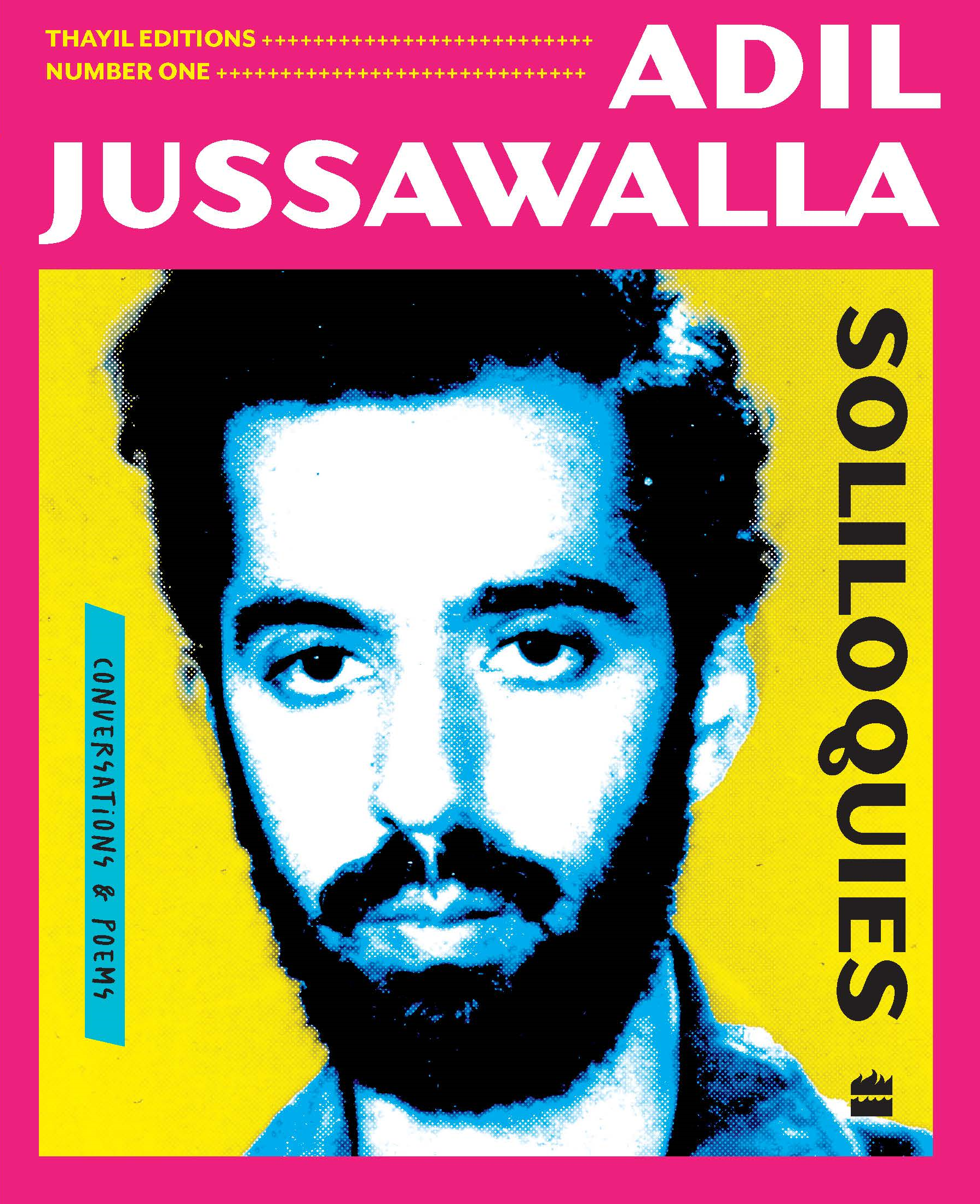
Excerpted with permission from Soliloquies, Adil Jussawalla, edited by Jeet Thayil, Thayil Editions/HarperCollins India.
