




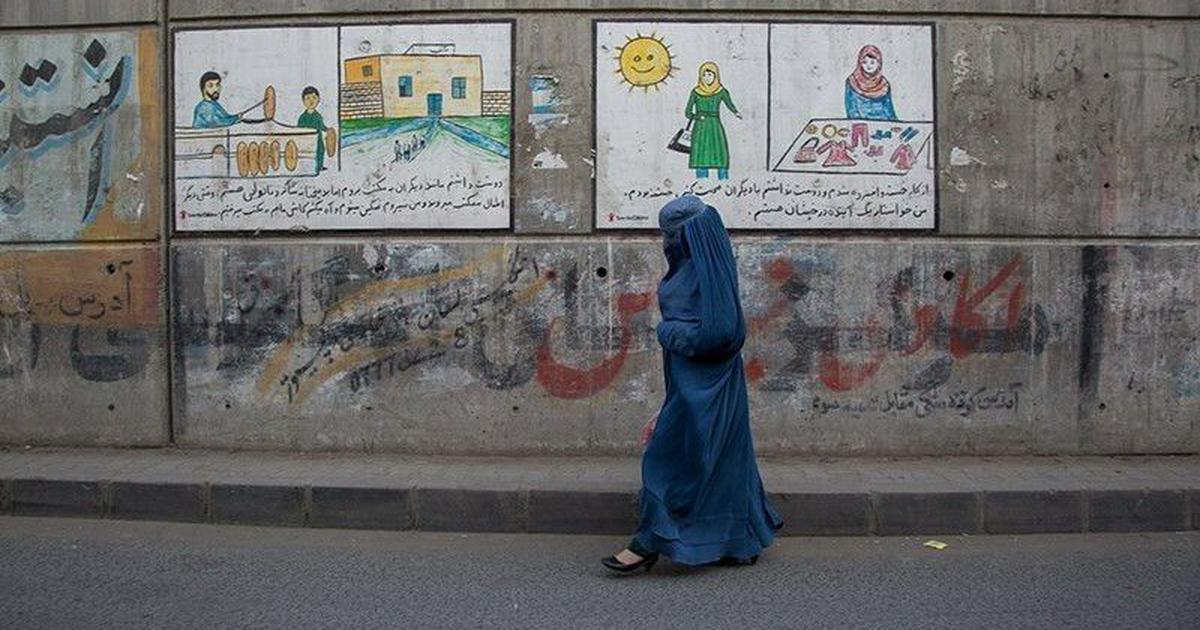
What does an Afghan girl dream of? Are her dreams the same as those of others around the world? Are they allowed to pursue their dreams? Are they free to choose their own path?
These and many such thoughts intrigued Nadia, the daughter of a single mother who worked the whole day to feed Nadia and her three siblings.
Nadia’s father was a soldier who had died an untimely death in one of the remotest provinces of Afghanistan. She was barely one year old then and didn’t remember him too well, except for the stubble on his cheeks that used to prick her when he used to rub his face on her soft, pudgy one. Madar Jan, as she called her mother, said that after three boys, her father was ecstatic to have a baby girl and would hold her close to his bosom the entire day when he visited them during his annual leave. He just wouldn’t let her out of his sight and used to play with her whenever he had some free time; she was his doll. He had promised to bring a beautiful pink frock and toys for his princess the last time he went away, something that he could never do. Madar Jan’s eyes became moist every time she spoke about him; she was still so much in love with him.
Marrying another man was not an option for her mother, although there were plenty of them in their Pashtun clan who wanted to accept her and her four kids as their own.
Soon, she got a job on compassionate grounds as a martyred soldier’s widow. It was arranged by a friend of her husband, who was the security supervisor at an international university in Kabul.
She was to work in the university canteen, preparing meals or taking orders or at times handling the cash machine. She came from a respectable family and was respected amongst her co-workers.
Half her earnings were spent on educating her children, and she made no difference between her sons and her only daughter, as she knew that this was what her husband desired. All of them should be treated equally and given the same opportunity to flourish in life. The other half of her earnings went to pay for rent, food and clothes for her little ones as they were growing rapidly. Her eldest was now a six-foot-tall lad, just like his father; time was passing so quickly.
Nadia was pampered by her mother and her three elder brothers; they indulged her and catered to her whims and fancies. At times, she behaved very irrationally and was unusually demanding. Like the time when she wanted a pair of jeans and a T-shirt like those that were worn in Bollywood movies. They never said no to her and gave her what she wanted.
Nadia, when she was not being pampered, was an obedient student, diligent in her studies. Her mother was strict with her schooling, and she reciprocated by securing good marks in her exams and was known as one of the brightest in her class, already fluent in Dari, Pashto and English.
When Nadia passed her school with flying colours, her mother took her marks sheet to the president of the university where she worked. As Nadia’s mother stood outside the room of this American gentleman, she was visibly nervous, biting her lips and drawing lines on the floor with her toes.
Once called in, she mumbled, “Sahib, my daughter is very good, she has got good marks, please see her report,” as she held it out for him to see.
“Can you give her admission to the university on a scholarship? I cannot pay her fees, but I am willing to work extra hours for her education.
“She must become independent and start to earn. The future of the women of our country must be bright, unlike what I faced in my youth. She is my only daughter; my sons can fend for themselves. It is the daughter I worry about; without education, she will not have a livelihood. She will be under the thumb of her husband, begging him to part with his money. This is something I don’t want my little girl to do.”
The president was a kind and fatherly man; he smiled at her. ‘You work in the canteen, aren’t you under the supervision of Mr Ahmad?
“I have seen you many times, but didn’t have the chance to speak to you. When my secretary told me you wanted to speak to me, I thought of the usual – a raise, a bonus or maybe some other facility. I didn’t think you were here to plead for your daughter.
“We must be doing something right, as mothers have started thinking about their daughters’ futures. They see that education is the only way to social upliftment. Good! I am very happy that you realised it.
“Deposit a copy of her educational documents and an application with my secretary; she will guide you in writing it. Let me see what I can do for your daughter.”
Nadia’s mother left with a smile on her face, hoping that maybe her beautiful daughter would now finally get a chance to make it big in this world. Her mind started sketching dreams that could become true very soon.
The first thing Nadia did after getting admission into the business department was to rush to her eldest brother, knowing that her untimely request would not go down well with her mother.
Her eldest brother, Ajmal, had recently started working in a beverage bottling factory. “You must get me a leather backpack, a big one with enough space, a pair of good sneakers, a new pair of jeans, preferably a black one, and a couple of tops. You know I like bright lipstick; hence, one or two new shades will be okay. Don’t forget to get me a new watch, too; this one is old. I have been wearing it for four years. Can I come with you this Friday for shopping? We can go to the new mall; I have been wanting to visit it; it looks grand.” Nadia was babbling away, excited about her future.
Ajmal smiled at his sister, “Oh, little one, slow down, your brother is not a business owner but a mere factory worker. Your list is going to cost me a fortune, but I promise I will buy all this for you. Not all in the next month, but slowly, one at a time, every month. I shall keep aside a part of my salary and buy these things as your wish is our command, our princess.”
Nadia didn’t like what she was told and left with a pout, muttering, “Nobody loves me”, which she knew would melt her elder brother’s heart. Her brother, though, was well-versed in his sister’s ways of manipulation.
Nadia’s classes started. She fared well in her foundation courses. She was an intelligent girl. For her, these modules were mere repetitions of what she had studied in high school. Professors started recognising her diligent work and her participation in the class. Her willingness to help in all departmental events didn’t go unnoticed either.
The chair of the department soon offered Nadia a part-time job. She was to work with her at the upcoming marketing fair, where she would contact stall owners and luminaries who would be speaking at the occasion. She was also helping in developing the entrepreneurship club at the university. She got very busy, immersing herself in the project, and was happy to earn fifty dollars as her side income, which she was very possessive about.
She wanted to buy the best with the limited money that was at her disposal. She took her best friend, Breshna, with her on the weekends and roamed about in Majid Mall or City Walk.
Nadia was fussy; if she liked a dress, she found it overpriced; if the price was suitable, then the cut and colour were not to her liking. She secretly wished she could go to India to shop, as she had seen photographs of actresses in film magazines and wanted to buy things that they wore.
When she tried on a new dress, she admired herself in the mirror. She knew she was good-looking, but she wanted Breshna’s admiration, “Do I look good? Just like that heroine in the film the other day? Only her dress was blue, and this useless shop has nothing in blue. Do you have a lighter shade of lipstick? Can I borrow it? The shade I have is not suitable for this dress. Please, just for a day till Ajmal buys a new one for me, please.”
She would fold her hands and draw a crying face, and Breshna had no alternative but to yield, knowing that her best friend was incorrigible with her demands.
Everyone was indulgent towards her – she ruled her world; she was the princess of her world. And out of love, everyone catered to her needs and whims; there was no other way anyone would bear to see tears in those lovely eyes.
She was basking in happiness now that she had her income as a part of the work-study programme and started vying for a permanent job at the university. Her professors were more than happy to give her a recommendation letter. Some even suggested that she should try to get a scholarship and attempt to go to the US to complete her master’s degree, a thought that appealed to her.
She took some glossy brochures; they were kept in the library in bunches, and students were picking them up. The brochures were from various universities in the US that were offering partial or full scholarships.
The brochures had pictures of the university halls, the student dormitories, the canteens and the playgrounds. Nadia got lost in those pictures, dreaming of climbing those large steps or playing basketball in the play area. Nadia was very excited because her GPA score matched their requirements, and she had some excellent recommendation letters and work certificates. There was no holding her back; it was just a matter of time before she would be on an aeroplane, off to America.
That day, the journey back home to her house in Khair Khana was long. It took her nearly an hour and sometimes more, depending on the traffic. She was restless and fidgety in the shared cab. She clutched the brochures, and when she reached home, she galloped her way to the third floor, missing a few steps each time.
On reaching home and plonking herself on the carpet, she was a bit surprised to see her mother and her elder brother looking sombre, with her aunt sitting next to them.
She tried to lighten the atmosphere by saying, “Don’t waste time, Madar Jan. And you, too, brother, start preparing for my flight to America! I am sure to get my scholarship, and off I go in less than six months.”
Her mother didn’t smile and looked at her brother. He asked her to come and sit close to them while her aunt continued sipping tea from her cup. Something had gone wrong; Nadia felt this sense of foreboding. She sat straight, drew her legs closer and pulled her skirt to hide her toes.
Her brother cleared his throat and said, “Nadia Jaan, you know how much we love you; you mean everything to us. The environment in our country is deteriorating. The Taliban are coming to power, and the US troops are no longer going to be there to protect us. We are hearing of Taliban activities in the Kandahar region. If they get hold of Kabul city, they will drag out every woman of marriageable age and throw them to their soldiers. You are very pretty and noticeable among many. We won’t be able to face a calamity like that. And thus, we have decided to get you married.
“Do you remember our tenant from almost ten years ago? Zahirullah, that young lad who enrolled himself in the army? Aunty here has come to speak about your nikah to him. He is from our tribe, known to us, and from a good family. He is the eldest son; you will be happy with him. He will know how to protect and take care of you.”
Nadia couldn’t believe what she had just heard; how could her brother and mother be so cruel? She was still pursuing her dreams, holding those colourful brochures of American colleges in her hands. All she wanted was to study, do well in life and not get married to someone she barely remembered. She tried to protest, but her voice gave way. Only tears streamed down her face.
She got up and rushed out, heading straight for her room. She threw herself on her pillow and sobbed uncontrollably for almost an hour, her dreams melting away with her tears, like the kohl of her eyes. Then she got tired and dozed off to sleep, her sneakers still on her feet and the brochures clutched in her hand. The day of the wedding came soon. Everything had to be rushed, and Nadia barely had any time to comprehend what was happening. She was pulled from one side to the other, selecting her dresses, the makeup, the bangles, the jewellery. She ran to and from the tailor to the salon, and then to the jeweller, and still managed her studies.
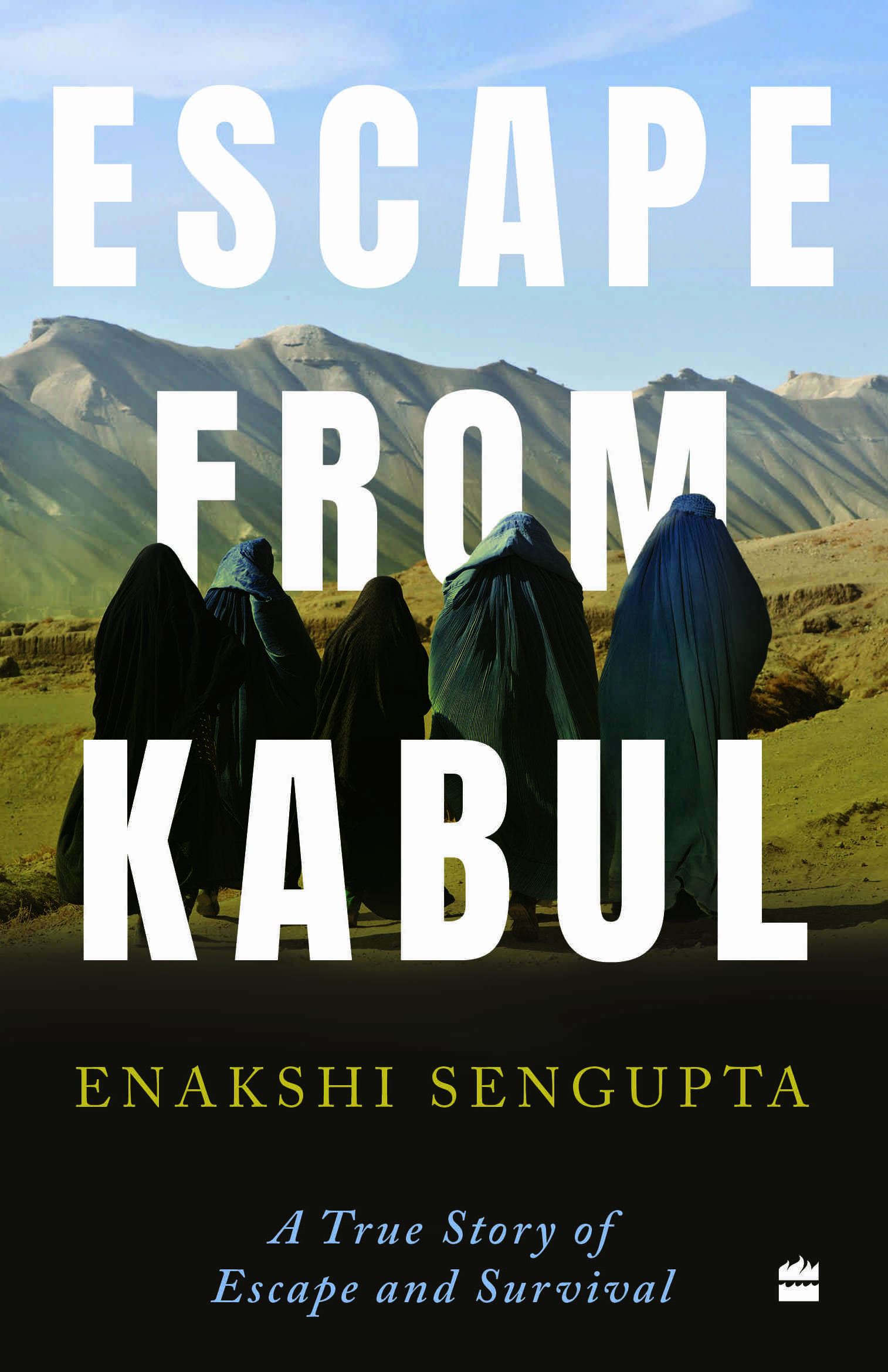
Excerpted with permission from Escape from Kabul: A True Story of Escape and Survival, Enakshi Sengupta, HarperCollins India.
