


I tried everything, Doctor. Tanya Sinha. Tanya Sinha Architect. Tanya Sinha School of Planning and Architecture. Tanya Sinha Delhi. Tanya Sinha Bombay. Tanya Sinha Mumbai.
I kept googling on my phone until I ran out of coffee, and then I ordered a fresh pot. As the breakfast room emptied out, I searched Facebook and Instagram. I even signed up to LinkedIn, just to look for her.
I found a Tanya Sinha in Los Altos, California, who taught history at Stanford, and who on weekends went windsurfing in Half Moon Bay. There was a Tanya Sinha in Pollokshields, on the south side of Glasgow, who made YouTube videos about make-up techniques. I found a few in Patna, and in Ranchi. In Mumbai, I found a 51-year-old lawyer who believed that Nehru’s grandfather was actually called Ghazi; she wrote lengthy Facebook posts about how he’d changed his name to evade capture by the British. But there was no sign of my Tanya, Doctor. Somehow, she had evaded Google.
That’s why I returned to the park. Over the next week, I went whenever I could. Before breakfast. At lunch. In between meetings with my lawyer. After press interviews. (My lawyer said we were losing the media war.) Even at night, after dinner. After all, that’s when I first saw her, Doctor. I scanned the faces, came to know the regulars. The mornings were the busiest. Mostly a mix of the middle-aged and the elderly. They breathed heavily and walked slowly. (I learnt that it’s the humidity that makes them sweat, Doctor.)
Many came by car. There was never enough parking, so their drivers waited under the ‘No stopping, No parking’ signs on Lodhi Road and Amrita Shergill Marg. I would do a round of the running path before covering the middle section, twice. I didn’t want to miss her or walk past her.
I saw things I hadn’t noticed before. In the mornings, gangs of old men colonised the benches.
They would gossip or stare into the distance or scrutinise openly the rare female jogger in shorts; they followed them with their eyes, until the women disappeared down the running path. Younger men would leer even more openly, staring at the women with their hands thrust deep inside their pockets. They were unaware or unconcerned that I or anyone, really, could see them. Certainly unafraid of being confronted. They vastly outnumbered the women.
At lunch, the average age fell by several decades. No walkers or joggers; too hot. The activity was in the bushes, behind trees, in dark corners inside the tombs: young couples, clumsily kissing, feeling each other up, or more: there was a quiet spot on the Amrita Shergill side, near the public toilets and the outside wall, where they could go further without being seen. Or at least without being seen easily. Walking down Amrita Shergill late one afternoon, I saw a group of men standing on tiptoes on the other side of the wall, groins pressed against the burning stone, looking in.
The evenings were like the mornings: busy, too busy. Walkers, joggers, old men in oversized shorts. There were a few regulars who came after nine, after everyone else had left.
Among those who always came so late was a young woman – 25, maybe 30 years old – whom I encountered five times during that period, always around ten, always on the Lodhi Road side; she never seemed to venture beyond Muhammad Shah’s tomb. I’d smile at her when I saw her but she always looked past me and stepped up her pace when she saw me.
By the time I saw the young woman for the fifth time, I was ready to give up. I had been going to the park for seven straight days, Doctor. Tanya had disappeared, again. I felt I’d lost her all over again. But when I saw this young woman on the eighth day, on that eighth night, for what I thought would be the final time, I saw that she was with someone else: a small, slow-moving figure with a silver head. They were near the footbridge on the far side of the tomb. That’s right – it was her. I didn’t have to look twice.
They were walking arm in arm, the younger woman almost dragging her companion along. I could feel my heart accelerate as they made their way around the tomb. In my head, I began rehearsing what I would say to her. No hello or how are you. Not necessary. No, just, “It’s me.” Or “It’s me, Vidhu.” Or maybe, “Tanya? Is that you?” But I didn’t want her to think that I didn’t recognise her, that somehow I had forgotten her. “It’s me.” I decided that that was enough; it was perfect.
They turned the corner. I wiped my face, took a deep breath and prepared to go up to them when the young woman saw me. Her eyes widened and then narrowed. And then they stopped. The young woman said something. I couldn’t hear her. They were still a good 15 or 20 meters away. But I saw her moving her mouth. She had Tanya’s mouth, Doctor. For a few moments, everything seemed to have stopped, all movement and all the sounds in the world, even the noise of the traffic on Lodhi Road. Even the traffic itself. I felt cold, feverish. In my ears, I could hear my heart banging against my chest, like a fist beating against a door. On the back of my neck, I felt a sharp pain, like a needle prick. And then they turned around and began walking away from me. The young woman took out her phone and turned on the torch. She looked back at me over her shoulder with an expression that said, “Stay away.”
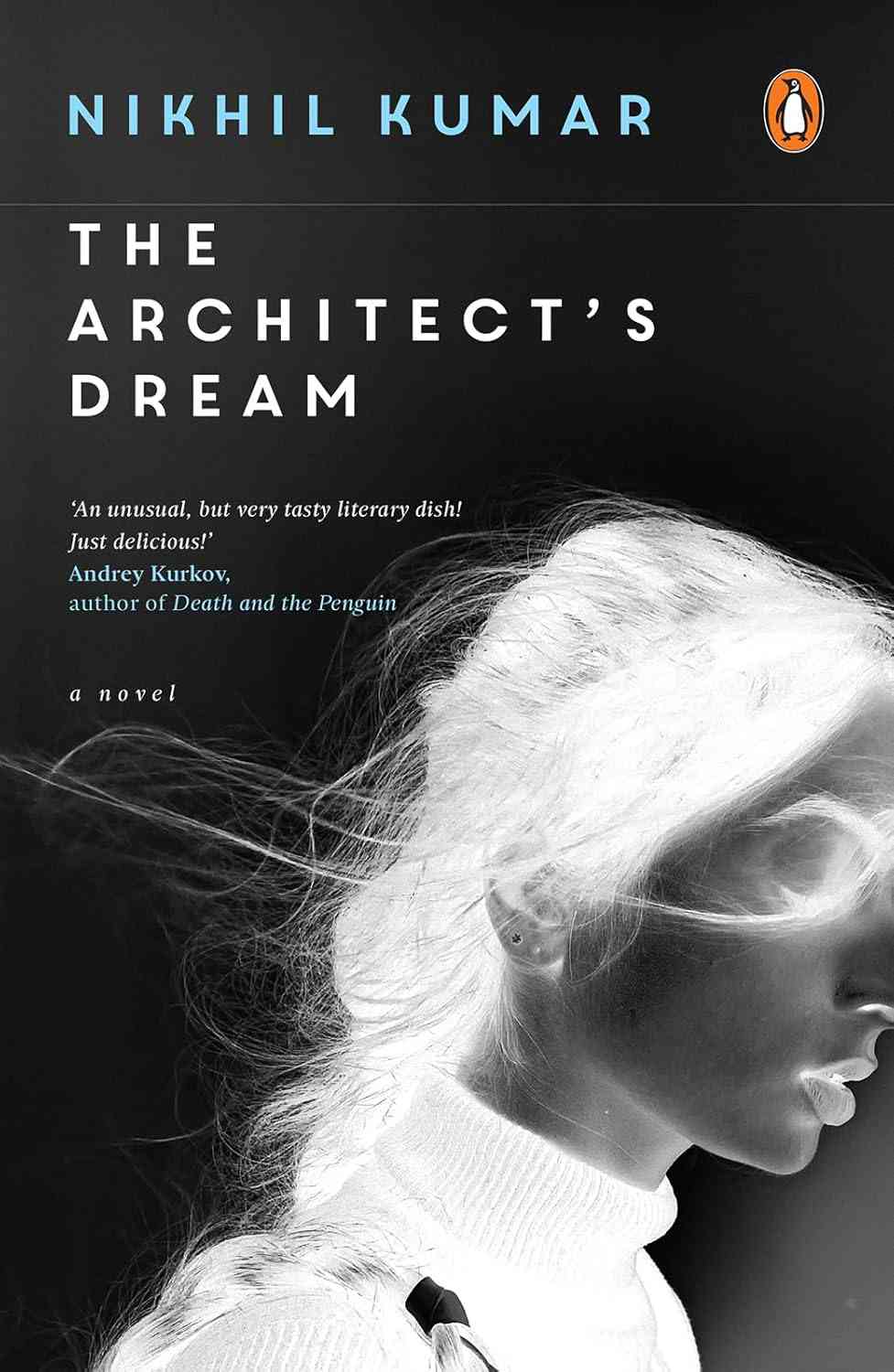
Excerpted with permission from The Architect’s Dream, Nikhil Kumar, Penguin India.
