


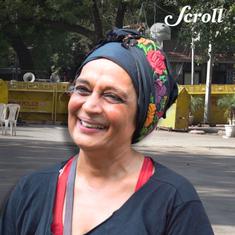
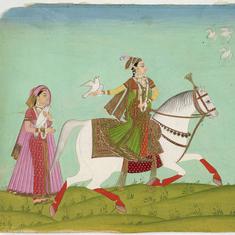


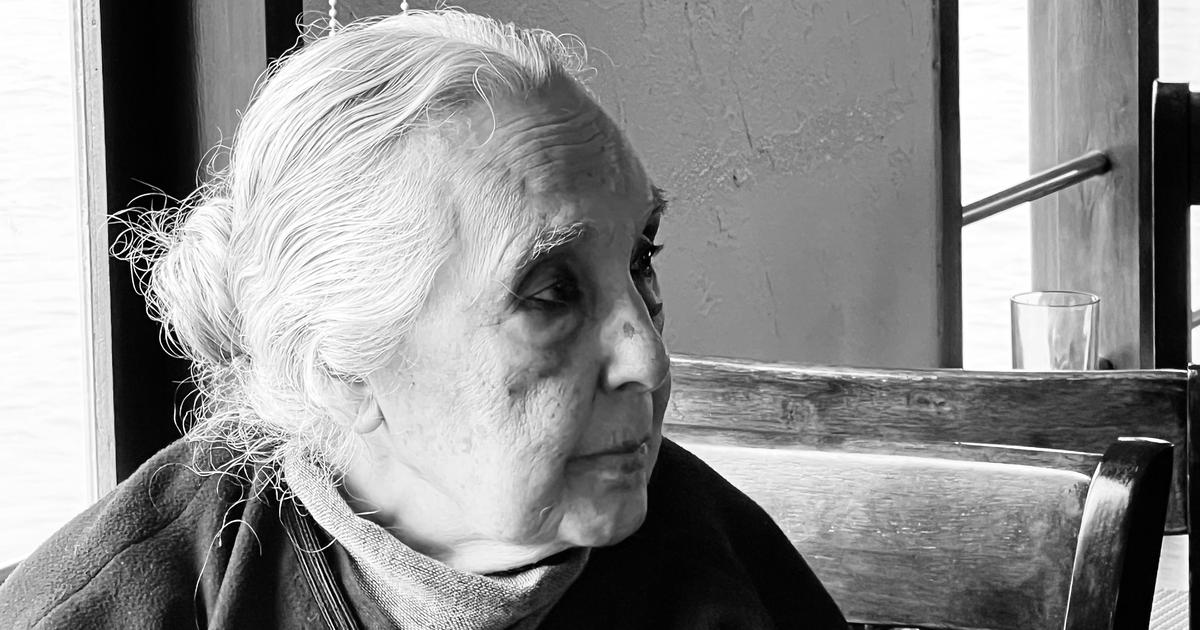
She had come to deliver a special lecture on Kalidasa’s Abhijnana-Shakuntalam. I was in my second year of college, pursuing a Bachelor’s degree in English Literature. A towering persona, Romila Thapar was dressed in black, and her hair, resembling white waves, was tied in a bun. Huge silver rings of intricate designs adorned her fingers. The seminar room at Miranda House, Delhi University, was packed to the brim. Some students had even lined up outside the room, trying to sneak a peek. The central argument of her lecture, as I remember it, was how we must critically understand and analyse the difference between the depiction of Sakuntala in the epic Mahabharata and Kalidasa’s text.
The woman who had agency and spoke truth to power in the epic was somehow at the mercy of patriarchal dogma in Kalidasa’s story. An antithesis to what she epitomises in the Mahabharata, Sakuntala submits to the authority of Dushyanta in Kalidasa’s version. Gender norms and patriarchal dictates of the classical age are unravelled through Kalidasa’s characterisation of Sakuntala, who sought legitimacy by being a conformist and not a subversive woman. All this while, I kept imagining what if the “ring of recognition”, the cure to Dushyanta’s forgetfulness, was what Thapar was wearing that day. Whether, in fact, she was the modern-day Sakuntala coaxing us to perhaps question and revolt against injustice; to seek the truth, to weigh all possibilities before us and be rational even when emotions are tearing us apart. Maybe she knew the secret. Maybe she knows whatever happened to Sakuntala. Mesmerising truly. This was almost two decades ago.
This year, Thapar will turn 95 and her memoir Just Being is out. Published by Seagull Books, the memoir stands as a testament to living wholeheartedly every single day. Reading her life has been like the quest for that mythical “ring of recognition”. To recognise your own humanity and your inner being while being aware of what’s unfolding around you.
Romila’s garden
The initial pages give us a generous view of Thapar’s intimate space and probably favourite corner: her garden, her Garden of Eden minus Adam. She meticulously tends to her garden, the trees whose saplings she had planted decades ago have now grown and overgrown; the staring game she plays with the garden lizard until the reptile surrenders and goes its way; her two dogs, Ranjha and Bulleh, keep her company after the passing of her first pet, Amba. The magpies, bulbuls, and mynahs she breakfasts with every morning and the echoes of dawn laced with the music of words paint a picture.
Slowly, moving away from the idyllic scene, the historian eventually wakes up to the realities of a world which does not look or feel the same as it once did many years ago, when people, even belonging to diverse backgrounds, cultures, and religions, could coexist despite the contradictions and understated hierarchies. Through the pages of this memoir, Thapar talks candidly, yet she is measured – giving precedence to facts instead of sentiments.
Thapar tries to remember episodes from as early as when she was five and recalls how her father, a doctor, would always be travelling for his work at military hospitals during the World Wars. One of the striking facts that leaves a mark early on is a young Thapar’s admiration, more than surprise, for her maternal grandmother, a trailblazing woman at a time when women’s education was not encouraged. Her daughter (Thapar’s mother) married her partner with the condition that she would never “take the veil” and would not cook meals. These conditions were met in India of the 1930s, an era not really enthusiastic about achieving gender parity or equality. The beauty lies elsewhere: these small acts of revolution were happening quietly in this Punjabi-Khatri family for their daughter to emulate later in life. Living in a cantonment, where everything was guarded and life happened within boundaries, five-year-old Thapar was as curious then as she is now at 94. The urge to question, seek answers, and get into healthy debates was always present. The fact that she confronted her Anglo-Indian friend for bossing her around proves that Thapar was fighting, or at least speaking up against injustice, from an early age.
Her life in Lahore, Rawalpindi, and Peshawar are full of interesting anecdotes too. For instance, she often wonders what kind of person she would have turned out to be had she been called Romila Kaur! Precocious. That was her. A polymath. That is Professor Thapar. Her Music lessons with Masterji, classes on playing a musical instrument called dilruba, singing bhajans (thanks to her upbringing on Vaishnava belief), education in private schools, leading a sheltered life in her formative years – these were what made a young Thapar think, quite mistakenly so, that it was always the British who were at war and that those skirmishes had little to no consequences to their lives as Indians. One day, this idea would be overturned.
A young Thapar fondly recalls how the Pathans, once treated by her father, would send sweets during festivals but were not allowed to visit them in cantonments as it was a British area; she understands the humanity of it all – how people loved and lived even from the other side of the barbed wire. The Pathans, out of their gratefulness to Thapar’s father, would leave the sweets with the guard at the cantonment gate. A young Thapar felt sad that they couldn’t join in the festivities.
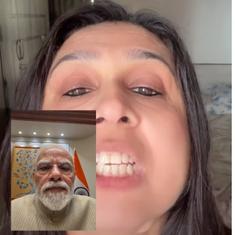
When the family moved to Poona in 1942, the house in the cantonment had a small garden with a fountain set in a pool with goldfish. She would sneak out to indulge in a special chaat and mithai; several friends were made, some stayed, others drifted. In due course, she recalls with delight how she reconnected with a childhood friend over a Zoom call after nearly 80 years!
In a way, this memoir also reads like an ode to her long-ago friends with whom she’d like to renew and relive her childhood and be called by special names such as “Cuckoo Apa”, enjoy bread and butter from the military bakery, and homemade butter from buffalo milk.
Oxford days
Oxford University thought her entrance exam was “substandard”, a university which would felicitate Thapar with an Honorary Doctorate 50 years later. While London was synonymous with freedom, Delhi meant confinement for her. Since she didn’t want to return to Delhi, out of desperation, she applied for a research fellowship and got it too. Between being an academic (which she didn’t want to be) and a homemaker (which she absolutely couldn’t see herself as), she chose the “lesser devil,” i.e. academia. She completed her doctorate in 1958 and was offered a temporary job at SOAS to teach a course in ancient history. Thapar’s father had set aside funds – it could be used for either marriage or education. She chose the latter. From attending the lectures of Eric Hobsbawm on European political thought, reading Ismat Chughtai, Simone de Beauvoir, enrolling herself in evening courses on Chinese art (she did Chinese landscape painting) and archaeology, learning italic calligraphy, playing table tennis with monks, holding the stepladder for friends in libraries while the other reached for books in upper shelves, her discovery of Africa, to making posters and going for marches at Trafalgar Square and Hyde Park, Thapar was shortlisted (as an Asian extra) for a toothpaste advertisement! As an extra for a movie, she was required to be dressed in a sari, sitting at a table on the set of a Delhi restaurant.
Finding a companion in Oxford with whom life felt “complete” opens a new chapter in Thapar’s life, a leaf which is perfectly wedged between the pages of a favourite book. When this person exits from her life, she writes, “Perhaps the presence of someone close gives courage to the person facing the closure of life. A segment in the life of the other also departs and never returns. Only memories return, initially embedded in grief.” Beethoven’s piano sonatas rendered by Artur Schnabel gave her the feeling that “I had life to live.”
An autonomous woman
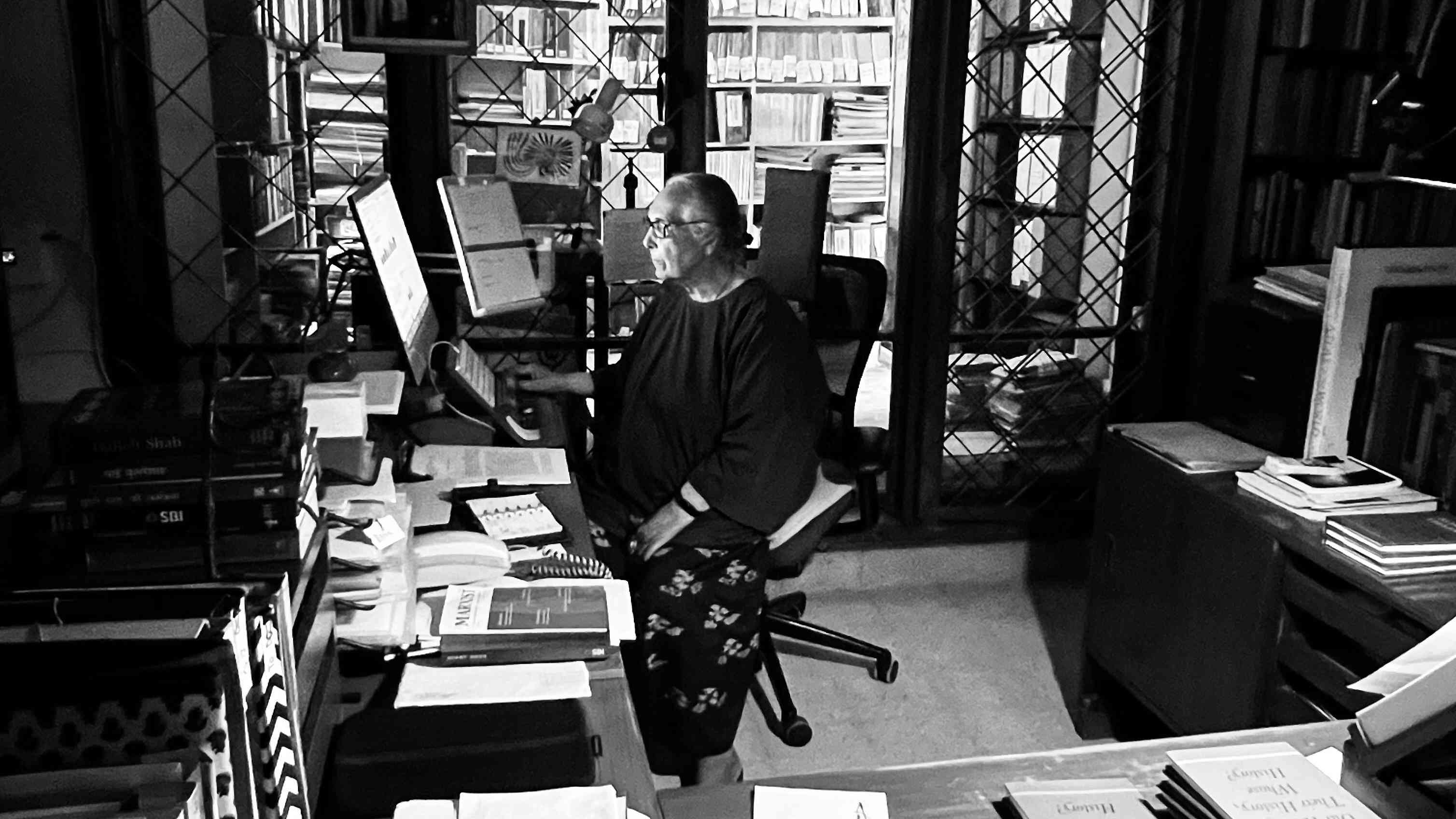
Thapar’s memoir is a journey and quite a poetic one at that; a continuous quest for autonomy, liberation and freedom. A journey almost impossible to replicate but it sure leads the reader to recognise the Buddha lies in us, every morning, we are born again.
She is interested in gauging the pulse of a nation and its people. If it’s religion, what is it about religion that makes cultures unique or what is it about people and their faith and belief systems? Her questions arise from lifelong observations. The majoritarian view of nationalism is something that must be problematised, argues Thapar. Secularism is not about the coexistence of all religions, she writes, but rather an ideology that refers to a condition where “religion does not control social institutions.”
Speaking of autonomy, Thapar’s relationship with her mother evolved and grew into something more meaningful and beyond the traditional mother-daughter bond. She derived autonomy from her mother and later in life, she would meet Betty Friedan (author of The Feminine Mystique) and discuss what it means to be living as an autonomous woman.
This is a historian’s memoir, a woman historian’s memoir, an Indian woman historian’s memoir, a political Indian woman historian’s memoir, a political, unmarried Indian woman historian’s memoir. Generations of Indians will reap from this work of deeply personal writings that also ruminate on India over the previous 100 years. Thapar’s gaze opens a door that we hesitate to open, for it might show us what we were, what we became, and what we can become.
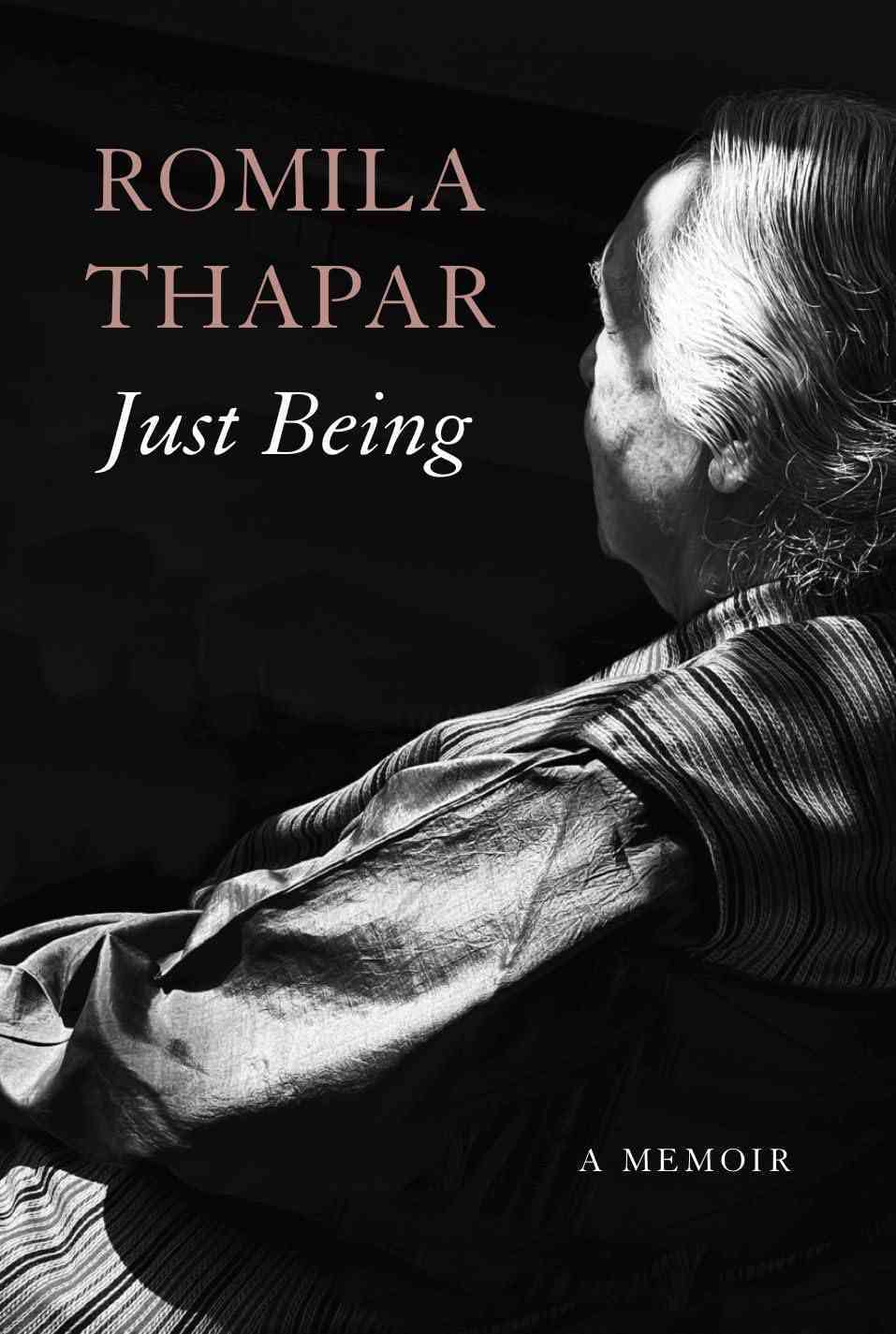
Just Being: A Memoir, Romila Thapar, Seagull Books.
