




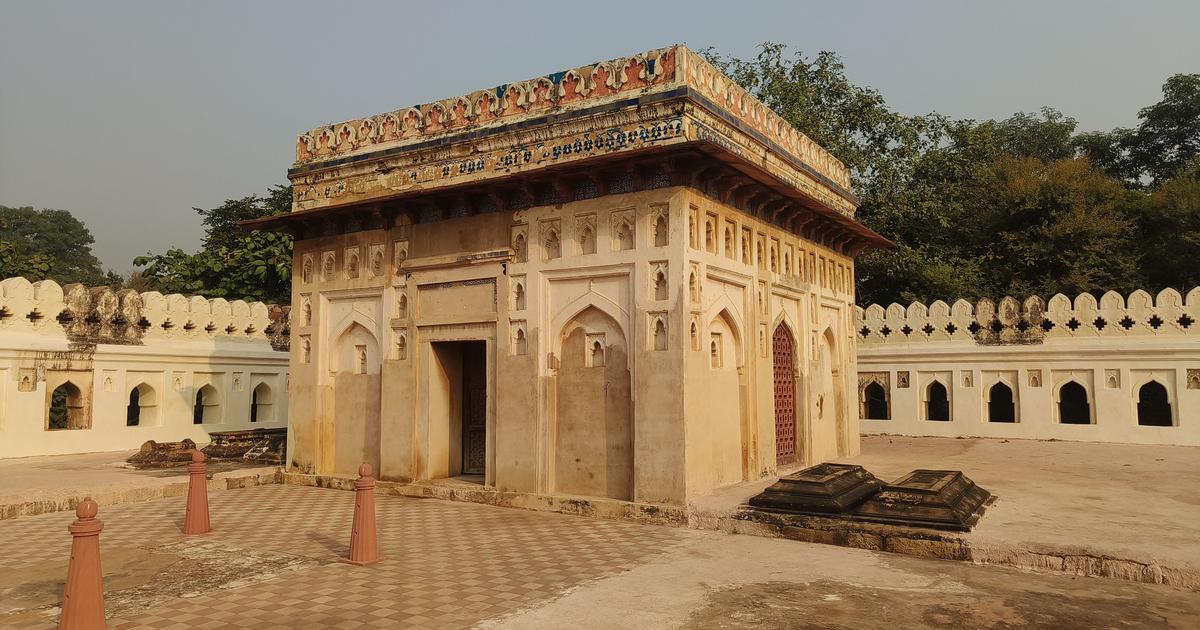
In July 2023, I received an email from The Indian Express. Two young journalists were doing a video piece on Jamali-Kamali and wanted to interview me for it. This was around the time when I was publishing some of my thoughts on the haunting of heritage sites in Delhi through my Instagram page Itihāsology and naturally, I thought that their questions would be focused on this. But their feature was on how Jamali-Kamali is a sanctuary for the queer community. In the company of the other roles that Kamali has been given, one of them has been of Jamali’s lover, and I was asked to speak about this.
Were Jamali and Kamali partners? Much like my answer to the haunting, this too, I do not know. That identity is as true as it is false. But has Jamali-Kamali been a monument that has allowed many queer people, including myself, to look at our histories from a much more inclusionary lens?
Absolutely. Jamali-Kamali has been a part of the answer to a question that has pestered generations of queer people: Are we part of history? Historiography, for the longest period of its operation, has privileged certain stories, made space for some narratives, and operated from a heteronormative gaze. Imagine then, sitting in a classroom, traversing through centuries and learning about the formidable saga of humanity and not even once coming across a story that resembles yours; thinking that neither history belongs to you nor you to it. In many ways, Jamali-Kamali has been seen as a challenge to this exclusion.
The monument has become a meaningful space for the community, hosting specially-curated queer heritage walks, including the “Mehrauli Queer Heritage Walk” led by Batool Ali and the “Queerwalk” organised by the New Delhi LGBTQIA+ Centre, an initiative of the pioneering Naz Foundation. In April 2025, on a spring evening, I found myself at the tomb once again, where I met a large group gathered beneath one of the trees in the complex. They were immersed in the storyteller’s tales of a historic world, one that carved out space for a time when Jamali and Kamali could have been lovers.
The queer lens through which the tomb of Jamali-Kamali is seen has a long history. In the 1980s, iconic photographer and curator Sunil Gupta embarked on a project called Exiles – a series that captured gay men in “historic architectural spaces” of Delhi and it featured a photograph depicting two anonymous men lying intimately on the mounded grass beside the folly that faces the tomb of Jamali-Kamali. I see Gupta’s passion and urgency to recreate modern images of gay love set against Delhi’s historic backdrops as an artistic reimagining of lost histories. The intimacy and beauty of this picture continued to be remembered, getting a special feature in a 2011 interview with Gupta in the defunct Pink Pages, a national gay and lesbian magazine.
Gupta’s photos have also been cherished by acclaimed designer Karan Torani, who launched an entire menswear collection called “Jamali Kamali”. When Torani came across their story and the possibility of them being lovers, he was awestruck, and as he explains in the videos made around the launch, he stopped everything else to focus on this collection. With the vision to treat the world through Jamali’s eyes and to showcase his love for Kamali, the launch of the outfits was accompanied with a stunningly visualised and choreographed film, celebrated as an ode to the “secrets of an unsung love.” In 2020, when the collection launched, the designer had no intention of releasing a menswear line but the influence of the oral traditions woven around Jamali-Kamali was simply too strong for him to hold his creativity back.
Torani is not the only maverick who has experienced this rush of imaginativeness after coming across the monument. I observe something very similar happening to poet and essayist Karen Chase who was taken by surprise when she first arrived at the tomb. Having come to Delhi, when Chase saw the tomb of Jamali-Kamali and heard the stories, she just knew what had to be done. Something took over her for the next year as she composed the long poem Jamali-Kamali: A Tale of Passion in Mughal India, which was finally published in 2011. In her evocative verses, Jamali emerges as a passionate, torn, restless, and sometimes insecure lover who pours out his desire for Kamali. He gives him constant reassurances: lets him know that even while dancing with somebody else, it is Kamali that he pictures; promises to him that they shall be buried together in marble graves; and accepts that he is prepared to brave the streets of Delhi with him as his bride. Jamali calls Kamali his everything: “my life, my love, my lion, my wife.” It is only in the last part when we finally hear Kamali speaking to Jamali when the latter is in Gujarat, from where he was not to return alive. In the poem, the news of his death breaks Kamali. With a sense of finality, he expresses his desire to sleep next to his lover’s corpse.
However, Chase’s visit to Delhi was not intended to be for Jamali-Kamali. She had come for a month-long writing residency but did not have much of an idea of what she would pen down. Upon seeing the marble graves, inspiration struck like a thunderbolt, and the poem was born. To understand the origins of her mesmerisation, I chased Chase for answers. “It is imagination…but for that long, to that degree, to that depth – it is rather unexplainable what happened and how I began to write this book, or why I wrote this book,” she told me over a Zoom call. She, however, does not credit the enigmatic origin of the poem to the jinn. Chase said that she was unaware of that lore when she visited the tomb and it was only a few years after her poem’s publication that she was acquainted with the stories of the supernatural, something that she briefly pondered over in a 2023 essay.
Another writer, equally moved by the potential lovers is Madhavi Menon, whose book Infinite Variety opens up with a chapter exploring the multiple ways in which desire is embedded in dargahs, with her main focus being the mausoleum of Jamali-Kamali. Skillfully sifting through centuries of Sufi poetry and locating within it a different approach through which one can understand the multicoloured meanings of love and desire, both worldly and heavenly, she blurs the lines between the sacred and the sensual. For Menon, what is most important is not to ascertain whether Jamali and Kamali were lovers but that they were buried together and that in itself says a lot. She also lets the silos of identities collapse and asks a pertinent question: even if Kamali was a disciple, “what prevents a murid from being a lover?”
So, what really prevents it? When one is aware that all knowledge about their relationship is based on speculation, why is it so difficult to accept that Jamali and Kamali could have been lovers? It is because the histories we know have invisibilised stories that transcend the grammar of heteronormativity. This absence not only creates a void but also allows that empty space to be filled with bigotry and ignorance. This is why terms for sexual orientations are misused as insults for figures both contemporary and historical. The ignorance shines through in arguments that claim sexuality was “brought” from elsewhere and used as a tool to corrupt “civilisational values”. But one has to see the damaging impact caused to queer communities worldwide as a result of such othering and vilification.
However, exclusionary historiographies do not represent our intricate pasts. I suggested this during The Indian Express interview and later that year at the Rainbow Literature Festival, when I spoke about Jamali-Kamali during a conversation on the suspicion around ideas of love and pleasure with the fabulous raconteuse Seema Anand. The discussion with Anand made it glaringly obvious that it is difficult for people to accept love beyond their ascribed meanings due to its lack of representation. If such stories have never been part of one’s imagination, it is inevitable for them to shock, leading even something as pure as love to be hated. So, is it not our responsibility to allow histories to flourish with the fluidity and complexity they deserve? To not think of queerness as an impossibility of history but as a part of the human experience since time immemorial? If we do not take the onus now, what will continue to haunt history more than the jinn and ghosts is the silence of untold stories.
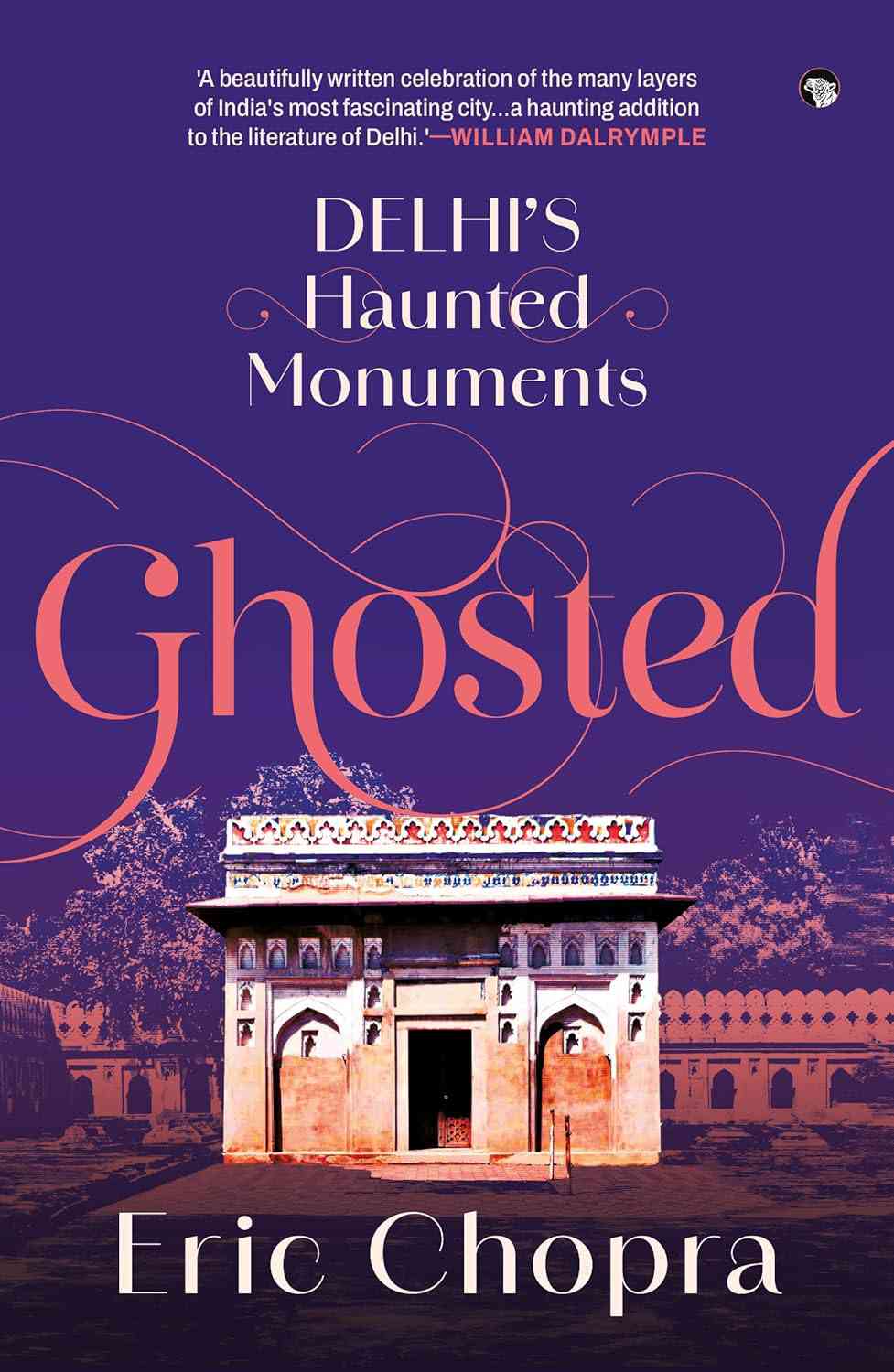
Excerpted with permission from Ghosted: Delhi’s Haunted Monuments, Eric Chopra, Speaking Tiger Books.
