





The geopolitical and ideological tensions between participants at the 30th Conference of the Parties of the United Nations’ Climate Change Conference in the Brazilian city of Belem was evident on Tuesday with the release of the latest draft text of the “Mutirão decision”.
The annual conference is the opportunity for delegates from nearly 200 countries to assess global progress and negotiate solutions to mitigate the effects on climate change, as rising global temperatures are altering precipitation patterns, resulting in floods and longer-lasting droughts.
The “Mutirão” document released by the COP30 Presidency, held by Brazil, is a draft of the deal it hopes can be reached at the meeting ending on November 21.
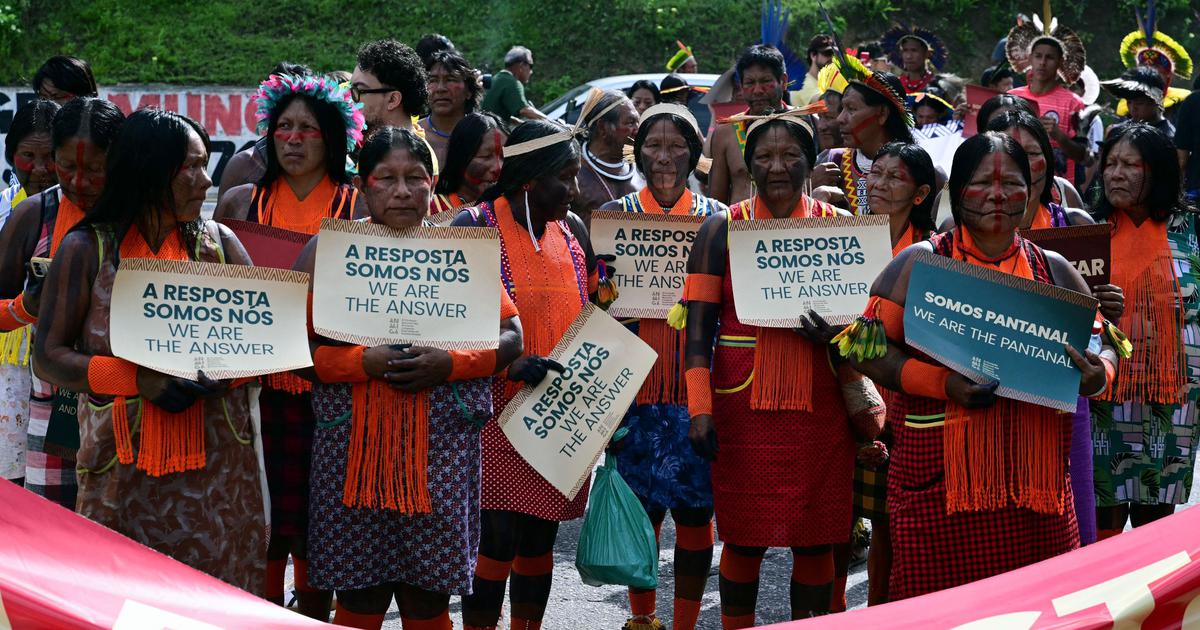
Mutirão – a Portuguese word of Indigenous origin – means “collective effort”. At the opening of this year’s conference, the host country called for a global mutirão, a collaborative approach to solving challenges and to push for global climate action.
In 2015, as part of the Paris agreement reached at COP21 in France, developed countries had a accepted a binding legal obligation to provide funds to developing countries to help them make a transition to cleaner sources of energy and make the transition to green technologies.
This is because, historically, developed countries have been the biggest producers of the carbon emissions that have prompted climate change.
But the draft document in Belem has divided experts, especially on the matter of climate finance.
The call in the Mutirão’ draft text for “collective mobilisation across the board…reflects a dangerous attempt to shift the burden of climate action onto the developing world – nations already crippled by climate impacts, energy poverty, and the debt crisis”, said climate activist Harjeet Singh, the founding director of the Satat Sampada Climate Foundation in Noida.
The text, he said, “fundamentally weakens the commitment to equity and Common but Differentiated Responsibilities” – which means that while all countries have a duty to take climate action, “the types of action they take will depend on their differing national circumstances”, explains the United Nations.
Singh warned that the document remains disproportionately focused on private finance, capital markets and concessional loans from multilateral development banks. This, he said, is “poison for countries already struggling with debt”.
At the same time, the document “utterly fails to instruct developed countries to meet their legal, public finance obligations”.
As the Least Developed Countries have reiterated their call for funds to adopt green technologies to be tripled by 2030, the draft urges developed nations to triple adaptation finance to developing nations by 2030.
A Climate Analytics report released on Tuesday notes that “tripling renewables, doubling energy efficiency, and cutting methane by 2030 could reduce global warming rates by one-third within a decade and by half by 2040”.
But Singh says that even the mention of tripling adaptation finance is compromised by mentioning both grants and highly concessional finance.
“Concessional loans are a debt trap,” he said. The document fails to close the huge gap in adaptation funding and loss and damage funding with the grant-based support that communities desperately need, he said.
India has consistently maintained that climate finance must be public, predictable, and mandatory. It has also insisted that the obligations of Article 9.1 of the Paris agreement requiring developed countries to provide funds to developing countries for climate change mitigation and adaptation are not optional.
“The Mutirão decision draft text…reveals deep differences between developed and developing countries on three key issues – adaptation finance, mandatory commitment on finance provision by the developed world, as well as unilateral trade measures,” said Vaibhav Chaturvedi, a senior fellow at the Council on Energy, Environment, and Water, an Indian think-tank.
Developing countries, Chaturvedi said, have also criticised “unilateral trade measures” taken by countries to restrict trade based on environmental standards.
An example of this is the European Union’s Carbon Border Adjustment Mechanism, to be implemented in 2026. It taxes emissions embedded in imported products. But this, developing countries say, unfairly burdens them.
“Clearly, parties in the developed world don’t want to use the word ‘unilateral’ and prefer framing it as an ‘international economic system’ with no mention of trade,” he said
Despite the international dynamics, more than 82 countries are now supporting a roadmap to transition away from fossil fuels. But the draft text, as experts pointed out, is optional and weak.
“The best chance of landing an agreement is in a Mutirão package” but the text must be strengthened, said Marshall Islands climate envoy Tina Stege at a press conference on Tuesday.
The COP30 Presidency had hoped to close the Mutirão decision by midweek, but the debate around this draft makes it unlikely.
“We cannot accept a political outcome that proposes more round tables and more processes when the world demands immediate, concrete commitments,” said Singh. “If this draft doesn’t drastically improve centre equity and mandate scaled-up public finance, it will only secure more dialogue” but not meaningful action.
Cheena Kapoor is a Delhi-based independent journalist and photographer focusing on health, environmental, and social issues.
This story was produced as part of the 2025 Climate Change Media Partnership, a journalism fellowship organised by Internews' Earth Journalism Network and the Stanley Center for Peace and Security.
