






Nearly a decade ago, when the Indian Embassy in Stockholm still enjoyed cordial relations with me, a senior diplomat made an unusual request. An important Indian political leader was scheduled to visit Sweden, and the embassy wondered whether I could help arrange an honorary doctorate from my university. I politely but firmly declined. I also advised the diplomat not to approach any of my Swedish colleagues with the same request. Universities confer honorary degrees to recognise exceptional achievement, not because foreign embassies ask for them on behalf of visiting leader Lobbying for such honours would diminish India’s image.
A few weeks ago, another conversation reminded me of that episode. I asked a professor at the University of Ghana why the university in 2016 had removed MK Gandhi’s statue from its campus after installing it with much fanfare. She replied that many academics believed the statue had been placed on the campus under pressure from the Indian High Commission and that the university leadership had been left with little choice. Whether that perception was entirely accurate is almost beside the point.
Faculty members and students, upset that they had not been consulted and objecting to Gandhi’s documented views on Africans, mobilised against the installation until the statue was finally relocated. Instead of celebrating Gandhi’s legacy, the episode ended with both Gandhi and India being publicly embarrassed.
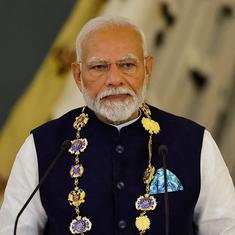
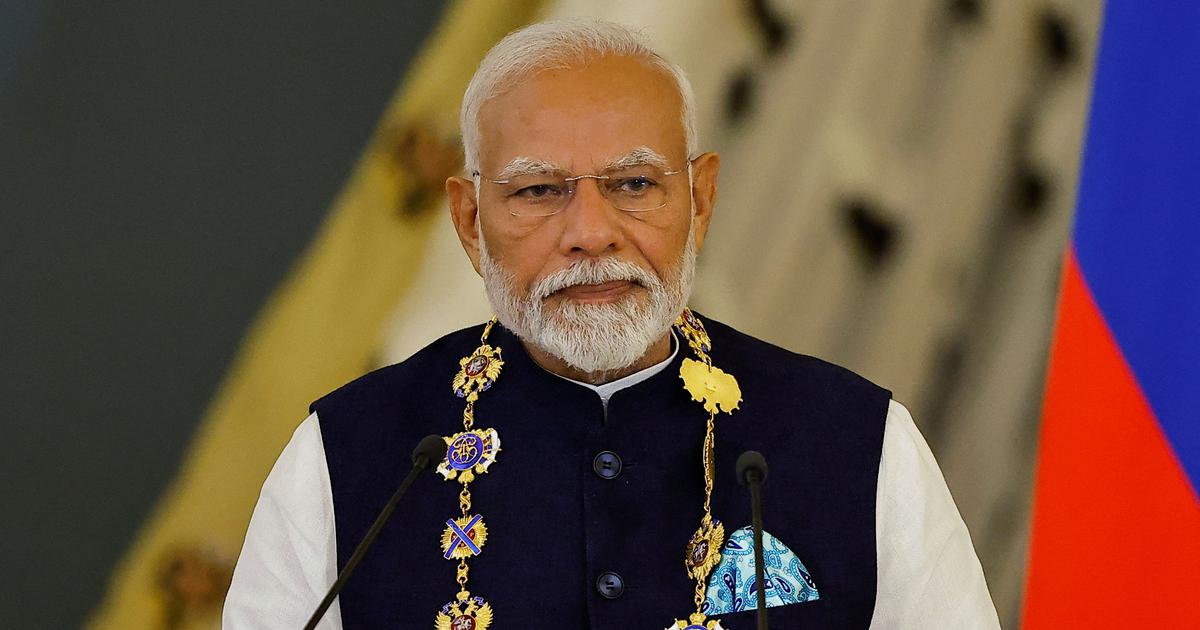
These two incidents are separated by continents, but they reveal the same disturbing mindset. Indian diplomacy increasingly appears preoccupied with manufacturing symbolic honours for political leaders instead of advancing India’s national interests. That is why the growing obsession with foreign awards for Prime Minister Narendra Modi should concern every Indian.
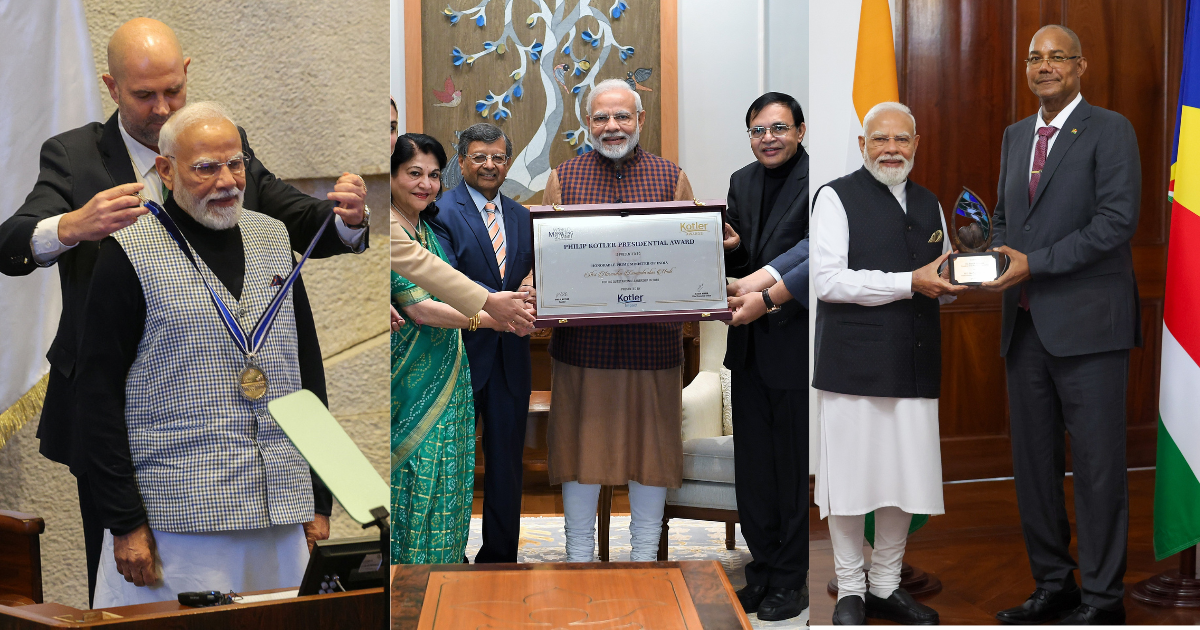
Hardly an overseas visit of Modi passes without another medal, another state decoration or another ceremonial honour. The latest controversy emerged in Seychelles, where the “Guardian of the Blue Horizon” distinction was reportedly created days before Modi’s visit, making him its inaugural recipient. The award soon attracted international attention after observers pointed out spelling mistakes and factual errors in the citation, turning what should have been a diplomatic success into an avoidable embarrassment.
Whether these honours are initiated entirely by host governments or quietly encouraged through diplomatic channels is not the central issue. Diplomacy is built on perception as much as reality. When almost every foreign visit concludes with another award, and when some of these honours appear to have been created just in time for the occasion, the unavoidable impression is that India’s diplomatic machinery is investing considerable energy in securing personal recognition for the Prime Minister.
India is not a country struggling for international recognition. It is the world’s most populous nation, one of the largest economies, a nuclear power, a space power and a leading voice of the Global South. It possesses one of humanity’s oldest civilisations and commands growing strategic importance in an increasingly unstable world. Countries seek India’s friendship because India matters, not because its Prime Minister returns home with another medal.
For a country of India’s size, history and civilisational confidence, the appearance of chasing awards projects insecurity rather than strength. Respect must be earned through national achievement instead of being collected like a souvenir.
The responsibility of every Indian embassy is straightforward. It must protect India’s interests. That means strengthening trade and investment, securing technology partnerships, assisting Indian citizens abroad, deepening defence cooperation, building strategic alliances and promoting India’s positions in international institutions. None of these objectives is advanced because another ribbon is pinned on the Prime Minister’s jacket.
Diplomatic goodwill is also a valuable national resource. Every ambassador has limited access to political leaders, limited opportunities to shape outcomes and limited diplomatic capital. Those scarce resources should be invested in advancing India’s long-term interests instead of cultivating the image of one political leader.
Foreign visits that should be remembered for major agreements or strategic breakthroughs are instead remembered for elaborate award ceremonies. Headlines celebrate medals while substantive negotiations receive secondary attention. Spectacle replaces substance. This is unhealthy for Indian democracy and damaging for Indian diplomacy.
Successful foreign policy should be judged by outcomes that improve the lives of Indian citizens. Did India gain greater access to foreign markets? Did it secure investment? Did it strengthen supply chains? Did it obtain advanced technologies? Did it build stronger security partnerships? Did it improve the welfare of the Indian diaspora? Those are achievements worthy of celebration. Another ceremonial decoration for Modi is not.
The Indian Foreign Service has historically been one of the country’s finest institutions. Its officers built India’s international reputation through professionalism, strategic thinking and intellectual excellence. They navigated the Cold War, regional conflicts, economic transformation and shifting global power balances with remarkable competence. Their mission has never been to enhance the personal prestige of the Prime Minister of the day.
When diplomats begin to appear more concerned with managing symbolism than protecting national interests, institutional priorities become dangerously distorted. The Republic is gradually overshadowed by the ruler.
Few people today can list the foreign honours received by Jawaharlal Nehru, Indira Gandhi, Atal Bihari Vajpayee or Manmohan Singh. Yet their foreign policy legacies continue to shape debates because they are measured by decisions, achievements and strategic vision, not ceremonial decorations.
India’s global standing will not rise because another foreign government invents another award. Nor will India’s prestige increase because another university confers another honorary degree or another campus installs another statue. On the contrary, when such honours appear to be sought rather than spontaneously bestowed, they often produce exactly the opposite effect. Instead of admiration, they invite scepticism. Instead of respect, they provoke ridicule. Instead of strengthening India’s image, they weaken it.
India’s diplomats should be known for securing trade agreements, strengthening strategic partnerships, protecting Indian citizens and advancing India’s influence in the world, not for creating the impression that every foreign visit must end with another trophy for the Prime Minister. Diplomats are servants of the Republic. Their highest duty is to protect India’s interests, not to polish a leader’s legacy.
Ashok Swain is a professor of peace and conflict research at Uppsala University, Sweden.
Also read: Why flattering awards for Modi by foreign countries are not necessarily good for India
