








We have had dogs at home for three generations now. (For India’s street dog debate, lessons from a mother in rural Rajasthan.)
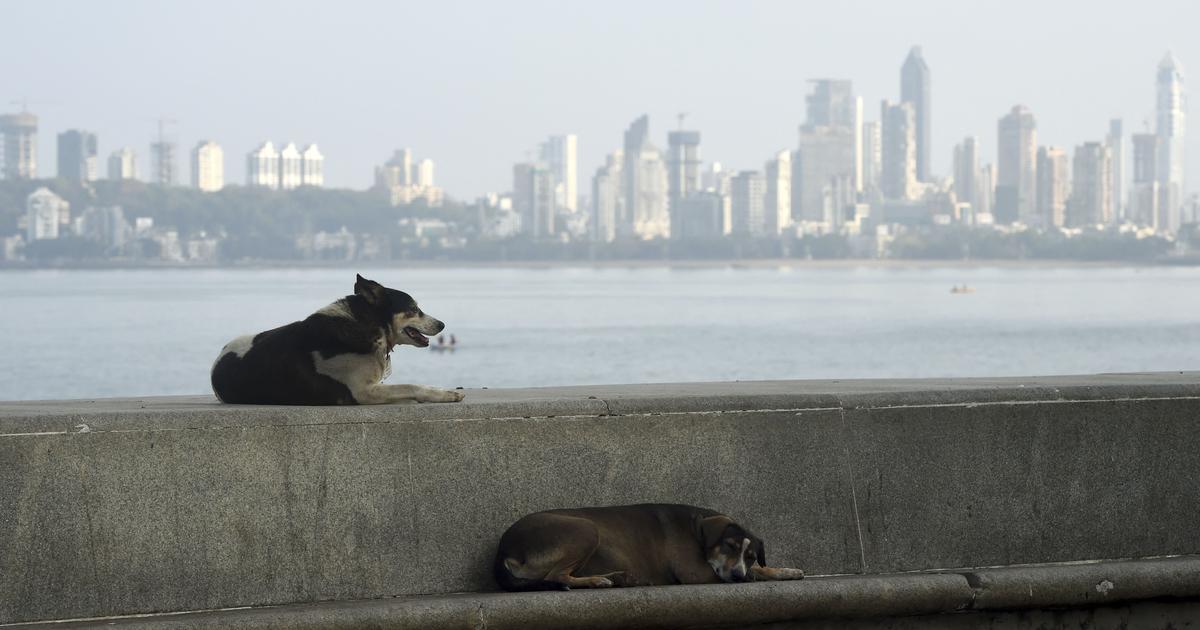
This story has a great example that is time-tested and which now needs to be scaled up to address the needs of large numbers of stray dogs that are territorial, especially around the residential colonies and garbage dumps of our over-populated cities.
Many of the informal open debates we have had suggest that we need a nationwide “Dog Patra”-type organisation that runs efficiently and seamlessly on the lines of, say, Akshaya Patra to start with, so that stray dogs can be fed properly with fresh dog food.
More importantly, we also need “dog shalas” that take care of the shelter, health, vaccination, hygiene needs of dogs and a lot more, like all the better-managed gau shalas work. The shelters can be managed by a team of administrators, dog trainers, dog walkers, veterinary professionals and funded by government bodies, patrons and dog lovers of the country in a public-private partnership model.
The dog shalas could also arrange for street dogs to be adopted for a fee.
The main issue here is not the law or people or authorities. It’s about who owns street dogs and who foots the bill for their care and wellbeing.
Offering that first roti or biscuit to street dogs or pouring milk in a mud pot kept in the corner of the lane and so on worked very well even in Indian cities till the late 1980s. But now their numbers have multiplied manifold. A pack of them is not a situation even dog lovers are comfortable with when they are out for a walk or walking with their pet dogs on a leash. Pet dogs can't deal with these situations either.
In fact, many dog owners and dog lovers are also scared of street dogs. They can attack as a pack. They are angry, violent, not fed for days at times, not vaccinated and may be carrying many infections too in many cases, only because nobody owns them and nobody is responsible for their acts, health or well-being.
Unless every street dog is tagged, is traceable and has a defined owner who is responsible for its shelter, food and wellbeing, this problem is far from finding a long-term solution, no matter how many laws are put in place.
As a nation that loves and cares for animals, we should aim for a nation that has no strays, not just stray dogs. Also, we should aim for becoming a rabies-free country. – Padmaja Krishna
***
I see your mother as a light and guide to civilisation. Gandhiji should not have said that a roving dog is not part of civilisation (if he has said so). Civilisation encompasses all. – Deepak Kumar Upreti
Caste in academia
Yes, social hierarchy has played a major role in several services, both for previous generations and this one (Class, caste, collapsing public universities: Why Indian researchers publish in predatory journals). But it becomes a hurdle only if one lets the hierarchical system affect one's academic curriculum.
Moreover, the system has become much more open. But the limitations are funding and restrictions placed as barriers. If these limitations are removed, a lot of effective science and innovation can be carried out.
The budgetary constraints are so high compared the funds available in the western world that our scientific research looks almost trivial. But that should not deter one' s determination
My own venture, coming from India and with an father as accomplished academician, also proved to be with hurdles, but technology has opened so many avenues that were for a long time not within one's grasp.
Despite technology presenting itself as a quick solution, the facade of instant approval and instant gratification is not what one should be looking for. It requires a lot of time and patience for one's labour, however arduous it may be, to come to fruition
Moreover this generation has so much access to information that crying over the past is not going to solve any problems. – Shoba Dasari
***
This is a thought-provoking article, immensely valuable for all. – Kanchan Mondal
***
The author has explained the current situation clearly. I appreciate the effort made to analyse and express exactly. – Gayathri Devi
***
In today's environment, I don’t agree with the word “caste”, used in this article by the author. This may be nearer to ground facts in some of the social environments that the author is exposed to; otherwise, it doesn’t exist in the 21st century. – Ashok Patel, former vice chancellor, Sardarkrushinagar Dantiwada Agricultural University
Vegetarianism and purity
I have seen the strong response to this piece and I understand it (“How early vernacular cookbooks set the template for domesticity, caste purity”). Here is my take.
The author calls “vegetarian” food as that of the “dominant” castes and shies away from using words like Brahmanical or Brahmin-Bania-Jain food. At best, these were minority elites, who looked down upon their fellow beings. This is inferred from who is writing these cookbooks and the practices prescribed there are followed by these communities.
I also believe that while referring to classifications of “sattvik”, it should be accompanied with a note that this is not scientific, in any sense.
I read a response on equating “purity” with hygiene. This , as we all know, is rooted in the notion of purity and pollution ascribed to people and their caste. But if the concern was only about hygiene, meat wouldn’t be considered “impure” or merit complete deletion from one’s diet. Rather, practices of disinfecting meat and utensils would have been stressed upon. – Amar Kumar
Humourous review
Such a hilarious review of Param Sundari (‘Param Sundari’ review: Kerala survives the invasion of the northerners). I laughed and I laughed. Thanks! – Sunita Raghu
