








In September 2018, the Supreme Court of India passed its judgment on one of the most controversial laws in India. Years after decriminalising and re-criminalising, in 2018, the Court finally struck down Section 377, removing the illegality attached to same-sex consensual relationships in private. Mahesh Rao’s latest novel, Half Light, is set against the backdrop of this 2018 judgment, following two young men. Timely, urgent and deeply unsettling, it comes at a time when queer rights continue to be contested both in domestic spaces and governing bodies.
Desires and quips
Half Light starts with Pavan, a 24-year-old man, who’s suddenly had an emergency at the hotel he works in. There is a landslide at the bend of the road and the guests have no way to leave the hotel. As he manages the kerfuffle, his eyes dart past a young man who smiles furtively at him. Pavan chooses to ignore it because Neville is a guest with two women who demand a little too much. As the days change in Darjeeling’s foggy and mystical silence, Pavan and Neville draw closer. The growing intensity between the two men also carries the scent of fear and anxiety. It is ominous and soon it is revealed on a dark, still night. In Rao’s scintillating prose, the reader finds themselves moving through unruly waters alongside Pavan and Neville, who remain blinded by their own desires and quips.
The setting draws its reader in immediately. Rao makes use of space ineffably to show the different ways in which these two men, separated by class, religion and positions of power, come together. This part of the story takes place in 2014, just a year after Section 377 was brought back and homosexual encounters were recriminalised, overturning the 2009 judgement. There is something supernatural about it when forests, a lone town cloaked in fog, witnesses a growing intimacy between two men. The discomfort both in the physical setting and the political milieu of the time is palpable. The author captures the character’s growing discomfort: “Pavan forced himself to think about what he had unwittingly revealed to this boy. All his life, he had tried to maintain a protective equilibrium between aloofness and involvement.” Throughout the novel, we find Pavan unable to overcome this ambiguity of being himself.
Rao draws a stunning portrait of the two protagonists with empathy and thought. Pavan’s anguish of voicing out his desire for men over the years, as the novel takes a leap of four years and the readers find them in Mumbai, is persistent. We are let in on his rural upbringing and his escape from home, which reveals his silence. At the same time, we have Neville, a Mumbaikar who belongs to an upper caste, Catholic family, has a fair number of sexual adventures but lies low within the company of his mother and her friend. Rao relays the many dimensions of silence that queer subjects negotiate in their everyday lives. That these silences are a product of larger structures that determine the lives of queer individuals beyond their sexual orientation is excellently achieved in Rao’s story. The struggles explored in this book add to other Indian books that have ventured into this direction, like Vasudhendra’s 2016 Kannada novel Mohanaswamy, translated into English by Rashmi Terdal. Like Mohanaswamy pining for his partner and a life forgotten of the violence he witnessed at his home, we see Pavan and Neville deal with their struggles with home and desire. Although Mohanaswamy’s struggles remain suffocated in an India that still refuses to see queer men as humans with rights, for Pavan and Neville, a hope remains.
Illusions of hope
Later in the book, when the characters hear of the judgment, Pavan feels “…an intense desire to speak to someone. Was there anyone? He pulled out his phone. There was no one to call. But the feeling still had not dissipated. Life flooded over him.” At the same time, Neville feels, “It was supposed to be one of the most meaningful days of his life but he would have to have lunch with Audrey and Loran as they would on any other day.” Through these two contrasting and yet viscerally similar experiences, Rao brings to the fore the poignancy of his characters and the larger queer publics to be recognised by law. It is one of the most heartening moments in the novel because Pavan and Neville finally shed the air of uncertainty attached to their characters and reveal their vulnerabilities to the reader. Rao writes about hope as much as he writes about the melancholy of being in a structurally unequal relationship. He writes about love as much as he writes about the loneliness of being an outcast, where love is stripped of its recognition.
Rao takes the narrative forward by providing his readers a story where the two protagonists seem to be apart, come together and tear apart across space and time. This relative tension is maintained throughout the story, holding the novel by a delicate thread. Rao convinces his reader to depend on that thread he unspools as we go from one chapter to another. The setting and the diaphanous romance between Pavan and Neville made me think of Jay and Chuan from Tash Aw’s 2025 Booker Prize-longlisted novel The South. The tingling sensation of the world falling apart, and the tense upsurge of desire in Rao’s novel pair beautifully with Aw’s stiflingly brilliant narrative of a holiday gone wrong.
In places, because of the novel’s structure, the reader is often left confused and nebulous. For once, it seemed as though the unclear tension was intended by the author to reveal the layer of miscommunication happening between Pavan and Neville. Besides, the story drifts unceremoniously in Neville’s chapters, making the reader search for Neville, lost in the author’s evocative writing style. The reader is convinced of Rao’s brilliant prose but the unclear direction of the plot sometimes drags the story. Shyam Selvadurai’s 1994 novel Funny Boy was hazed by a similar strain where Arjie, the young Tamil boy in Sri Lanka, often gets relegated to the background in the myriad tales of his family. Regardless, Rao is skilful in carefully tying and untying each of these threads to create the illusion of the novel’s title: the Half Light.
India is at a pivotal moment regarding marriage rights and other modes of legitimisation of queer desire and relationships. Politically, the issue remains contested what with the Supreme Court of India putting the onus on the Parliament. In these delegations and negligence for governing bodies to act, it is men like Pavan and Neville who live lives in illusions of hope and a struggle to reach for that hope. Rao’s novel reveals the problem and at the same time breathes hope through its characters.
Rahul Singh is an academic and a writer based in Kolkata.
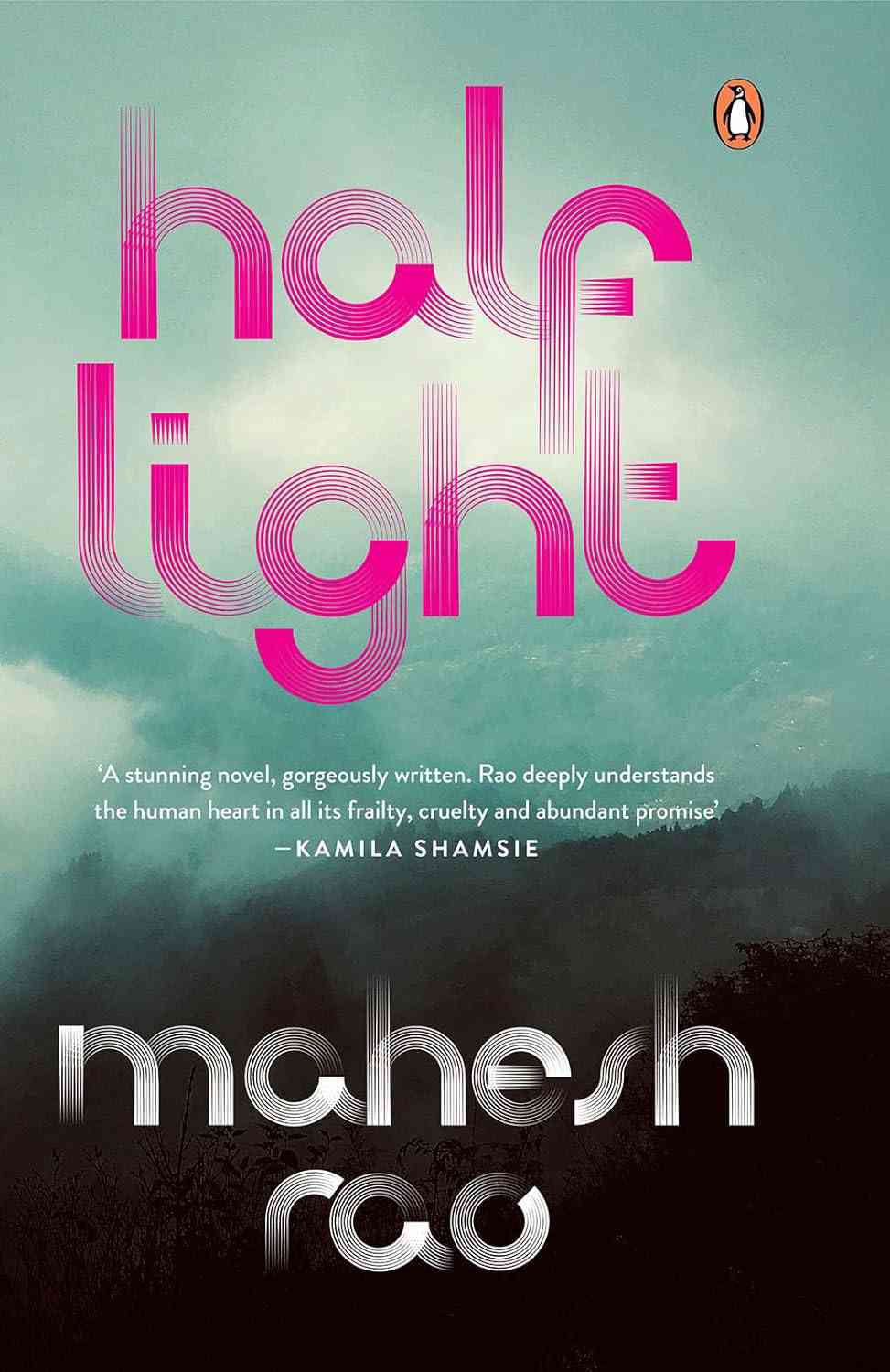
Half Light, Mahesh Rao, Penguin India.
