





Friends,
Finally, this unpleasant accident has happened to me, too. You always hope for serendipity for yourself, maybe I’ll win the lottery one day. Mishaps and disasters always happen to other people. But will the bomb fall on my house instead of lakhs of other houses in Delhi? Among the thousands of cars that can crash into each other, will my car be the next one? When other people turned sixty, and functions were organised for them, we felt pretty irritated; the whole thing looked ludicrous. An idiot, sitting on a stage, all dressed up like a doll, grinning in a self-absorbed way. People garlanding you, talking about your greatness, enumerating qualities that you either don’t possess or qualities that they will turn into your weaknesses as soon as you get off the stage, qualities that irritate and annoy – is all this going to happen to me too?
Even when we sense the onset of some serious illness, we avoid addressing it. We delude ourselves into thinking that no, his is not that illness, it’s nothing really, it’ll go away on its own. As far as possible, we postpone seeing the doctor, the wretch might confirm the fear spreading like smoke inside us as a real illness. These kinds of functions attest to the truth of crossing 60 – putting a stamp on the arrival of old age – now where will you escape, you poor chap? But what can I do, I don’t feel as if I’ve been “caught” or that I’m now in the grip of advancing age. Somebody once asked an 80-year-old woman, “Amma, now that you are so old, tell us, how do you feel? Do you feel as if everything is over?” She replied in all honesty, “How can I tell you now? I’m only 80 years old.” Nothing has died inside of me. [I have] the same desires and aspirations. The same longing to do something. How cruel is this concern that creates a sense that [once] you’ve reached a certain age, you’ve achieved what you had to, and now you should smother your desires and aspirations.
I don’t know why but sitting here in this celebratory function in my hometown, I’m reminded of the last scene of Raj Kapoor’s film Mera Naam Joker, in which all the people he loves, who have been close to him (the joker), who have shaped his life, are sitting in front of him. Standing on the stage, perhaps what he’s saying to them, in Bachchan’s words, is this: “I am what you made me (Hoon jaisa tumne kar dala).” But behind the persona of the joker is a terrible tragedy of failure and frustration. I don’t find my situation so tragic, but the sense of a put-on persona is very much there. Perhaps I’m not the person that I appear to be. I myself don’t know who I am. Bas, there’s just a feeling that torments and agitates me that I should, right now, remove this outside cloak and robe, this disguise, and like an impersonator, shock you by presenting my real self to you. But which real self? Amidst this confusion, I want to say, like Ghalib, “Banakar faqiron ka hum bhes Ghalib, tamasha-e-ahle-karam dekhte hain … (Disguised as a faqir, Ghalib/I see if the rich and powerful are actually generous.)” I feel something like a slight, smarting pain when I think of those who only see the outside, who can’t see beyond this faqir-like disguise, do they know about the sly impostor hiding inside?
Is this about getting trapped inside the several personalities of the impostor or is it about going beyond my own self?
Is the outer persona a cover to hide your personalities or are you living those personalities as an extension of that persona?
Most of us keep the originals of important documents in our safe, locker or almirahs and carry copies with us. Even if they get lost or damaged, the originals will remain safe. Do all impersonators leave their “original faces” in a secure place and go through their lives with the help of masks? Does a beautiful woman, always wearing make-up, used to people exclaiming over her beauty, always have this niggling worry … What if, during intimate moments, someone were to see her “real face”? How would she feel? We keep putting off such moments; the “make-up” that gets compliments becomes our real persona.
Anyhow, whoever I am – a copy, [someone] with make-up, a mask or my genuinely extended persona – it has all been given by you. I accept, with all sincerity, that whatever is good, lovable or alive in me is from my friends and everyone who is close to me and whatever is bad, wrong or distasteful is what I have “earned” on my own. You can call this a confession. I am grateful to you from the bottom of my heart, and this gratitude is my strength. People complain that all they’ve got from life is bitterness, betrayal, humiliation and misunderstandings. That other people have been unjust to them. It’s not as if all this has never happened to me, but time and again, I’ve been overwhelmed by the respect, love and warmth given to me by my friends. Whatever we give to others, we either deprive ourselves of it or give them someone else’s share. Sometimes, I really get overwhelmed by how much my friends have deprived themselves just to give me a shot in the arm. Constantly taking from others also makes me feel guilty. I probably haven’t given even 1 per cent in return. If I didn’t have your support, I would have probably been left behind in the anonymous black holes of life.
My entire life has been an exercise in coming out of these black holes. If someone were to ask me, is there a common thread in your life, I’d probably point to this. My attempt to transcend the boundaries of my body, geography, mind and intellect, the effort to breach them, to go beyond them, to undertake the task of rising above what was given to me – you can call this my evolution. This I have done through my experiences, relationships and perhaps self-education. If I were to sit and write my autobiography, it would undoubtedly be the saga of my successes and failures in attempting to transcend my situation and limitations. I love living in my memories and dreams; it’s something very dear to me. If they weren’t there, I couldn’t have become a writer. But my past was never so burdensome that I couldn’t walk ahead, nor did the future dominate my life so much that I used every relationship, every person as a ladder to reach that future. The past and the future remained relevant so as not to crush my present. If one is like the kitchen garden behind my house, the other is the front lawn, beyond which lies the expanse of open fields and roads. This is why I’ve never had an iota of fear about the future or any impending insecurities. I’ve never thought, what will happen next? I’ve never had a bank balance, insurance, fund for the future or pension. I’ve never even worried about them. If I’ve had trust in anything, it is my friends and the belief that somehow, something will happen. I have gambled on life on the basis of these convictions. The latest gamble was starting Hans four years ago. Yes, looking at my companions lately, I’ve grown a little scared. Anything can happen in the phase of life that I’m entering now. How will I face this new phase with my bank balance of Rs 1500–2000? Somewhere, some deep-held beliefs have cracked and I’m making an attempt to do something, to at least make sure I tide over the next couple of years, despite the rising prices. An artist is an emotional parasite, but being a parasite at a physical level is now a scary thought. Earlier, this was like a challenge: let’s see what happens, I’ll deal with it. My life has always been lacking in material things but rich in emotional and mental aspects. People find it hard to believe that I have let go of solid, material benefits in favour of intangible satisfaction and accomplishments. If someone else had said this to me, perhaps I wouldn’t have believed it either. But I have spent 60 years in this tussle between other people’s disbelief and my own belief. Now, I no longer feel a sense of failure when I hear someone say, ‘It’s not possible that you have not made any arrangements till now.
I don’t consider myself a miser or spendthrift, nor am I extravagant when it comes to money. I consider throwing away even a few morsels of food a crime and find it extremely problematic if I have to spend twenty–thirty rupees on a cold drink in a hotel that would cost just two or four rupees in the bazaar, whether I’m paying for it or someone else is. I’ve always been fond of travelling. In the beginning, I used to go in second or third class with my own money; now I go by AC or plane, courtesy the institutions or organisations that invite me. After spending 40 to 45 years of my active life in buses, trams and rickshaws, I have kept a car. Not because I have a passion for cars or because I see it as a status symbol, but because it’s a need and a compulsion, especially in Delhi with its distances, where scooter drivers accept passengers at their own whims and fancies. Yes, earlier these journeys used to lead to story ideas or thought processes,but now they’re just a way to cover distances.
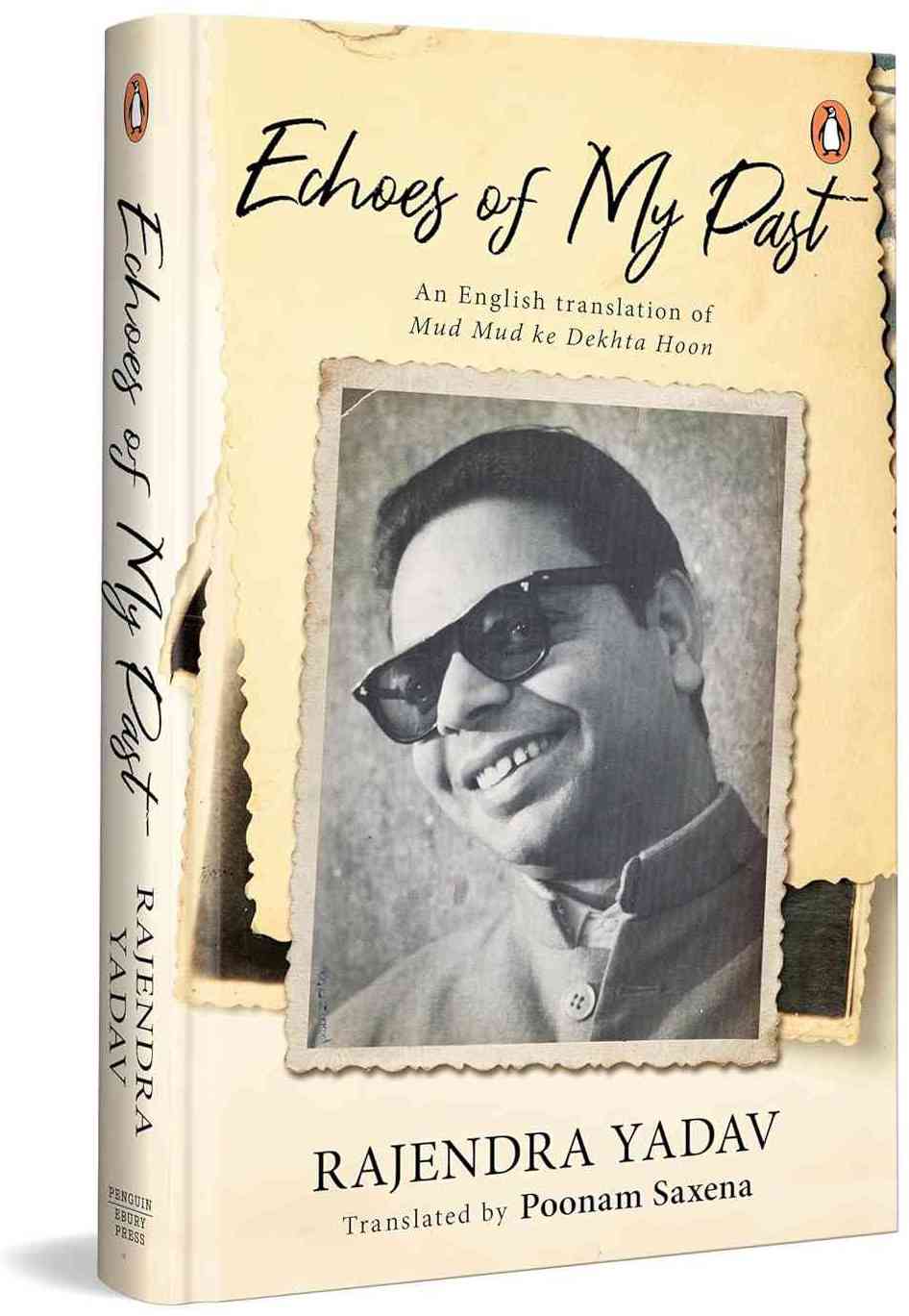
Excerpted with permission from Echoes of My Past, Rajendra Yadav, translated from the Hindi by Poonam Saxena, Penguin India.
