








The city was silent. Closed shops stayed desolate. Crossroads stood speechless. The buses that crawled along did not feel like buses at all; rather, they felt as if darkness had been fitted with wheels. For the first time, people sitting next to each other on the bus were not taking advantage of the cover of darkness.
When he got off the bus at Karol Bagh, he was unable to recognise his colony. The incessantly chirpy Ajmal Khan Road was cowering. Never before had the blue streak of Belga’s lights stopped. Prahlad Market stood in attention. Even if a passing vehicle turned on its lights for an instant, the light would flare up and be switched off immediately. People alighting from buses were heading straight for their homes, without greeting acquaintances. While on the bus, something had certainly been weighing Kapoor down. Several thoughts swirled in his mind all at once. First, what will happen to his parents living in Ambala city in Punjab? What will he do in the evenings now? The bus conductor issuing tickets in the darkness seemed like the epitome of innate faith in humanity. Not once did he count or even look at the change he was being handed. He simply gave out tickets for whatever stops the passengers said they wanted to go to. It is possible that he got a lot of counterfeit coins that night, but this wouldn’t be the case. The city’s submissiveness had surprised him.
In the darkness, each house’s outline was clearly visible, as if an architect had sketched out the city’s map with a fat pencil on a big sheet of paper. As one understood the import of this darkness, a feeling of emptiness arose in the pit of one’s stomach, which wasn’t a mere ache. The experience was new and strange. Kapoor wished he would bump into an acquaintance so he could discuss the current situation to his heart’s content.
He had been feeling weary for days now. Every morning, when he woke up and found himself exactly where he had gone to sleep, he felt disappointed. The perpetuity of the state of things was exhausting. People considered life to be a mystery. For him, life had become static. To date, nothing unimaginable had ever happened to him. At work, he would certainly be scolded by his superior officer the day he fearfully anticipated a scolding. On days when he sensed from Ruchi’s tone on the phone that she could not come to see him, she did not. He had wished for something to shake him up, but hadn’t wanted to be jolted out of his boredom at the expense of the country. The current situation had turned out, instead, to be paralysing.
He had seen Ruchi off at her house. She had told him she would no longer be able to come over in the evenings. Kapoor felt bad that after working (or not) all day at the office, he would not see her in the evenings at his apartment. Returning home implied returning to Ruchi. She would stay there till eight, after which he would drop her off at her house.
The city stayed fast asleep for four days. It was the fifth day of the blackout. Without any lights, the nights become thicker. There are very few things one can do in the dark. One may either eat in the dark or make love in the dark. Eating as an activity irritated Kapoor. In his opinion, it was an uncouth act. And Ruchi’s presence was integral to making love. He could listen to the radio, but Akashvani aired the news diffidently, and even the dim light of the radio hurt his eyes.
He had found himself some means of entertainment. In his free time, he read O’Neill, trimmed his nails, and recalled Ruchi’s compact body like the metric system. His colleagues had not been able to warm up to him. They went to Buddha Jayanti Park or India Gate on holidays, where their wives ate chana and their children ice-cream, and they smoked and thought life was pretty good. He always found married people to be less hassled with life than he was. But this solution – marriage – was in itself a problem.
He had pleaded with Ruchi to come over today and convinced Mummy that he would drop her back before dark. As darkness fell, they realised they had been waiting together for it to grow dark. Mere decency had obliged them to keep the lights on till today. The darkness of the blackout was dense. The intermittent whistles of the Home Guard were ringing out like reminders. Ruchi’s body was warm. He always held her as if she were a molten substance. Her body would begin to melt very rapidly. She called Kapoor “jewel” and did not mind much what he said. Her face always appeared freshly washed and when he looked at her, he felt the same way one feels upon looking at heaps of fresh vegetables early in the morning. Initially, this would startle and confuse him. Then he realised that the newness on her face and the deeper freshness in her eyes depended on her bindi. Ruchi did not look the same way every time. Her eyes had immense potential for expression. Sometimes, after she had left, Kapoor would feel that he had not been able to see Ruchi at all, just her sparkling, deep, closing, elusive eyes. She left behind many images of eyes. She spoke little about him and spent most of the time talking about her life. But he found this more convenient. He evaded himself to a great degree and delayed any introspection on a daily basis.
He held Ruchi passionately. Her hair was plastered around her face but there was no smell in it. Ruchi never even oiled her hair, and if her eyes weren’t such pools, her personality would certainly come across as dry. Compared to other times, she was quieter today. Otherwise, amidst her steady stream of words, he was often forced to remind her, “Ruchi, we’re making love.” They were sitting silently in the darkness today as though obliged to hold a pose of fearful reverence towards an invisible entity. When darkness was falling, he had decided to lose himself in her for a long time. But right now, simply touching her felt enough. When Ruchi moved closer to him, he kissed her hard on the mouth. He could understand her every demand.
Suddenly, a hoarse note pierced the darkness, softly at first, and then, oscillating continuously between a high and low pitch, went on and on. That noise could not be shut off like an alarm clock’s sound. The abruptness with which it started shook him up so much that he did not even realise he was crushing Ruchi’s lips, and she was trying to free herself.
The siren eventually died out but left its intent and aura in its wake. The quiet city became quieter, and the sleeping colony slipped into deeper sleep. In truth, nobody was asleep. Eyes wide apart, everyone was suspended in wordless waiting. Ruchi and he were now sitting. Neither interrupted the other’s stupefaction. Fear had placed its fingers on their lips. Kapoor had always been afraid of personal dangers. He had encountered the dangers to the country only in newspapers and forgotten all about them by the next morning. He had seen their miniature images sometimes in passing. He recalled that there were hutments of flood victims at the edge of Ring Road; in front of Gaylord in Connaught Place were piteous children worse off than beggars selling garlands. But he had never found himself included in their sorrows. He could see the present danger, however, on his wrinkled and bent mother and on his helpless father, on the quicksilver-like molten Ruchi and on himself as clearly as an X-ray film. He discovered that this darkness had the potency to assert disapproval of their intentions, for one cannot make love in this darkness. One can merely hold one’s breath, fix one’s eyes and ears on a point, and wait.
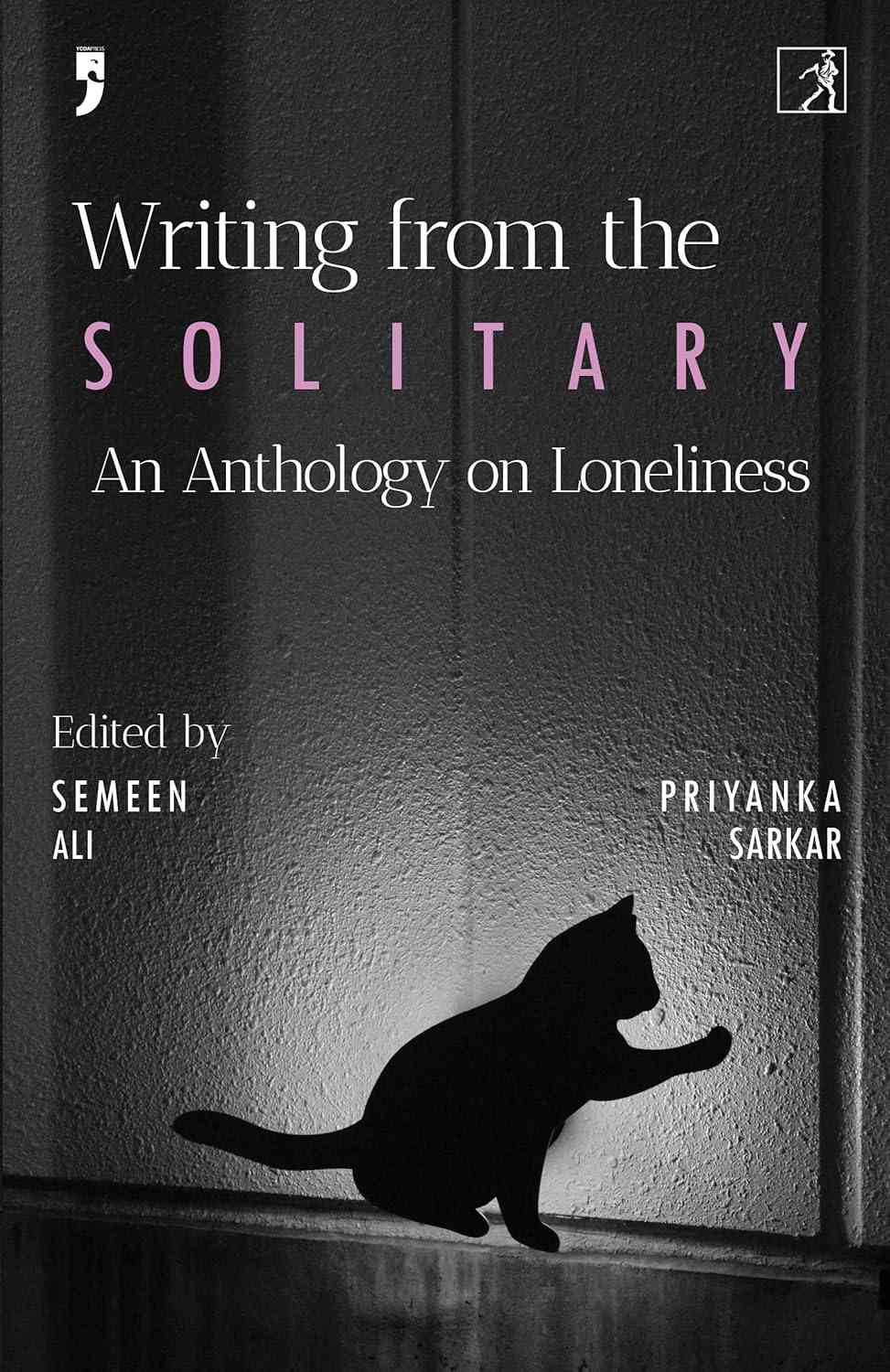
Excerpted with permission from ‘The Darkness of These Past Days’ by Mamta Kalia, translated from the Hindi by Pooja Sancheti in Writing from the Solitary: An Anthology Of Loneliness, edited by Priyanka Sarkar and Semeen Ali, Yoda Press and Simon and Schuster India.
