






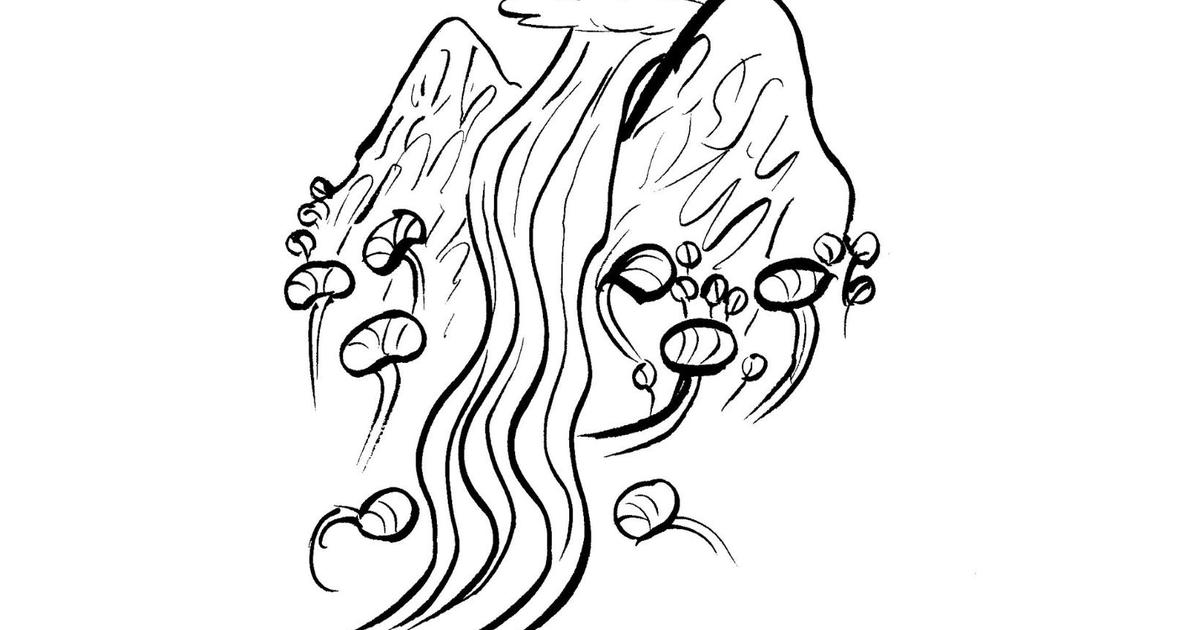
Everyone goes to Lampati to listen to stories, to learn from fables, or to seek a way to avert a danger. It’s even whispered that Lampati was a rock in the life just before his current one as a tree. Although he doesn’t have direct control over this part of the world in social or political or cultural terms, Lampati is effectively the undeclared monarch of Tadingdong. He may not feature in everyday activities, yet he’s everywhere. Even though no one in India is aware of Lampati from Tadingdong, many internationally-renowned sages from South-East Asia know of him. It seems the word Lampati has been found in carvings on stone in a left-to-right script, without a horizontal line above it, on a wall in an ancient temple in the Yunnan province of China. But there is no linguistic proof of this. The word should at least have had a botanical meaning, but no such meaning exists.
Apparently, the story of Lampati’s international fame and mysteriousness, and of its being the undeclared monarch of a valley of sapiens is included in the syllabus for young lamas in a Buddhist monastery in Japan. During their visit to Gosanimari, the capital of the old Khen kingdom, a group of travellers from the island of Sumatra also visited Tadingdong. There is, however, no record of their motive. It isn’t clear whether their visit was at all for a view of Lampati or for conducting some research on magic. Once upon a time, very long ago, a hermit from Bomdila lived clandestinely in Tadingdong. The only witness to this incident was Amochu. But how will anyone learn of such histories from Amochu? No one knows his language. And then he belongs to Chumbi Valley in Tibet.
When the hermit from Bomdila was thrown out some time ago, some of the sapiens here may have understood what was going on. But then that was in the age of the great-grandfather of the oldest diviner here, who is called Old Jhankri. By then the hermit had gathered some followers in Tadingdong. Those researching Lampati have realised that it was the intention of the hermit to diminish the ancient patriarch Lampati’s inherited knowledge of nature, philosophical prowess, and influence on the sapiens of Tadingdong, and gradually steer the creatures in the valley towards an altogether different passion, with the overall objective of establishing a small colony of the Bomdila Mission here. We will find out later whether this goal was met or not—we may explore the subject if need arises. Several sapiens indoctrinated by this hermit who came from somewhere else have, however, been living overly shadowy lives in Tadingdong for a long time. It’s not as though Lampati doesn’t know this. And it’s not as though Amochu doesn’t know them. But because of their exceptionally philosophical perspective and liberal mentality, neither of them influences, nor wants to influence, the flow of class-struggle or class-adjustment in the lives of sapiens, whether they are locals or outsiders. Both of them desire that these small incidents and accidents that sapiens encounter should be resolved according to the laws of nature.
The ancient patriarch Lampati with his transcendental vision only chuckles at them. None of this is new to him, he has observed sapiens for a long time, over hundreds of years and many generations. He considers this a natural event—this romance of the minor struggle of co-existence between locals and outsiders amidst friendships and enmities and diplomacy. And no form of life brought about by nature appears profane to him. When Lampati think of his previous life, he believes that his transformation from a long lifetime as a rock to one of a tree has also taken place in accordance with natural laws.
Many aliens from other planets are convinced that the smell of primordial rocks persists in Lampati’s shadows and leaves and branches and cryptic hollows. It is also said that the smell had wafted all the way to Buddha of Kapilavastu, who had followed it in his dream to visit Tadingdong on one occasion. Of course, these are only the hypotheses of Chinese and Japanese research scholars, and no one has arrived at a definitive conclusion. It’s a lot like the matter of Netaji Subhas Chandra Bose’s disappearance, which is extremely complicated. This narrative will probably choose not to go towards such complexity. The language in which this story is being told at the moment might also pose an obstacle in that case. It is truly difficult to discover Lampati, to identify him correctly. It is said that some Latin American thinkers, predecessors of Alejo Carpentier, had also turned their thoughts at one point to Lampati and Amochu of Tadingdong. These things cannot be achieved with archaeology or botany, after all. Some say a deeper knowledge of two more non-existent, imaginary deities of Tadingdong, the goddess Sainja and the god Ispa, might unravel the mysteries of the region to some extent. But learning about and understanding Sainja and Ispa is even more difficult. Neither history nor mythology exists where they are concerned. Apparently, it involves the theory of dreams, which is still more or less out of reach of the world of knowledge.
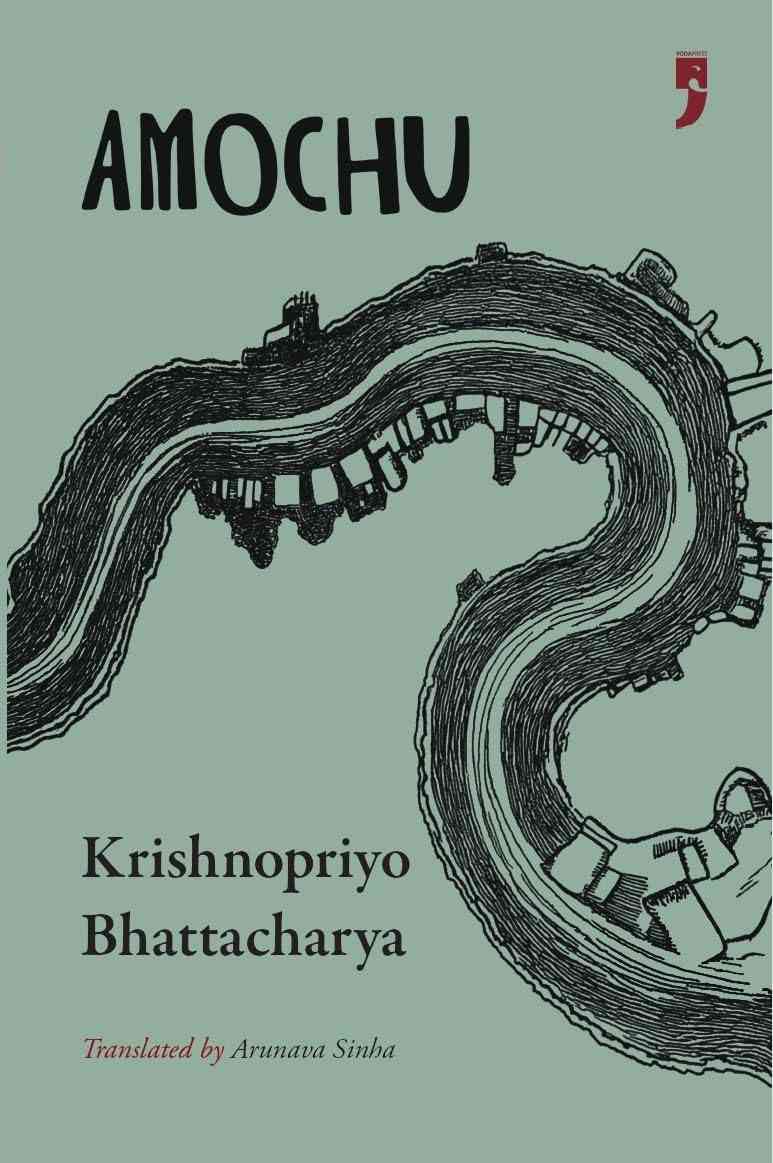
Disclosure: Arunava Sinha is the Books and Ideas editor at Scroll.
Excerpted with permission from Amochu, Krishnopriyo Bhattacharya, translated from the Bengali by Arunava Sinha, Yoda Press.
