








Over three and a half decades ago, the “Washington Consensus”, a neoliberal consensus encapsulated in ten principles laid out by economist John Williamson, emerged on the horizon. Backed by institutions like the IMF and World Bank, this consensus has been extremely influential in determining economic policy and, consequently, political trends, the world over, including in India.
However, it has been found wanting in a number of aspects – particularly in its failing to factor in social and institutional factors which define economics and policymaking in innumerable ways. In 2008, on the heels of the global financial crisis, Joseph Stiglitz published an essay titled Is There a Post-Washington Consensus Consensus? highlighting the inadequacies of this set of economic principles.
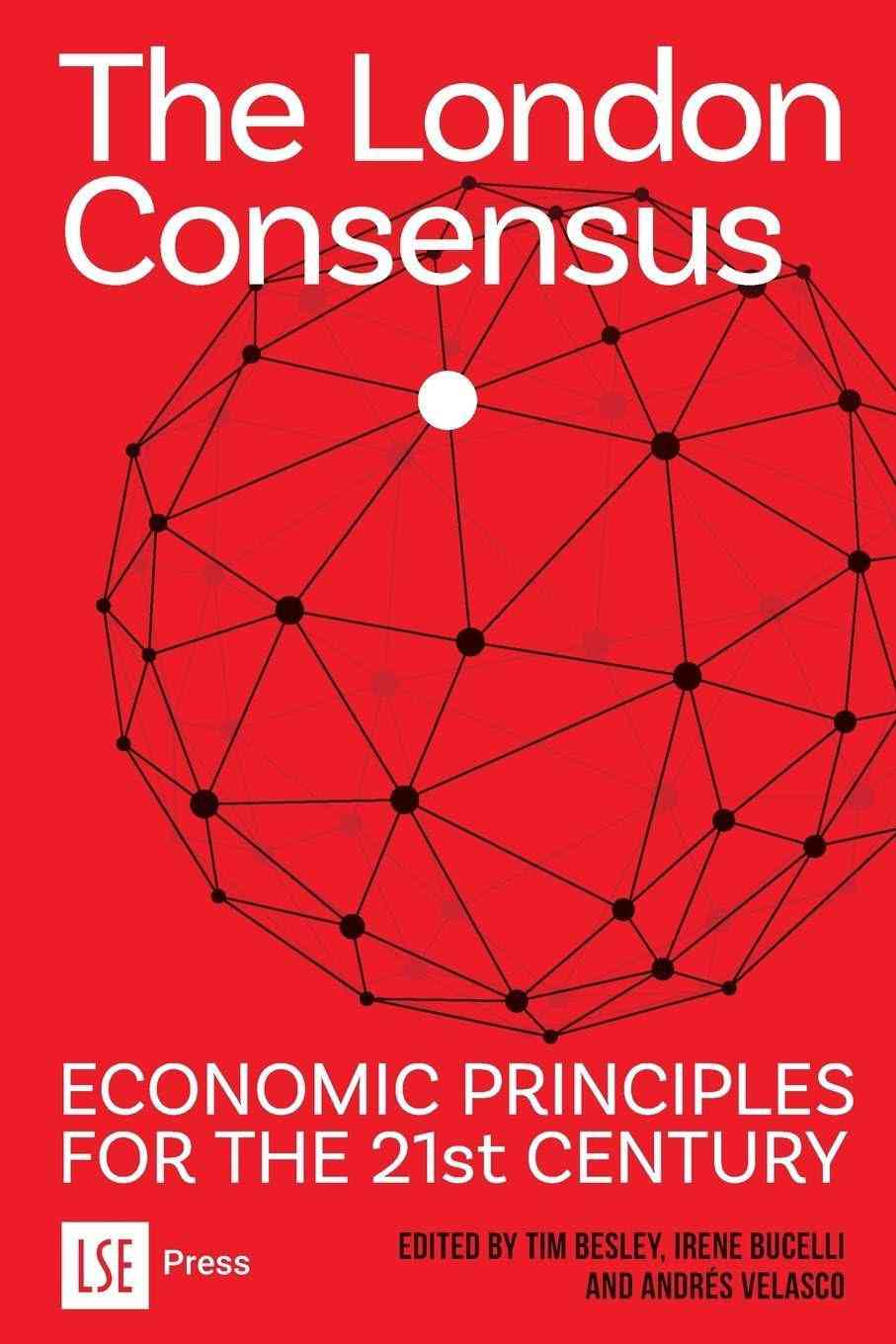
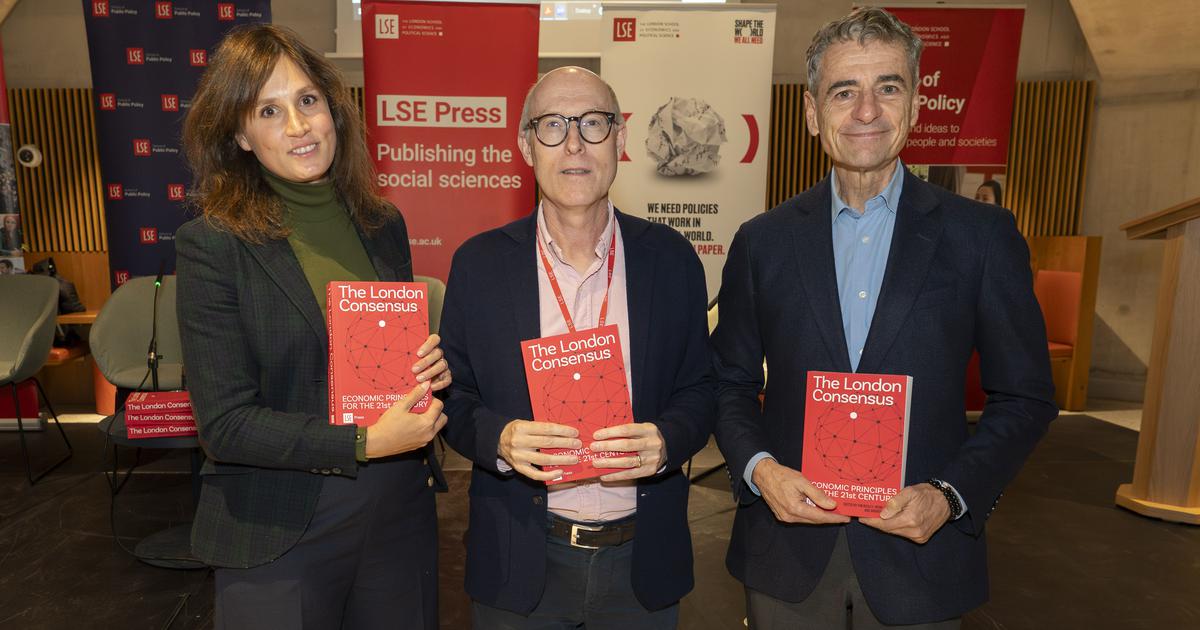
In recent years, 55 economists from around the world (20 from emerging economies) have met at the London School of Economics and Political Science to answer this question. The result is a book of essays, edited by Tim Besley, Irene Bucelli and Andres Velasco, which addresses some of the most pertinent economic and political questions the world is grappling with in the 21st century. Most importantly, the book lays down a new set of principles for the world to consider, which the scholars call the “London Consensus”, because the discussions which shaped them took place at the LSE.
But can a set of economic principles really influence the way the world works? Why should they? How will they? What should nations watch out for with regard to such economic paradigms? Andres Velasco, contributor to and editor of The London Consensus: Economic Principles For The 21st Century, economist and dean of the School of Public Policy at the LSE, and former finance minister of Chile, answers such questions in this interview.
The London Consensus: Economic Principles For The 21st Century is freely available to download and read.
In popular discourse, the “Washington Consensus” has certain buzzwords or catchphrases attached to it, such as “globalisation”, “neoliberalisation”, “open economy” and “free markets”. While reductive, these words and phrases attribute to it a distinct popular identity. How do you see the “London Consensus” being characterised?
For better or for worse, we have resisted the temptation to attach buzzwords or catchphrases to our work. We think having an economy open to international trade is good, but there are caveats. We also think that economic growth is highly desirable, but it is not due to the actions of the private sector or the government alone, but of a collaboration between the two. We believe that fiscal policy can be used to stabilise the economy and help households in crisis times, but in order to be able to do this, governments have to be fiscally prudent and reduce debt in good times. In short, the London Consensus resists an easy characterisation.
For lay readers not acquainted with economic history, can you give us an overview of what the Washington Consensus meant for the world, especially countries like India, and the importance of the London Consensus in this context?
The Washington Consensus arrived in the late 1980s when some developing countries (like India) had very closed economies, while others (mostly in Latin America) had big budget deficits, too much debt, and suffered endemic financial instability. So the Washington Consensus, understandably, stressed trade liberalisation and macroeconomic prudence. Those are still valid lessons. But the world faces different challenges today. Productivity growth is slow, in spite of the technological revolution underway. Labour markets work poorly and leave too many women and young people without decent jobs. There are many risks for which private markets provide no insurance, leaving households exposed. About such issues, the Washington Consensus had very little to say. That is where the London Consensus comes in.
Arriving at an economic consensus for the 21st century is a grand ambition. What process did the 55 scholars from around the world, who convened at the London School of Economics, follow? How were the scholars who were to be a part of this process chosen?
We do not pretend to have a monolithic consensus, nor did we invite only one type of economist. The only thing we all have in common is some connection with the London School of Economics – some of us teach or have taught there, others obtained their doctorates at the LSE. What we asked each of them to do was to reflect on what we have learned, in each one of their subfields, since the days of the Washington Consensus. More than a policy consensus, telling countries what to do, we hope to provide general economic principles, which leaders can then use to organise their thinking about which policies to choose.

Many see the Washington Consensus as something imposed upon the world by the West or the Global South. Like Washington, London is a centre of the Global South as well. What would you say to similar concerns regarding the London Consensus?
That should not be a concern in this case. Far from it. Nearly half the authors come from developing countries, including me. We do not speak on behalf of any organisation or country. We are simply to put our research and scholarship at the service of better policy-making.
While Williamson’s “Washington Consensus” comprised a set of ten principles of policymaking, the “London Consensus” has five. The Washington Consensus was also more prescriptive in nature. While you write in the introduction that you wish to avoid the “one-size-fits-all-temptation” there is the concern that these principles might be too broad to have any real application or value. How did you walk this fine line? Can you share an example of how a principle might be applied to economic policymaking in very different countries in the Global South and the Global North?
Williamson’s “Washington Consensus” offered ten commandments. We offer five principles which can have different implications depending on where they are used. Let me give you an example. One of our principles is that state capacity is key. Several papers in the volume are sympathetic to what you might call industrial policies, or productive development policies. But those papers would agree that such policies require an able, agile and technically adept state. If you do not have such a state, you should think twice before undertaking certain kinds of industrial policy.
Let’s discuss the principles one by one with examples of their application. The first principle – “It’s not just the money: wellbeing is the key” – insists on taking into account personal and societal wellbeing as well as financial considerations when thinking of economic policy. Could you elaborate?
People care about their income and consumption. But they also care about the health of their communities, the vibrancy of their cities, and the ties that hold people together. It is not enough to tell a resident of a town suffering from high unemployment to move to where the jobs are. That person will shoot back: What about my family and friends? My neighbourhood and my community? Do you really expect me to leave all of that behind?
The second principle – “Growth matters, but so does place” – speaks of where and how growth occurs being essential, besides the growth itself. There is an emphasis in your explanation of this principle on innovation. Could you share an example of how this principle might translate into policy?
The Washington Consensus assumed that growth would automatically happen if the government stepped back and let private firms do their thing. Today we understand – thanks to the work, among others, of our co-author Philippe Aghion, who just won the Nobel Prize – that it is a lot more complicated than that. That you need deregulation but also competition policy, that rents are needed to stimulate innovation but that if they get too fat, they can be used to stifle new competitors, that the government must also supply some key public inputs, and so on and so forth.
The third principle – “Building resilience: government as insurer of last resort” – places upon governments the responsibility of guarding against and fighting crises and volatility. What are the kinds of crises you see governments having to brace themselves for and how can they prepare for what are popularly known as “black swan events”, i.e. crises which simply can’t be pre-empted?
The Washington Consensus consensus focused on the volatility coming from bad monetary and fiscal policies. That is still a key concern. But today we also know that shocks can also come from out-of-control finance (think of the 2007–09 crisis), from pandemics, or from geopolitical events like the criminal Russian invasion of Ukraine. Governments can help citizens deal with such shocks – in the book, we call it government as an insurer of last resort – but not every government can do that. Only fiscally prudent governments can.
The fourth principle – “There is no good economics without good politics” – certainly seems more pragmatic than economic policymaking in silos. However, it brings risks with it: with polarised politics, and every government looking to secure another term, how does one propose policy which is politically feasible without giving into populist demands?
Precisely because economics and politics are so closely linked, and because populism is an ever-present danger, economists cannot be blind to the political consequences of politics. Nor can they ignore the fact that policies that are not viewed as politically legitimate can be short-lived, and this expectation causes those policies to have unwanted effects. It is a delicate dance, but it can be performed.
Finally, “A capable state: the essential complement for everything” could be seen to challenge the libertarian ideal of a minimalistic state. The three capacities in focus within this principle are “revenue-raising capacity”, “legal-administrative capacity” and “delivery capacity”. How does this principle intend to guide policymakers to ensure an efficient state as well as a well-funded one?
A capable state does not fall on our heads from the heavens. It is built. It is like an investment decision. Governments can choose to build a better state. But it takes time and money to develop all those capacities that you list above. Therefore, policymakers better start soon.
Would you call the London Consensus a correction of the Washington Consensus or a completely fresh approach?
The Washington Consensus provided answers to the problems of 1990. We try to provide fresh answers to the fresh problems of 2025.
Most importantly, one might argue that the Washington Consensus achieved the influence it commanded because of backing from institutions like the World Bank and the IMF. What kind of support do you see the London Consensus garnering for its relevance?
The most important kind of backing is from the democratically-elected governments of countries, poor and rich. We do not believe in recipe books imposed from abroad.