






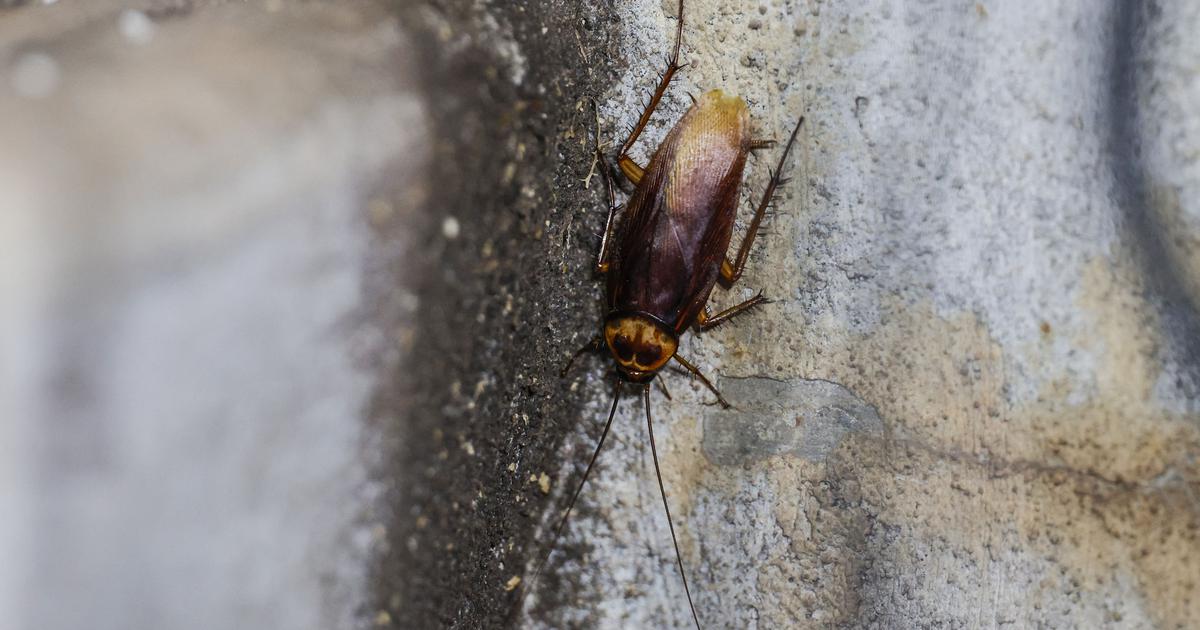
I have never woken up with an armour-like back and many tiny legs as Gregor Samsa did in Franz Kafka’s Metamorphosis. But I know for sure that I am a cockroach – the disgusting species that Charles Bukowski writes in a poem about killing with a subtle pleasure for living rent-free in his home. Maybe it is not just about the rent. It could be the insect’s audacity to flaunt its existence. The crime is its visibility.
How dare it leave the sewage, even momentarily, for a place where it does not belong?
Samsa, the salesman in Kafka’s novel, met the same fate at the hands of his helpless family when he left his room.
I am acutely aware of this. I know what would happen to me if I dared to breach boundaries. That is why I tend to isolate myself in places that conceal my visibility, hoping that this situation might end one day – the day I metamorphose into a human being.
Mind you, don’t pity me. Never. I remind you of what Babasaheb Ambedkar said in his essay Waiting for a Visa, “Though my condition was pitiable I did not like to be pitied.”
Perhaps, it isn’t pity. You are kind enough to empathise with me. But I don’t want you to be kind either. I remember complaining to my DPhil supervisor about how her kindness was overwhelming, and how I was not used to being treated in such a manner.
Humiliation? Yes. It is painful, yet familiar.
But kindness drags me into a world of unfamiliarity. It disorients me and confronts the comfort that I have known so far of being a cockroach.
“Can’t you see that I am a cockroach?” That is what I want to say to anyone who tries to be kind to me.
You are probably wondering where I am going with all this. Will this end with a hint of hope? Maybe, maybe not. But isn’t hope a tricky thing? It is easy to confuse it with delusion.
It is possible to think that I am being delusional when I say that I am a cockroach. You may say, “It is just in your mind” or that I am making it up, something similar to what Justice Brown of the US Supreme Court said in the Plessy vs Ferguson case in 1896 when he held that segregation of races does not treat the Blacks as inferior unless they want to construe it in such a manner.
But my mind doesn’t operate in a vacuum. What am I supposed to think when I constantly read that my fellow Dalits are being killed – not only for marrying non-Dalits but for actions such as sporting a moustache, for sitting cross-legged, for riding a horse, or dressing up. In short, for breaching society’s idea of how a Dalit should be?
How am I supposed to feel when my fellow Dalit students are forced to clean bathrooms in schools, humiliated as “quotawallas” or even driven to suicide in colleges?
I myself was expelled from my previous university without any inquiry for demanding scholarships. Not to mention the humiliation I have faced since my school days. In every nook and corner, I am reminded that I am a cockroach that must never come out of the sewer. I have internalised these reminders.
But that’s only half the story. Being a cockroach is familiar, but there is also the violence that I commit upon myself, as my therapist once put it. I do want to be a human being with dignity, for I am not made for the sewer. So far, I have outsourced the task of recognising me as human to others. When others appreciate or validate me for the things I do, I feel like a human – at least until the feeling fades away.
I continued chasing such validation, only to realise that it never made me feel completely human. It was a conditional recognition that I imposed upon myself. I got into Oxford University! Yes, you are a human now, but you must prove that you deserve to be here.
I completed my MPhil in law with distinction! Yes, you are a human now, but that’s not enough. Perhaps my examiners were kind and liked doing charity work. Nothing killed the cockroach to give birth to the human.
It is ironic that since my undergraduate days my research area has centred on human rights. Several moments of deep breathing, hours of therapy sessions, the constant support of my loved ones and reading philosophical texts gave me the courage to entertain the possibility that I could be wrong.
What if I am not a cockroach?
What if I deserve self-respect irrespective of what I do?
Yes, the time has come to rebel.
Albert Camus says that to rebel is to say no and yes at the same time: “no” to existing conditions, an awakening to the realisation that they cannot continue like this. And “yes” to certain parts of one’s self that must be preserved. I have started saying no to the thought that I am a cockroach and began to think for myself, as a rebel initially does.
I know this is not a linear process, and I may be forced to return to my sewer whenever I say yes. But I will still come out again and again. I don’t think I have any other option, for I, “a glorious thing made up of stardust”, do not belong to the sewer.
Do I like doing this? Am I happy? I am – or at least I imagine that I am, and perhaps, you could imagine it too.
Bhimraj M is a DPhil student in Law at the University of Oxford. He currently coordinates the Oxford South Asian Ambedkar Forum, an anti-caste society at Oxford.
January 17 marks the death anniversary of Dalit student Rohith Vemula, who died by suicide on this day in 2016.
