










In the Mundaka Upanishad, death is seen as part of the never-ending cycle of karma; an interplay of birth, pleasure, possession, grief and loss. Here, death is one perishable aspect of material reality. It is not an end but a perceived momentary pause before another cycle takes over. The realisation of brahman – the truth, immutable and imperishable – leads to the transcending of the life–death cycle. This awakening is not necessarily something that happens after a physical death; it can happen during life too. As the Mundaka Upanishad states, “One who knows this, my friend, hidden within the cave, cuts the knot of ignorance in this world.”
The Upanishadic world is not really interested in the how or why of dying because these reasons fall within the causative trap. All that lives will die. Yet, not all deaths are equal. Indeed, death could be commissioned, ordered, using the vocabulary of justice. We cannot let this pass as just a product of karma.
The phrase “awarded the death sentence” is used with great regularity. It’s an expression that has always made me uncomfortable. The word “award” is derived from French, meaning “to decide after due observation”, and used both as noun and verb. As a noun, it refers to a prize or recognition. As a verb, it carries emotional neutrality and, when employed penologically, it has the distinct clang of finality to it: was awarded the death sentence.
This triggers a phonetic dissonance. My mind is unable to reconcile the image of the guillotine with the word “award”, the noun and verb forms getting tangled up. The lexical entanglement reminds me of the word “loha”, which Surdas says does double duty:
इक लोहा पूजा मेंं राखत
इक घर बधिक पड़ोOne iron adorns the puja altar
Another the hunter’s den
From the kings of lore to modern democrats, those in power have always promulgated laws to prevent human deaths. Punishments are prescribed – impersonal institutional retribution that could vary from solitary confinement and life imprisonment to imprisonment for a certain period of time. They may also involve mental and physical torture, even though it is illegal in almost all parts of the modern world. Denying inmates food and social interaction, verbal abuse, intimidation and physical assaults are all par for the course in prison. Prison officials, too, are victims of the punishment culture and the oppressive environment. Army detention centres seem to be worse. The videos and reports of the treatment of Iraqi and Afghan prisoners by American soldiers are seared into public memory.
In India, there are over 60 offences for which the death sentence can be applied. Along with countries such as China, Iran, the US, Pakistan and North Korea, India retains the death sentence. Rwanda, a country that lost over five lakh people to genocide in the early 1990s, abolished the death sentence in 2007 – a move that was seen as a way to facilitate the extradition of those accused of genocide who were living in other countries. 25 African countries have abolished the death sentence, while some others are abolitionist in practice.
Our neighbour, Sri Lanka, a country that endured three decades of armed conflict, when mass killings, attacks and assassinations were all commonplace, has the death penalty in its books. But not one person has been executed for nearly 50 years. In 2019, former Sri Lankan president Maithripala Sirisena tried to bring it back into practice by ordering the execution of four drug offenders. Hangmen were recruited after a gap of 43 years. But the next president, Ranil Wickremesinghe, assured the Supreme Court of Sri Lanka that he would not sign warrants for their execution. Taiwan moved in the other direction. 37 inmates on death row challenged the constitutionality of the death penalty. In 2024, the courts held that the death penalty was legal but also put in place more safeguards. The hope was that this would move Taiwan in the direction of abolishment. Unfortunately, that did not happen. In January 2025, Taiwan executed a person convicted of rape and murder. That was the country’s first execution since 2020. According to Amnesty International, as of December 2024, 113 countries had abolished the death penalty for all crimes and 145 countries were abolitionist in law or practice.
There is a lack of accurate data about how many people have been executed in independent India. As per Annexure XXXIV of the 35th Report of the Law Commission of India (1967), the total number of murder cases in which the sentence of death was executed from 1953 to 1963 was 1,410. As per the responses received from central prisons in India by Project 39A, National Law University, Delhi (now The Square Circle Clinic at NALSAR University of Law, Hyderabad), 134 people have been executed in India in the past five decades (1973–2023). However, certain prisons have provided information only for a limited period, refused to provide any information or did not have any records available. As of 2024, over 546 prisoners had been sentenced to death.
In the case of mercy petitions, our presidents have demonstrated varying inclinations over the decades. Gopalkrishna Gandhi records in his book The Undying Light that requests were made through him to the then president R Venkatraman, including one from the Dalai Lama, to accept the mercy petition of Kehar Singh (convicted in the Indira Gandhi assassination case). But the president was unmoved.
And finally, after the dreadful deed was done on January 6, 1989, the president went on with his work. Gandhi notes, “Kehar Singh was a file disposed of.”
KR Narayanan was probably not an abolitionist, but after scrutinising the death sentence files, he decided not to reject any mercy petition. APJ Abdul Kalam was the only president who publicly stated his reservations regarding the death penalty, pointing to the fact that it was the poor who faced the brunt of it. He rejected just one mercy petition because he was convinced that the accused was directly responsible for the rape and death of a girl. In the other cases, there was, according to him, “social and economic bias”. Kalam felt that in most cases, those who were being punished were the ones least involved with the crime. The next president, Pratibha Patil, most definitely leaned towards abolishment. She commuted 35 sentences. Pranab Mukherjee, on the other hand, rejected 30 mercy petitions involving 42 convicts. Ram Nath Kovind rejected six of the mercy petitions that reached his desk.
Since Independence, there has been great progress in our laws and in the legal attitude towards the death sentence. Where once the norm was to award the death sentence for certain crimes, and judges needed to explain why they did not take that route, our system now requires judges to spell out reasons for awarding the death sentence. Though the death penalty is only applicable in the “rarest of the rare” cases, its implementation is ripe with concerns. Guidelines have been put in place for the manner in which the death sentence can be imposed. The circumstances and mental health of the accused are to be taken into account. Additionally, in 2014, the Supreme Court took cognisance of the torture that inmates are subjected to in prison, including solitary confinement and having to wait years for presidents and governors to decide on mercy petitions. Such individuals, the Supreme Court said, cannot be executed. In 2022, the apex court even put down guidelines for the manner in which information about the prisoner is to be collected before the death sentence is pronounced.
Yet, the reality on the ground is that the death sentence continues to be awarded in trial courts, where citizens go to demand justice, and caste, class and religious discrimination are all-pervasive. According to the Death Penalty India Report published by Project 39A in May 2016, which studied the death sentences imposed by trial courts between 2000 and 2015, 76% belonged to the backward classes and religious minorities, 24.5% to Scheduled Castes and Tribes, 61.6% had not finished their secondary education and 74.1% were economically vulnerable.
Evidence of how casual the process is can be seen in the fact that only 4.9% of the death sentences imposed by trial and high courts between 2000 and 2015 were upheld through the appellate process by the high courts and the Supreme Court.
The powerless find it harder to navigate the court system, and between corrupt, inefficient or uncaring lawyers and judges apathetic to social disadvantages, they stand no chance. The few who are able to take their cases up to the Supreme Court are usually supported by legal collectives. Mental health professionals and social workers are not an integral arm of the justice mechanism. Until this integration is recognised as essential, there is a high probability that the disenfranchised will be sent to their death by law.
Over the past decade, the gamut of crimes for which the death penalty is applicable has expanded. After the Nirbhaya incident in 2012, rape that causes death or results in the victim having to live in a vegetative state was brought within the purview of the death penalty. Then, in 2018, the rape of children below the age of twelve was included too. The recommendation of the Law Commission in 2015 that the death penalty must be applicable only for terror offences has been ignored. The general public was jubilant about the execution of those involved in the 1993 Mumbai bombing, the 2001 Parliament attack, the 2008 Mumbai attacks and the 2012 Nirbhaya gang-rape case. It was unnerving to see citizens rejoicing over the killing of an individual. As Albert Camus suggests in his essay “Reflections on the Guillotine”, if executions are a deterrent, then people should be made to watch every execution and it must be broadcast on television. If these are moments to be relished because justice is being served, we should take part in this accomplishment.
Public floggings in countries like Afghanistan and Saudi Arabia are the subject of opprobrium and disgust. Why? Is it only because these State-sanctioned punishments are happening in public for everyone to see? So, is it the public sharing and participation in the violence inflicted on an individual that is considered repulsive? We hide executions from the public because we know that such actions are inhuman, that this is not justice. This is the satiation of our savagery. Army combatants have reported that killing another person is shattering and that, with repeated participation, it strips them of empathy, pushing them into an emotionally dark place. This is why even the nature of the crime is not a good enough reason to sanction the death penalty. The Law Commission felt that terrorism was reason enough; some other countries believe drug smuggling is equally vile. Who is to be the arbiter of what that threshold should be?
When the death penalty exists, every other punishment is placed on a downward scale in relation to it. The wider the reach and scope of the death penalty, the harsher are the laws on the downward curve. The existence of the death sentence also has a psychological impact on how even brutal sentences such as life imprisonment, are perceived. This allows governments to pass stringent laws for offences it wants to criminalise.
Every execution chips away at the nation’s moral fibre. We watch from the sidelines as a death penalty case crawls up the judicial ladder. Finally, the Supreme Court pronounces a guilty verdict. A few years later, the president rejects the mercy petition. Then, often for a very long time, the convicted person languishes in jail waiting for the dreaded day. Life in Indian prisons is itself torturous. The hierarchical, violence-entrenched environment takes away every shred of dignity, and the restrictions placed on access to family destroy the mental health of inmates. All of a sudden, one morning, we learn that the individual has been executed. As citizens, we have participated in the systemic destruction of a human life. Eventually, we move on. This numbness is the scariest consequence of legitimising the death penalty.
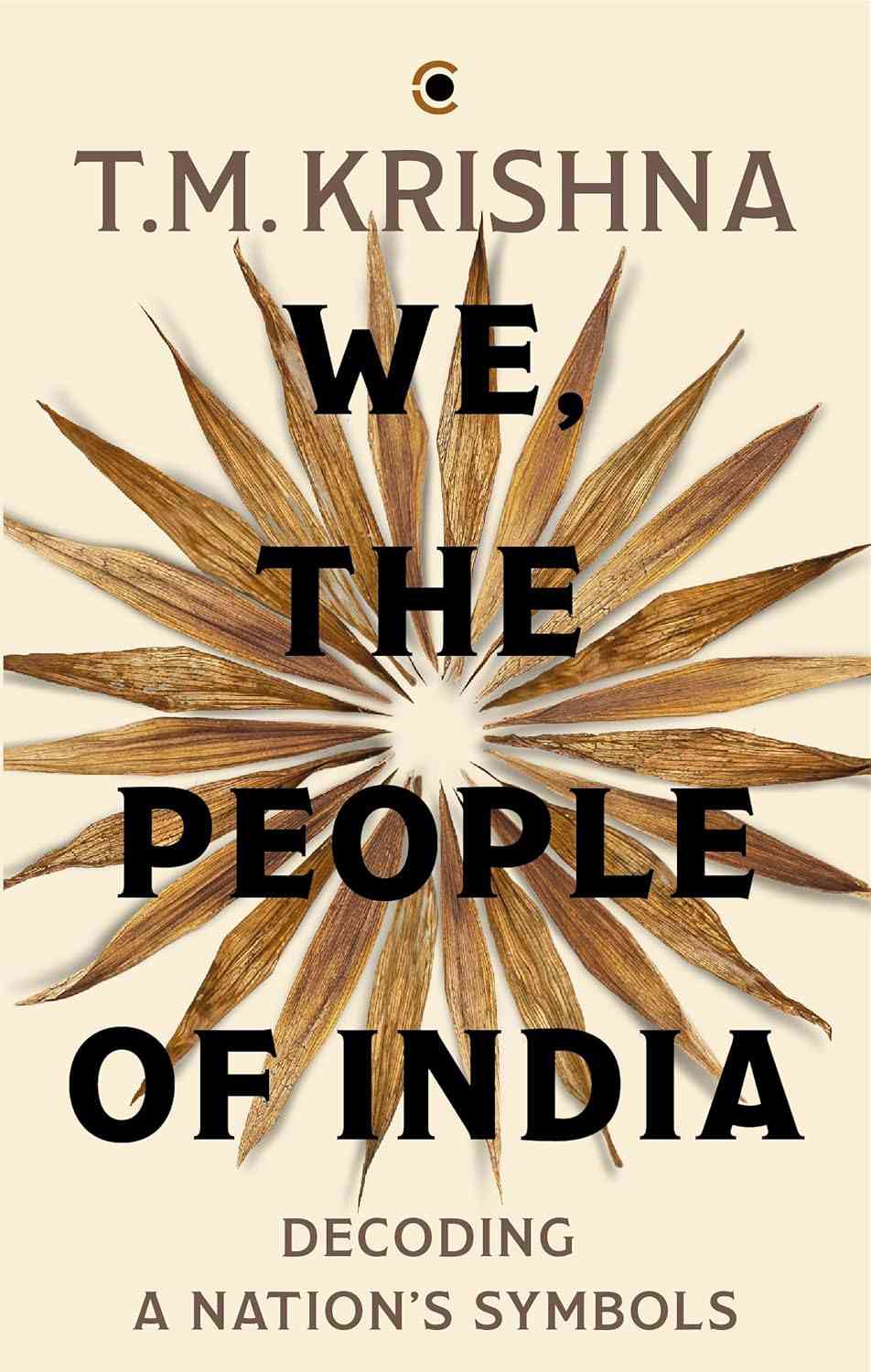
Excerpted with permission from We, the People of India: Decoding a Nation’s Symbols, TM Krishna, Context/Westland.
