





A week passed in uneasy silence.
The story had been about Sedo Hazan, Kurdish bomb-maker, once the PKK’s most trusted ghost. A man who’d wired explosives for a cause he no longer believed in.
By the time Amol found him, Sedo was done – tired, hollowed out, carrying the weight of every life his devices had claimed. He didn’t ask for forgiveness. What he wanted was a way out. A deal – names, operations, the bomb-making secrets that haunted Europe’s cities – in exchange for exile and a pension somewhere no one would find him.
That was the story Amol wrote – a man, too late, trying to change his life. It ran three columns on page five. The editor teased it on the front. Amol thought, briefly, it might spark something. But then … silence.
No angry phone calls. No denials. No visits from Kurdish heavies. Just the newsroom hum, London rolling on like none of it mattered.
It felt wrong. A story like that should have made waves. Instead, it folded neatly into yesterday’s news. Sean didn’t call. No surprise visits. Just absence, louder than a shout.
Until today.
Amol was killing time in a Fleet Street café when the wall-mounted payphone rang, sharp, urgent. He hadn’t heard one ring in years. That alone made it feel like a threat.
The waitress barely looked up. “That’ll be for you, love. No one else here.”
He stared, throat dry, then answered.
“Amol?” Sean’s voice, smooth, almost playful. “Time to stretch your legs.”
“Where?”
“South Bank. Noon. Dress warm.”
“Who’s meeting me?”
“Peter Mone. Says he’s a spook. Don’t ask questions on the line.”
“Why now?”
“Because you’re wondering why no one’s come calling about your story,” Sean said. “The people who care about Sedo Hazan don’t write letters to the editor.”
“You’re setting me up.”
“I’m giving you the real story. You earned it.” Click.
By the river, the air tasted of damp stone and coal smoke. The South Bank was deserted, cold, grey, indifferent. Sean was already there, leaning on the embankment, scarf loose. He saw Amol, gave a thin smile.
“Didn’t sleep, did you?”
“What is this?” Amol muttered.
“Closure. Or the start of something worse.”
Sean jerked his chin. “Come on. They don’t like to wait.”
A hundred yards down, a man waited. He was short, bald, fat. Skin like milk. He cradled a battered paperback of The Secret Agent. Behind him loomed a minder; massive, immovable. He said nothing, did nothing, just stood protectively behind Mone like a giant tree or a block of ice.
Amol slowed. He recognised this kind of staging – the literary flourish, the brute in the wings. It was theatre, but not the kind with applause. Just cues, silence and things already decided.
“Peter Mone,” Sean said quietly. “Let me do the talking.” Mone turned as they approached, sharp eyes taking Amol in.
‘This is the writer?’
Sean nodded. “Amol, meet Peter Mone.”
Mone didn’t offer a hand. Just stared. “You wrote something dangerous, Mr Batty.”
“I wrote what I was told,” Amol said carefully. “I didn’t invent him. Sedo came to me.”
Mone sniffed. “And you believed him?”
“I wrote what I saw. And what I was told.” The phrase tasted wrong in his mouth.
“Told by whom?”
Sean cut in smoothly. “He’s one of our best reporters, Peter. Deserves a bloody gong for that story. No one else would’ve landed it, no one else had the balls to sit down with a ghost like Hazan.”
Mone grunted. “One story doesn’t make him clever.”
Sean pressed. “He didn’t stumble into this. He earned it. Tight copy. Clean. Not a word wasted.” Then, glancing at Amol, he said, “You are good. Don’t let the silence fool you.”
Mone nodded once, almost amused, and gestured to one of the two adjoining benches. “Sit.”
Somehow, it was dry, the only patch spared by the mist.
Mone and Sean took the other bench. The minder stood like a shadow – solid, unblinking. Amol hovered at the edge, the cold biting through his coat.
The physical differences between the two men on the second bench were stark. Sean – slim, almost translucent with his pale skin, straw-blond hair and freckled face – caught the eye without trying. Were it not for his bitten-down fingernails, raw little crescents of anxiety, he might have passed for a fashion icon, all sharp cheekbones and tailored shirts. At 38, he still carried the careless elegance of youth. Beside him, Mone did not shrink. Pudgy, bald, sweating through his cheap Marks & Spencer suit, Mone sat like a man entirely at ease in his own bulk – indifferent, almost defiant. He dragged his weight around like it was someone else’s problem.
Amol felt the flicker of something sour in his throat – not quite envy, but near enough. Sean played the part, all angles and charm, while Mone seemed to know he didn’t have to. In the shadows of the game, appearances mattered, but the trick was knowing when they didn’t. And Sean, Amol thought, had always known how to play the surface, even if the cracks showed underneath. Most of what followed between Mone and Sean was low, private – words lost to the river wind. But Amol caught flashes. Talk of whisky, bad pubs, dodgy weekends in distant places, Sean laughing, a sound Amol hadn’t heard in weeks.
It wasn’t the first time Amol had sat across from men who wanted something dressed as admiration. But back then, the stakes were theoretical, wrapped in footnotes and redbrick charm.
“I was a boy, Mone. Didn’t know a Provo from a priest. They sent me to Amsterdam – said file copy, shake hands and make sure the right names reached the right ears.”
Mone chuckled. “You did it well. Raised a glass with killers, then phoned it all home.”
Sean shrugged. “Wasn’t the worst job.”
Mone’s smile faded. “But this one is. You know why I called you.”
Sean nodded. “Because you want him.”
Mone’s eyes flicked to Amol. “Not yet.”
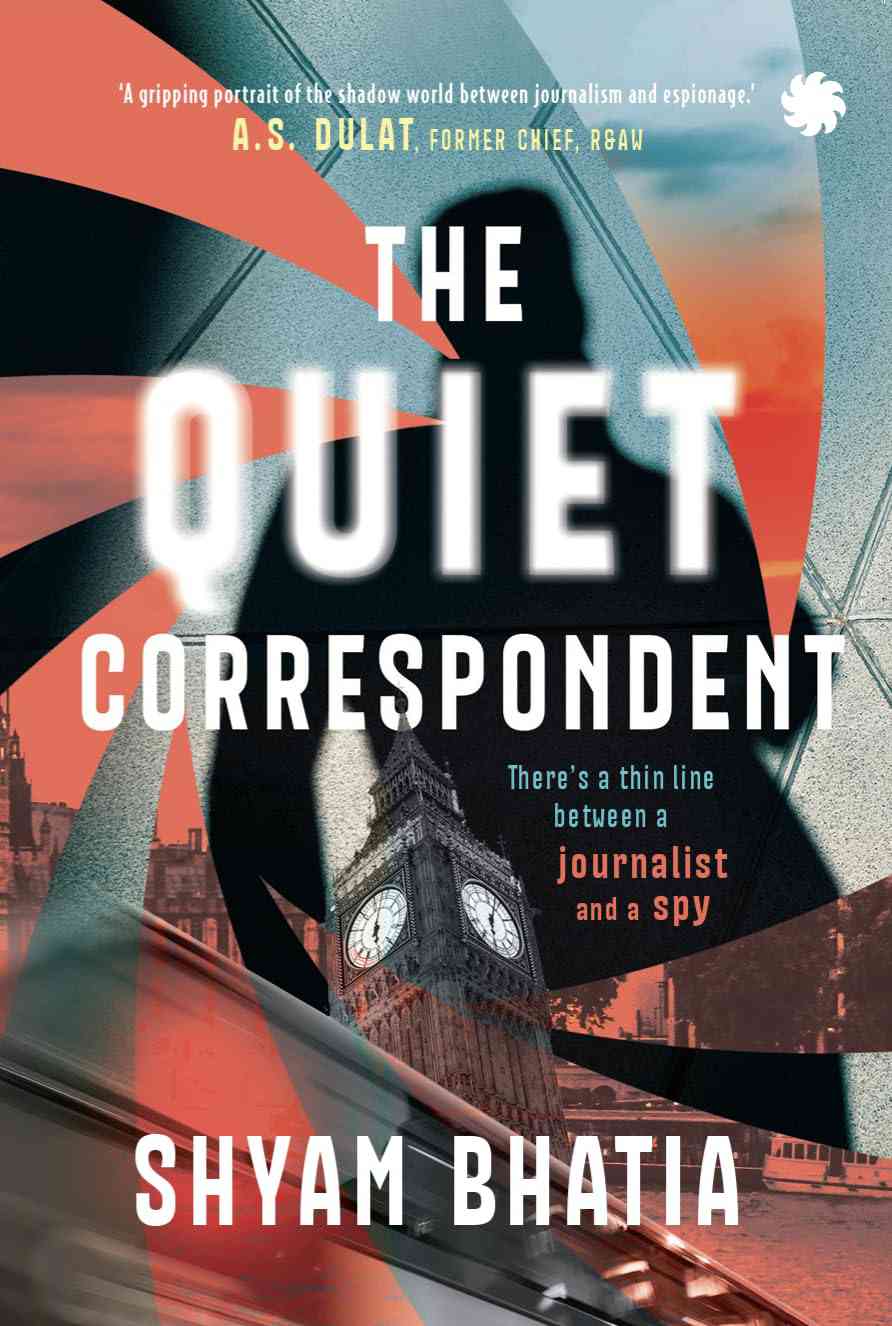
Excerpted with permission from The Quiet Correspondent, Shyam Bhatia, Juggernaut.
